A single remise de gaz was enough to shut a runway at Paris-Orly and force a passenger jet to climb away from its landing approach after the crew saw what appeared to be fireworks near the threshold. The episode, which unfolded on April 5 at around 5: 40 p. m. ET, shows how quickly a local celebration can become an aviation incident when pyrotechnics are set off too close to an active runway.
What happened near runway 3, and why did the pilot react immediately?
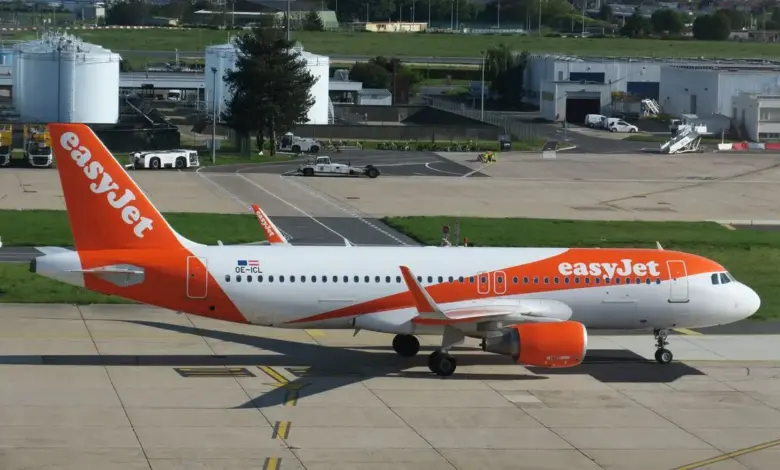
Verified fact: An EasyJet aircraft arriving from Venice was on final approach to Orly when the pilot saw small explosions and smoke near the ground, almost at the edge of runway 3, also identified as runway 25. The crew chose to interrupt the landing to protect passengers and the aircraft. EasyJet stated that the aircraft was not struck by any projectile at any time.
The maneuver was a standard climb-away to regain altitude and avoid the source of the disturbance. The aircraft then made a wide circuit over Essonne, Sénart, part of Seine-et-Marne, and eastern Val-de-Marne before attempting a new landing. The airline said the pilots are highly trained to carry out a remise de gaz as a precaution and in line with procedure, and that the flight later landed normally.
Who was behind the pyrotechnics, and what is still unknown?
Verified fact: French air transport gendarmerie teams were alerted and sent to the area where the mortars were believed to have been fired. A witness video helped investigators identify that the pyrotechnics were linked to a wedding procession made up of around fifteen vehicles, including several cars and quads. The prosecutor’s office described only a sedan and several individuals firing mortars into the air.
The central unanswered question is whether those involved understood the danger posed by setting off mortars beside a runway where arriving aircraft are at a low altitude. Another unresolved point is whether they positioned themselves there deliberately while waiting for an aircraft to pass. The search for the authors remained unsuccessful at this stage, and the inquiry is meant to determine intent. The event was not a routine disturbance; it created a direct operational response from air traffic control.
Why did airport operations change so quickly, and who absorbed the impact?
Verified fact: Air traffic controllers closed runway 3 after the incident. At that moment, Orly had runway 4 available, normally used for takeoffs, and runway 2 reserved for emergencies and exceptional cases. The EasyJet flight was redirected to runway 4 and landed without incident, while runway 3 stayed closed until 7: 00 p. m. ET, roughly an hour and a half after the first alert.
Analysis: The operational response suggests a system built to absorb sudden threats, but also one that depends on rapid recognition of danger from the ground. In this case, the airport did what safety doctrine requires: stop the approach, isolate the affected runway, and move the aircraft to a safer path. Yet the fact that a wedding procession could trigger that sequence shows how little margin exists around an active approach corridor. The episode is not only about fireworks; it is about the narrow line between private celebration and public risk.
What do the official responses tell us about responsibility?
Verified fact: EasyJet said the safety of passengers was never compromised and reiterated that no projectile hit the aircraft. The prosecutor’s office confirmed the re-routing and the safe landing. Those statements frame the incident as contained, but they do not answer the larger accountability question: why mortars were fired in a place where arriving planes pass low overhead.
Analysis: Both the airline and the airport system demonstrated a quick safety response, which is important. But the broader failure sits on the ground, where pyrotechnics were discharged near a runway boundary. If the inquiry confirms reckless behavior, the case will illustrate a preventable hazard rather than an aviation failure. The public interest now lies in establishing whether this was careless celebration or a conscious disregard for aircraft safety.
What should the public know after the remise de gaz?
The immediate threat ended without injury and without damage to the aircraft, but the incident left a trail of questions about conduct near the airport perimeter, the limits of enforcement, and how such events should be deterred. A wedding procession should not become a runway safety event. The essential lesson of this remise de gaz is that aviation safety can be disrupted in seconds by a ground-level act that never should have happened near an arrival path.