The arrest of Qasem Soleimani’s niece and grandniece has turned a routine immigration action into a political test. The State Department says the two women were detained after Secretary of State Marco Rubio revoked their lawful permanent resident status. Their relatives reject the claim that they were connected to the late Iranian commander. What is verified is narrow but explosive: two green cards were canceled, two women were taken into custody, and the explanation offered by the U. S. government rests on allegations about political support, not criminal charges.
What exactly did the State Department say happened?
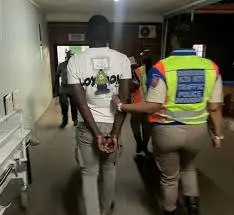
Verified fact: the State Department said Hamideh Soleimani Afshar and her daughter were arrested and were in the custody of U. S. Immigration and Customs Enforcement pending removal from the country. The department said Rubio revoked their lawful permanent resident status. It also said Afshar had been living in the United States as a green card holder after first entering on a tourist visa in 2015, receiving asylum in 2019, and becoming a green card holder in 2021. The Department of Homeland Security said that in a 2025 naturalization application, she disclosed four visits to Iran after obtaining permanent residency.
Another verified point: the government framed those visits as evidence against her asylum claims. The Department of Homeland Security said her trips to Iran illustrated that her asylum claims were fraudulent. The State Department also said Afshar had promoted Iranian regime propaganda on social media and described her as an outspoken supporter of the Iranian government. Those claims are central, because they are the basis for the revocation and the arrest.
Why does the family dispute matter so much?
The dispute is not limited to family disagreement. Narjes Soleimani, identified as Soleimani’s daughter, said the arrested individuals had no connection whatsoever to Martyr Soleimani and that the U. S. government’s claims were false. That denial matters because it challenges the public rationale for treating the case as politically loaded rather than simply administrative. It also underscores a basic uncertainty: the government’s allegations concern speech, online activity, and immigration status, while the family insists the relationship itself is being overstated or misused.
Informed analysis: when a revocation of residency is paired with rhetoric about a “totalitarian, terrorist regime, ” the case moves beyond immigration enforcement and into a question of political identity. The issue is not whether the State Department can move against someone it considers ineligible for residency; the issue is whether the public has been shown enough evidence to understand why these particular women were targeted now.
Why is Qasem Soleimani’s name central to the case?
Qasem Soleimani was the commander of Iran’s elite Quds Force and, by the accounts in the record, Iran’s most powerful military figure. He was killed in a U. S. air strike in Iraq in 2020, an attack ordered by then President Donald Trump. That history gives the case immediate symbolic weight. It also explains why a decision involving his relatives is unlikely to be seen as a routine immigration matter by either side.
The government has presented the case as an action against people it says supported Iran’s leadership and propaganda. The family presents it as a false accusation against people who, it says, had no connection to Qasem Soleimani. That is the contradiction at the center of this story: the U. S. is treating the relationship as politically meaningful, while the family is rejecting the premise entirely. The fact that the State Department declined to add more detail only sharpens the gap.
Who benefits from this move, and who is exposed?
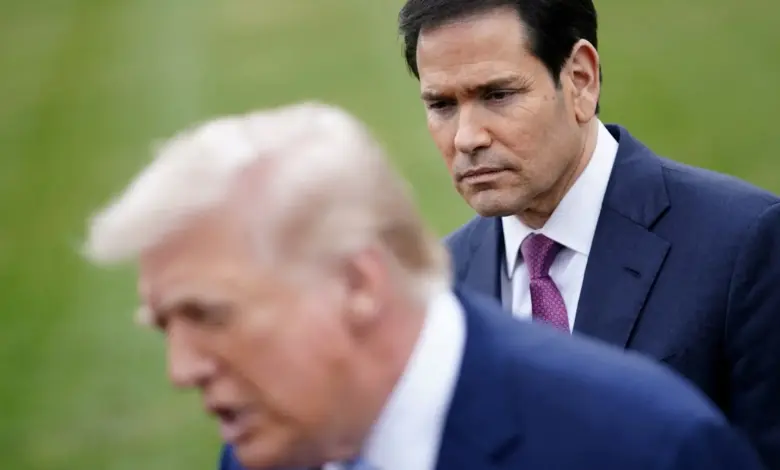
Verified fact: Rubio said in a social media post that the two women were green card holders living lavishly in the United States. The State Department also said Afshar’s husband has been barred from the country, though it did not name him. The immediate beneficiaries appear to be a government seeking to demonstrate toughness on immigration and on people it describes as hostile to the United States. The move also fits a broader pattern described in the record: this was the second known instance in the same month in which legal immigration status was revoked from individuals alleged to be related to Iranian leaders.
Another verified parallel involves Fatemeh Ardeshir-Larijani, the daughter of Ali Larijani, whose status and her husband’s status were also revoked earlier this month. That parallel is important because it suggests the Soleimani case is not isolated. It is part of a broader administrative pattern aimed at relatives of senior Iranian figures. In that sense, the question is not only who was removed, but what standard is being applied.
What does this say about enforcement, speech, and due process?
Informed analysis: the case raises three overlapping issues. First, immigration enforcement can be aggressive without being transparent. Second, political speech can become evidence inside an immigration file, even when the underlying public record is limited. Third, family relationship itself can become a liability when a government wants to make a symbolic point. Rights advocates have already raised concerns about free speech and due process in similar detention cases. That concern is relevant here because the government has offered a strong accusation, but not a full evidentiary record in public.
Verified fact: the women are being held pending removal, and the State Department said it had nothing more to add. That leaves the public with a partially explained action that carries outsized political meaning. In cases like this, a powerful state message can travel farther than the evidence presented to support it.
For that reason, the public interest is not satisfied by the fact of arrest alone. The key question is whether the government can clearly distinguish immigration enforcement from punishment by association. Until it does, Qasem Soleimani will remain at the center of a case that is as much about state power as it is about two revoked green cards.