The warning is no longer theoretical. airline flight cancellations jet fuel has become a phrase travelers are starting to connect with real itinerary risk, as the war on Iran pushes up fuel costs and tightens supply. What began as a price shock is now moving into airline planning, where carriers are weighing route reductions, extra surcharges, and in some cases outright cancellations. The pressure is especially visible in Asia and Europe, but the risk is widening as the conflict stretches on and refined fuel becomes harder to secure.
Why fuel scarcity is now shaping airline decisions
The immediate issue is not simply expensive oil. Jet fuel prices reached $195 at the end of March, nearly $100 higher than the end of February, after the war began disrupting supply chains and trapping oil in storage facilities across the Middle East. The International Energy Agency’s Executive Director Fatih Birol said the loss of oil in April would be twice what was lost in March, pointing to a growing scarcity of jet fuel and diesel. June Goh, a senior oil market analyst at Sparta Commodities, added that jet fuel requires specialized storage, leaving less of it available than products such as gasoline.
That shortage matters because airlines cannot easily absorb sudden cost spikes for long. In Asia, carriers have already begun adding fuel surcharges or canceling flights. In Europe, the risk is moving closer, with the UK described in a report by Argus Media as the most exposed country to tightening diesel and jet fuel supply. This is why the phrase airline flight cancellations jet fuel now describes an operating problem, not just a market headline.
What airlines are signaling behind the scenes
Ryanair, Europe’s largest airline, said it is considering reducing routes. Chief Executive Michael O’Leary said the carrier’s jet fuel supply could be at risk if the war continues, and warned of possible supply disruptions in Europe in May and June. He also said airlines could face a situation in which 5% to 10% of flights in May, June, and July might need to be canceled if the Strait of Hormuz remains closed for two to three more months. His warning was not about precision scheduling; it was about uncertainty, because airlines may get little advance notice and will depend on how much jet fuel each airport has available.
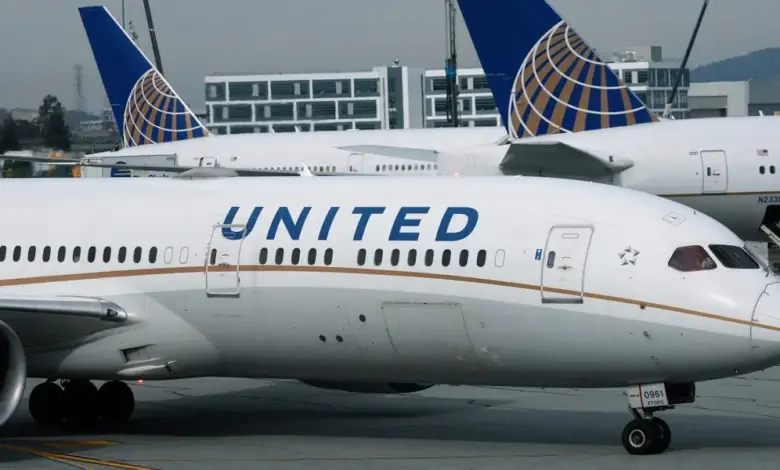
Lufthansa is also preparing for disruption, with a spokesperson saying the company has teams developing crisis response plans and could ground up to 40 aircraft. In the United States, top airport hubs including Chicago, Houston, Los Angeles, and New York have seen the average price for a gallon of jet fuel hit $4. 88, nearly double the prewar level. United Airlines is making contingency plans that include reducing capacity if oil reaches as high as $175 a barrel. These are early indicators that airline flight cancellations jet fuel concerns are beginning to affect network planning, not just ticket pricing.
The deeper economic impact of rising jet fuel costs
Jet fuel is often the first refined product to feel supply stress, and that sequence matters. Tom Kloza, an independent energy analyst specializing in refined products, said Asia showed the pain first, followed by Europe. He described jet fuel as the first product to feel the pinch, ahead of diesel and gasoline. That ordering is important because aviation sits at the front of a wider logistics chain: when aircraft are grounded or schedules are cut, passenger travel and cargo movement both become less reliable.
The scale is large enough to amplify the shock. Global commercial aviation is a $4 trillion industry, while commercial air cargo carries another $8 trillion worth of goods. Rising fuel costs can therefore spread beyond leisure travelers to businesses that rely on predictable air transport. Airlines are already responding with added fees for checked luggage and with capacity reductions under consideration. The concern is not only whether a flight can take off, but whether airlines can keep enough operations intact to preserve route networks and customer confidence.
What travelers and markets should watch next
For passengers, the practical message is mixed. O’Leary urged summer travelers to book sooner rather than later, arguing that waiting could mean higher fares if fuel pressure continues. He also said that within Europe, travelers should generally not be stranded and that airlines would work to reroute or bring passengers home if disruption occurs. At the same time, he acknowledged that refunds may not always be available if airlines treat cancellations as beyond their control. That combination leaves travelers facing both price risk and schedule risk at once.
For markets, the larger signal is that refined fuel scarcity is becoming a frontline indicator of broader energy strain. Crude oil prices may move within a range, but jet fuel is exposing the real stress point in the system. If the conflict continues into May and June, the pressure on airlines could intensify further, especially where storage and supply buffers are thin. The central question now is whether carriers can adjust fast enough, or whether airline flight cancellations jet fuel becomes the defining travel story of the summer.