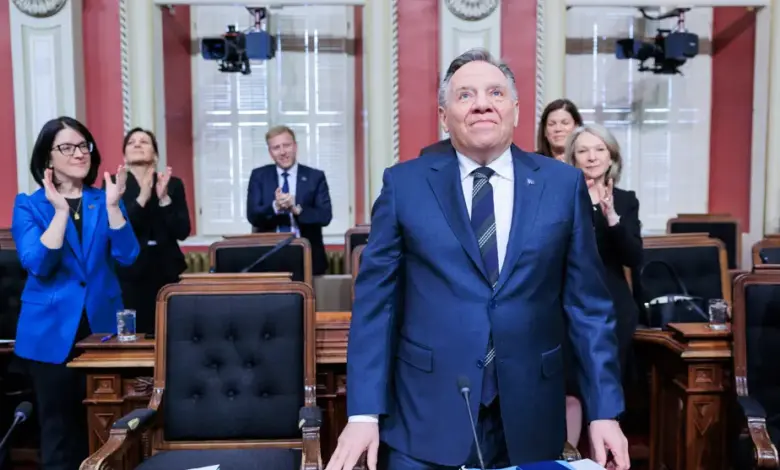
françois legault closed his final question period as premier under a rain of tributes from colleagues who praised his crisis management, laïcité reforms and the party he founded—while others used the moment to underline policy failures and a fragile path to the next election.
What happened during the last day in the Assembly for François Legault?
Verified facts: françois legault took part in a last question period as premier and delivered a ten-minute speech in the Assembly. He will cede the premiership to either Christine Fréchette or Bernard Drainville on 12 April at a party congress in Drummondville and will continue to sit as the member for L’Assomption until the general election. He began his political career as a minister of Industry in 1998 and founded the Coalition avenir Québec (CAQ) in 2011; he later became premier in 2018. Members of the Assembly observed a week-long adjournment of business following the speeches.
Analysis: The ceremonial final day combined ritual and calculation. The schedule—question period, a brief speech by the outgoing premier, remarks from other party leaders and a week-long break—framed the transition as both personal farewell and strategic pause ahead of a leadership vote and a general campaign. The Assembly setting amplified both praise and critique, concentrating the party’s internal contest and public accountability within a single parliamentary session.
Who praised and who criticized the outgoing premier?
Verified facts: Christine Fréchette, Member of the National Assembly for Sanguinet, described the party as both nationalist and economic and pledged to preserve party unity after the leadership race. Bernard Drainville, Member of the National Assembly for Lévis, recalled the singular feat of founding and bringing a party to power and noted advances on laïcité under the outgoing premier. Lionel Carmant, former Minister responsible for Social Services in the Government of Quebec and co‑founder of the party, praised the premier’s passion for Quebec and recounted how he had been recruited into politics. France‑Élaine Duranceau, President of the Treasury Board, described emotional caucus meetings and a relaxed final cabinet meeting with jokes from the premier. Samuel Poulin, Minister Delegate to the Economy, cited the premier’s management of the pandemic and responses to wildfires and floods.
Verified facts of criticism: Opposition members used the final question period to underline perceived failures from eight years in office. André Fortin, Parliamentary Leader of the Liberal Party in the National Assembly, pointed to a decline in the graduation rate from 76. 2% to 72. 9% over five years. Québec solidaire flagged strains in the community sector linked to a recent strike.
Analysis: The lineup of speakers mapped political fault lines. Senior government figures emphasized crisis leadership and institutional legacy; rivals balanced tribute with metrics and policy grievances. The juxtaposition of personal homage and pointed criticism made the session a concentrated audit of the outgoing administration’s record.
What are the political stakes now for the party’s survival?
Verified facts: Party insiders and public statements noted that the party is contesting its survival ahead of the general election, with the leadership choice set for 12 April. A recent Léger poll placed the party tied with Québec solidaire and behind the Parti québécois and the Liberal Party. Party figures called for unity following the leadership contest.
Analysis and accountability: The verified facts show a party simultaneously mourning and maneuvering. Praises of legacy and crisis stewardship sit beside polling weakness and tangible policy criticisms. That contradiction raises clear accountability questions for the next leadership team: how to defend the record that drew homage while addressing measurable declines and restoring public trust. Transparency on policy outcomes invoked in the Assembly—education completion rates, community sector labour disputes and crisis-response assessments—will be essential to that effort.
Closing call: Verified facts demand a public reckoning led by the incoming leader. The evidence presented in the Assembly and in party rooms points to a dual imperative for the CAQ’s next steward: preserve the institutional gains honored in the tributes and confront the shortcomings highlighted by opponents and hard numbers. The leadership election on 12 April will test whether those aims can be reconciled as the party seeks to recover after françois legault’s departure from the premiership.