Messi, Ronaldo among World Cup stars to feature as Lego — A fan moment or commercial reframe?

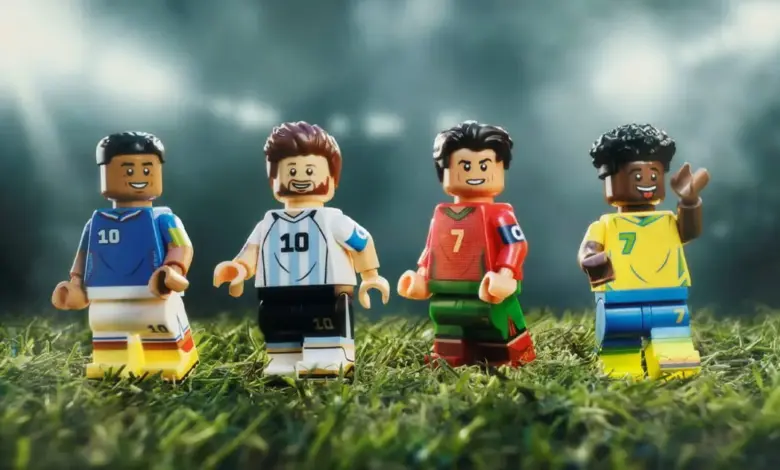
Ahead of the 2026 World Cup build-up, lego sets and a televised commercial have put Lionel Messi, Cristiano Ronaldo, Kylian Mbappé and Vinicius Jr. into miniature, collectible form — but the rollout reveals tensions between celebration and commodification.
How Lego turned icons into collectibles
Verified facts: The LEGO Group partnered with Lionel Messi, Cristiano Ronaldo, Kylian Mbappé and Vinicius Jr. to create a new LEGO Editions collection that presents each athlete as LEGO minifigures and display sets. The collection contains three different collector options called ‘Football Highlights’ action sets built on letter-shaped bases that include national colour cues, jersey numbers and a collectible plaque with a minifigure for each player. Two additional “Football Legend” display-scale sets feature Cristiano Ronaldo and Lionel Messi. The Cristiano Ronaldo display is an 854-element CR7 model that can be built in two poses, while the Lionel Messi display is a 958-element model with two build options and a separate ‘‘Celebration’’ 1, 427-element set aimed at older builders designed as 3D wall art and described as containing Easter eggs that nod to Messi’s life and career. Julia Goldin, Chief Marketing and Product Officer at the LEGO Group, said the goal was to bring the thrill of football to life and to let fans build, create and celebrate.
Cristiano Ronaldo is quoted as saying he is “incredibly honoured” to be part of the new lineup, noting the project blends football and creativity.
What the advert revealed — who finishes the trophy?
Verified facts: A commercial featuring Messi, Cristiano Ronaldo, Kylian Mbappé and Vinicius Jr. staged a contest in which the quartet vied to place the last piece on a trophy in a LEGO-themed advertisement. The advert concludes with a boy appearing among the stars and placing his own figure atop the trophy. The four players will appear at the World Cup in the United States, Canada and Mexico; the tournament is scheduled to begin on June 11 and the final is scheduled for July 19.
Analysis: The commercial frames control of the final, symbolic act — placing the trophy’s last piece — as a contest between elite players, resolved by a child who installs his own miniature figure. That narrative shifts the climax away from an individual athlete’s triumph toward a restorative gesture that returns the spotlight to a fan. The creative choice is notable given the simultaneous release of high-priced display sets: one narrative elevates celebrity, the other hands symbolic agency back to consumers.
Verified facts and informed analysis: what matters going forward
Verified facts: The product details, piece counts and build options outlined above are presented by the LEGO Group and by statements attributed to named individuals involved in the project. The advert places the four players together and ends with a child placing a figure on the trophy. The players named in the project are Lionel Messi, Cristiano Ronaldo, Kylian Mbappé and Vinicius Jr., and Julia Goldin is identified as Chief Marketing and Product Officer at the LEGO Group.
Informed analysis: These verified elements combine into two parallel messages. First, the productisation of player identity — through large, adult-targeted displays and collectible plaques — treats sporting legacy as an object to be assembled and owned. Second, the advert’s final moment reframes fandom as participatory: the boy’s placement of the figure suggests a narrative in which the fan’s act completes the story. Both messages are compatible but point to different ends of the market: collectible display pieces aimed at adult builders and a mass-appeal advert that privileges inclusivity and imagination.
What remains unsaid (uncertainties): The public-facing materials and the commercial do not disclose the full commercial arrangements behind the partnerships, the pricing and distribution strategies for the sets, or how the players’ likeness rights are licensed and managed. Those remain open questions for stakeholders and regulators who evaluate commercial partnerships in sport.
Accountability call: Given the scale of the rollout and the simultaneous placement of celebratory and commercial narratives, transparency on licensing arrangements, age-targeting rationale and the prominence of coded references (Easter eggs and collectible plaques) would help the public understand whether these products primarily preserve player legacy or primarily monetize it. Fans and policymakers alike should expect clarity from the LEGO Group and from the athletes’ representatives on those points as the World Cup approaches. The interplay of celebrity, commerce and childhood imagination will remain visible as these lego sets reach shelves and screens worldwide.