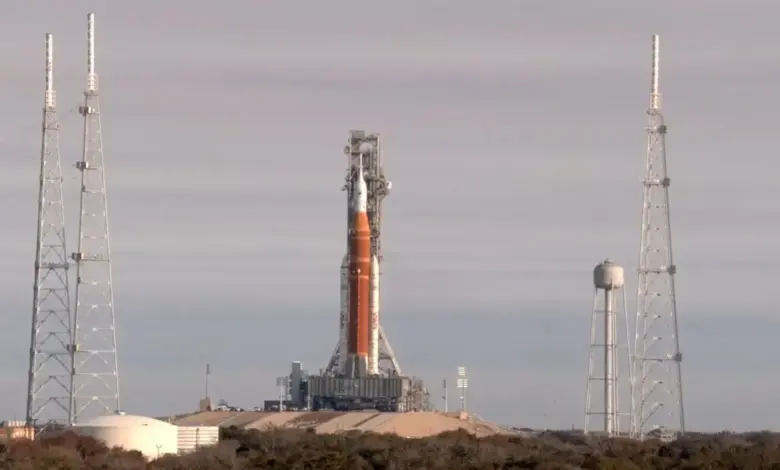
The artemis 2 tracker initiative is asking backyard astronomers with Unistellar smart telescopes to record the light curve of NASA’s Artemis II SLS rocket during both launch and re-entry. What looks like a public spectacle is being reframed as a distributed sensing campaign: coordinated observations by many small instruments could provide hours of continuous coverage and data that complement the mission telemetry released at the post-launch press conference.
Artemis 2 Tracker: Mobilizing Unistellar Telescopes
Unistellar is calling on owners of its smart telescope range to help observe the rocket’s light curve as it lifts off and when it returns. The company has run similar citizen science efforts for previous major missions, including observations of an earlier Artemis launch and the James Webb Space Telescope, where member-collected light curve data were included in a scientific study published in Aug. 2022. For this mission, Unistellar emphasizes that even observers without formal astronomy training can contribute useful measurements during the evening of Apr. 1 if skies are clear.
Deep analysis: what distributed light-curve tracking can reveal
Light-curve sampling by multiple identical smart telescopes can illuminate aspects of a launch profile that single instruments cannot. NASA confirmed post-launch that the solid rocket boosters had separated and that the spacecraft was in Earth orbit, with the crew safe and describing a “great view. ” The artemis 2 tracker effort aims to capture the transient brightness changes caused by staging, attitude adjustments and atmospheric re-entry phases. When combined, staggered observations from many geographic locations can produce a longer, near-continuous record of radiant intensity than an isolated instrument, narrowing gaps that might occur in professional coverage and filling local observational blind spots.
There are inherent limitations: amateur telescopes operate under variable sky conditions, local light pollution and differing user experience. Nevertheless, past Unistellar campaigns produced publishable data on a high-profile space payload, demonstrating that coordinated amateur measurements can reach scientific thresholds when properly calibrated and aggregated. The planned mission profile—one that will circle the Moon and travel farther from Earth than anyone has before, lasting a 10-day slate in which the spacecraft will not land—creates multiple observation windows, including launch and re-entry, where light-curve data are most informative.
Expert perspectives and mission implications
Dr. Ryan Lambert, planetary defense scientist at the Search for Extraterrestrial Intelligence (SETI) Institute, is heading the planetary defense and upcoming citizen science missions at Unistellar. He has urged broad participation, saying, “Direct observation by any telescope is better than no observation, especially when international devices can collectively cover hours of observation rather than a single telescope. “
Dr. Franck Marchis, senior planetary astronomer at the SETI Institute and co-founder of Unistellar, framed coordinated amateur observations as complementary to professional tracking: “Coordinated observations can provide valuable insights that complement professional data. By capturing this moment, amateur astronomers can play a meaningful role by contributing observations that help refine tracking, improve mission analysis, and strengthen collaboration between the public and the scientific community. “
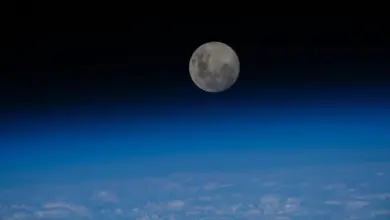
On the operational side, NASA held a post-launch press conference that provided an early orbital update and confirmed the crew are safe and in good spirits. The agency’s public statements included mention of a brief communications issue that was resolved during initial flight operations. An astronaut aboard described a dramatic Moonrise and the capsule—described as roughly the size of a minibus—carries four crew members on a mission intended to circle the Moon rather than land.
The convergence of NASA’s live operational reporting and a distributed citizen-science program creates a rare dual record: formal mission telemetry and ground-based optical intensity measurements. Properly synchronized, those records can be cross-referenced to test models of plume brightness, staging signatures and re-entry luminosity.
As the artemis 2 tracker campaign unfolds, analysis will need careful metadata management—time stamps in a consistent standard, calibration frames for each telescope, and a central aggregation plan to align observations with mission events publicly described by NASA personnel. Unistellar’s prior publication experience with member data provides a procedural template that may help validate contributions from disparate observers.
Will thousands of small telescopes be able to add measurable value to a mission that is already being monitored by professional networks? That is the question at the heart of this experiment—one that pairs a historic human flight around the Moon with an invitation for the public to turn awe into analyzable data through the artemis 2 tracker effort.