The Nigerian high commission in South Africa has urged caution after an anti-illegal immigration protest in KuGompo (formerly East London) turned violent, a development that has reverberated through local communities and diplomatic channels. nigeria citizens were told to limit movement and avoid public gatherings as demonstrations over the installation of a Nigerian community leader descended into disorder, with vehicles torched and shops looted. The incident highlights fragile local tensions and poses questions about protection for migrants and diaspora leaders.
Background & context: Nigeria community tensions in KuGompo
A march organised by civil society groups and political parties began as a protest against illegal immigration but escalated after a demonstrator said he had been attacked by a foreigner. The trouble occurred in the port city of KuGompo where members of the local population objected to the recent installation of a community leader recognised by the Igbo diaspora as “Eze Ndi Igbo East London. ” While the title is ceremonial within the diaspora, some local residents perceived the installation as an attempt to assert political influence in what they regard as Xhosa territory.
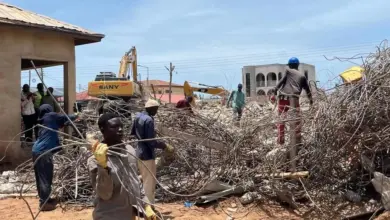
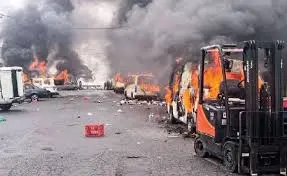
Local authorities condemned the violence. The KuGompo mayor, Princess Faku, who is a member of the African National Congress, said, “We supported the march because it is part of the efforts of defending our sovereignty but cannot condone violence. Violence doesn’t solve problems… it’s very sad that such an important march was turned into violence and chaos. ” The unrest resulted in 10 vehicles being set alight and the looting of both local and foreign-owned shops.
South Africa hosts about 2. 4 million migrants, just less than 4% of the population, with the largest flows historically coming from neighbouring countries. A smaller number of migrants come from nigeria, where the Igbo are one of the largest ethnic groups and maintain active diaspora networks.
Deep analysis: drivers, local power dynamics and implications
The immediate trigger — an allegation of an assault by a foreigner — exposed deeper grievances tied to economic competition, perceptions of sovereignty and disputes over traditional authority. Traditional leader Xhanti Sigcawu, who was present at the march, said the installation ceremony had left local chiefs feeling “undermined” and described the area as the “territory of the Xhosas. ” That language underscores how cultural and territorial identities remain potent flashpoints in municipal politics.
Beyond symbolism, the event reveals operational vulnerabilities for diaspora leaders whose roles are largely ceremonial within their communities. Solomon Ogbonna Eziko was recognised by members of the Igbo community as their local leader; his title functions as a mediator and cultural focal point for the diaspora. Yet its public visibility has unintentionally intersected with broader local politics, amplifying tensions rather than serving only internal community needs.
The Nigerian high commission in South Africa urged its citizens to limit movement and avoid public gatherings while tensions remain high, a diplomatic precaution that also signals potential reputational and consular costs. The safety of community mediators, the integrity of private businesses, and the capacity of municipal authorities to prevent escalation are now focal concerns for both residents and foreign missions.
Expert perspectives, regional fallout and what comes next
Dr ABC Okokoh, leader of South Africa’s Igbo community, stressed the ceremonial nature of the event: “We are not here to establish a kingdom [or] a king because there are laws in this country that must be respected. ” His statement frames the installation as a private communal recognition rather than a political project designed to usurp local authority.
Traditional leader Xhanti Sigcawu, representing local traditional structures, warned of the symbolic consequences, saying the ceremony had left chiefs feeling “undermined. ” That perspective helps explain why a diaspora-focused event could catalyse a broader street-level response. The mayoral rebuke and the Nigerian high commission’s advisory together illustrate the collision of local governance, traditional leadership, and diplomatic concern.
For the region, immediate priorities include securing affected commercial corridors, reopening foreign-owned shops, and rebuilding trust between communities. The incident may also feed into national political debates about migration and integration, making municipal stability a subject of wider attention.
As calm returns to parts of KuGompo and some normal activities resume, the question remains: how will municipal leaders, traditional authorities and diaspora representatives work together to ensure that ceremonial cultural practices do not become triggers for violence and that nigeria nationals and other migrants can live and trade safely in the city?