National Cabinet Meeting reveals split message on Iran objectives and short-term petrol relief

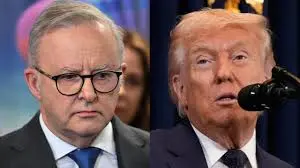
In an economy-facing week dominated by a 26. 3 cent per litre cut to fuel excise, the national cabinet meeting narrative is one of immediate relief framed against unclear strategic aims abroad. The public record now contains stark, verifiable numbers and blunt political signals that together raise questions about what ministers and the public are still not being told.
What public statements confirm about US goals in Iran—and what remains unspoken
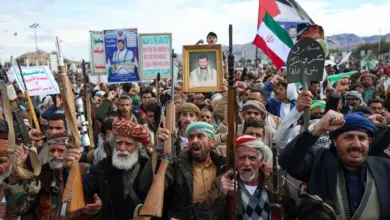
Verified facts: Prime Minister Albanese said he wants a de-escalation of the war and “more certainty” over the United States’ objectives in the conflict with Iran. He outlined three public objectives he identified previously: stopping Iran from obtaining a nuclear weapon, degrading Iran’s capacity to engage in military action proxies, and the prospect of regime change. The prime minister assessed that the first objective had been achieved and that Iran’s position had been substantially degraded; he described externally imposed regime change as historically difficult.
Analysis: Those public remarks present a circumscribed view of the campaign’s outcomes, but they do not resolve what specific, measurable objectives the government expects from allied action next. The statements underscore a demand for clarity about the United States’ aims, yet they leave open which strategic outcomes Australian decision-makers consider essential. This gap elevates the need for explicit, evidence-based discussion among national leaders about risks, exit conditions, and implications for regional security.
How the National Cabinet Meeting framing of fuel relief squares with inflation and oil-price data
Verified facts: The federal government has halved the fuel excise to 26. 3 cents per litre for three months, a change described as saving motorists 26 cents a litre on petrol and diesel. Jim Chalmers said the measure is expected to reduce headline inflation by about half a percentage point through the year to the June quarter of 2026. He noted that modelling for the measure will be considered in the budget, which will be handed down on 12 May. Chalmers also highlighted that the global oil price has nearly doubled since the start of the year, moving from roughly $60 a barrel to about $116 a barrel at the most recent cited check.
Analysis: The fuel excise cut is an immediately visible intervention calibrated to lower headline inflation modestly and provide short-duration relief at the pumps. The government’s own figures indicate the effect is limited in scope and time. Coupled with a near-doubling of global oil prices, the policy exposes a tension: a temporary domestic concession against a volatile external price signal. That dynamic suggests the measure buys breathing room but does not eliminate exposure to international market swings; the budget modelling referenced will be the primary test of whether short-term relief is matched by medium-term fiscal planning.
Political manoeuvres, parliamentary size and public-order bulletins
Verified facts: Don Farrell said that enlarging parliament has historical precedent under leaders he named and suggested he will not rule out future efforts to increase federal representation. He stated, “Increasing the size of parliament is what great Labor leaders do, ” and acknowledged that proposals for more upper house seats for territories do not yet have broad support. Separately, Victoria police are listed to provide an update related to Dezi Freeman, with a full report noting Freeman was shot dead by police after a seven-month manhunt.
Analysis: The remarks about parliamentary expansion signal an ongoing internal political debate that could affect legislative capacity and representation. At the same time, public-order developments such as the police update on a fugitive killed after a prolonged manhunt are discrete operational matters that will require factual briefings to clarify procedures and oversight. Both threads demand clear public explanation to prevent conflation of tactical law-enforcement outcomes and strategic constitutional or parliamentary change.
Verified facts summary: The prime minister has publicly called for clearer objectives from the United States in the campaign involving Iran; the government has enacted a three-month halving of the fuel excise to 26. 3 cents per litre expected to lower headline inflation by around 0. 5 percentage points to the June quarter of 2026; modelling for the measure will be considered in the budget to be handed down on 12 May; a statement on possible parliamentary enlargement was made by Don Farrell; Victoria police will provide an update after the death of a fugitive, Dezi Freeman, following a seven-month manhunt.
Accountability call: The evidence assembled in public statements and fiscal figures is concrete but incomplete. For the public to judge trade-offs between foreign policy posture, short‑term cost-of-living relief and institutional reform, participants in the next national cabinet meeting should publish clear, itemised objectives, the fiscal modelling that underpins short-term measures and a timeline for any proposed parliamentary changes. Greater transparency will let citizens move from inference to informed assessment about the choices now on display ahead of key budget decisions tied to the national cabinet meeting.