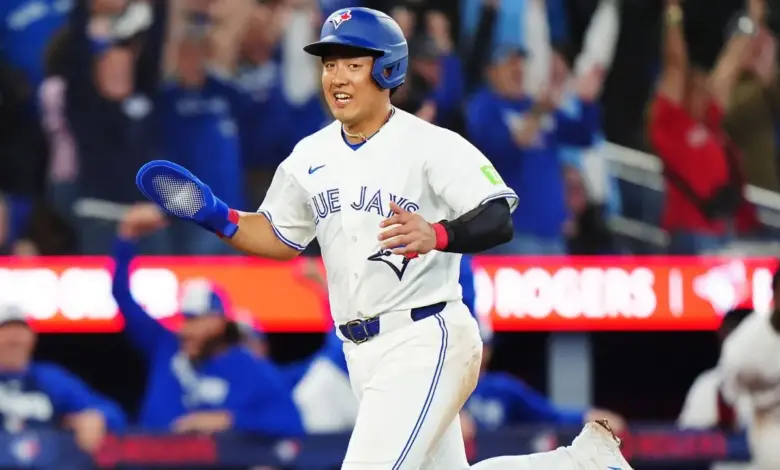
Kazuma okamoto arrived in Toronto with some nerves but left the season opener as a catalyst. The 29-year-old recorded two hits, drew his first big-league walk and delivered a ninth-inning single that sparked a walk-off 3-2 win over the Athletics. He also made multiple defensive plays and earned a post-game Gatorade shower — early signs that his transition to the major leagues is progressing rapidly and that the club’s offseason investment is already paying dividends.
Background: Why this debut matters now
The Blue Jays signed okamoto from the Yomiuri Giants this winter on a four-year, $60 million deal, a commitment intended to translate proven skills abroad into immediate on-field value. His first game of the 2026 season delivered a cluster of measurable contributions: a ninth-inning single that ignited a walk-off 3-2 victory, two hits, two runs scored and the team’s first run of the year. Those outcomes framed more than a highlight reel; they created tangible momentum for a lengthy 162-game stretch and validated why the club pursued him seriously.
On-field performance and underlying indicators
Okamoto’s box score tells part of the story, but the nuance lies in sequence and circumstance. He began the night visibly nervous, striking out on five fastballs up to 98 m. p. h. from the Athletics’ starter, then settled into the game and worked an eight-pitch walk later against the same pitcher. The walk preceded his scoring on an Andres Gimenez triple and complemented two crisp defensive plays: one charging a slow chopper and throwing off-balance for an out, another handling a tough hop and making a clean throw to first.
Those moments together — disciplined plate work, late-inning clutch hitting and reliable defense — are the sorts of small-margin contributions that influence run outcomes over a long season. The combination also demonstrates adaptability; after an initial strikeout, okamoto adjusted, drew a patient walk and delivered in the highest-leverage moment with a ninth-inning single that helped complete the comeback.
Clubhouse signals: fit, chemistry and immediate reception
Beyond statistics, teammates and staff framed his arrival as culturally and practically seamless. He received a loud ovation prior to the game while wearing No. 7 and a throwback white-panel Blue Jays hat, and the clubhouse response after the walk-off was effusive. “I’m just glad I could contribute, ” he said with interpreter Yusuke Oshima. Manager John Schneider framed the performance as a natural match: “He’s a guy who just fits in with what we’re doing, ” Schneider said. Those remarks underscore how early impressions inside the organization align with on-field output.
Teammates also noticed the mechanics of his integration. “A heck of a play on both ends, ” Ernie Clement said of a defensive sequence, adding that okamoto “just seems really comfortable. ” Clement highlighted okamoto’s advanced approach and the importance of the eight-pitch walk, calling it a foundation for the team’s scoring that would not have happened otherwise.
Broader implications and early takeaways
The immediate impacts are both tactical and psychological. Tactically, okamoto supplied run creation in a single game through plate discipline and situational awareness, plus defensive reliability on plays that could have extended innings. Psychologically, his comfortable demeanor after the initial nerves, amplified by a warm crowd reception and visible clubhouse support, reduces friction in the adjustment period many players face when changing leagues and countries.
For the organization, the debut offers early evidence that a significant free-agent investment is producing on-field outcomes and clubhouse alignment. For fans, the appearance of a new cultural touchpoint — an established star from another professional system — can deepen engagement, particularly when early performances validate expectations.
Uncertainties remain natural and limited: one game does not define a season, and adaptation over time will better reveal sustainability. Still, the elements present in this debut — plate discipline, defensive competency, immediate chemistry and composure — are core predictors of longer-term contribution.
As okamoto settles into Toronto and the grind of a full season begins, the question shifts from whether he can perform in a moment to whether he can sustain impact across varied pitchers and situations. The season’s length offers both challenge and opportunity: early signs point to opportunity, but long-term assessment will require consistent replication of the qualities that defined his first big-league outing.
Will this promising start evolve into the season-long influence the club envisioned when it invested in him, and how will his presence reshape the team’s lineup dynamics over the months ahead?