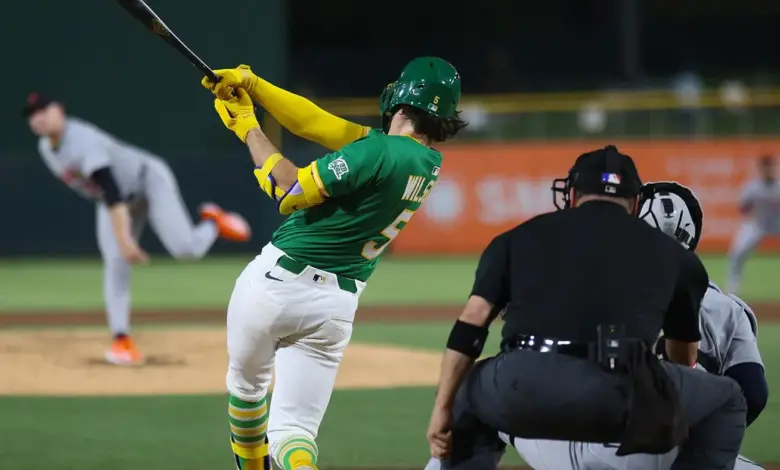
nick kurtz emerged from a breakout campaign as the American League Rookie of the Year, and his ability to follow that performance will be one of the clearest measures of how the Athletics fare as 2026 begins.
Why this season is an inflection point
The Athletics enter 2026 on a clear pivot from the prior seasons. Offensively the club was among the league’s top run producers and cleared fences with regularity in 2025; that power surge helped generate optimism even as the team closed the year with a sub-. 500 record. Management added veteran contact hitting and positional depth over the winter and committed to several young core players with extensions, signaling a dual bet: keep building around promising bats while trying to stabilize pitching.
At the same time, analysis of last season highlighted a durable tension: the offense can outscore problems only so long. The rotation and bullpen additions were intended to raise baseline reliability, but questions remain about whether pitching can support a playoff push. That tension turns 2026 into an inflection point—if the offense sustains, this group can contend for the franchise’s first winning record since the earlier decade; if it falters or pitching underperforms, the club risks a repeat of last season’s standing.
Nick Kurtz: What he and the young core must deliver
Nick Kurtz arrives in 2026 with Rookie of the Year laurels and expectations that he can replicate the production that made him a breakout figure. He will be watched as an early indicator of whether last season was the start of a sustained run or a one-year peak.
- Key offensive contributors named as part of the core: Brent Rooker, Tyler Soderstrom, Shea Langeliers, Jacob Wilson, and Lawrence Butler.
- New veteran additions intended to steady the lineup: a versatile contact hitter acquired in trade and two pitchers on short-term deals to add starting and bullpen depth.
- Primary performance lever: at least one of Lawrence Butler or the recent veteran acquisition must regain impact-level production to keep the offense ahead of pitching shortfalls.
The club’s internal narrative centers on development: continuing the trajectory of younger players while integrating veterans who can temper late-game risk. For each young player—especially Kurtz and Soderstrom—the challenge is consistent production and availability across a long season; for the veterans, the task is to provide steady at-bats and reliable innings that let the club convert offensive gains into wins.
What readers should expect and do
Three realistic paths frame 2026: a best-case where the offense stays elite, young players progress and short-term pitching additions provide needed stability; a most-likely case where offense remains strong enough for a modest winning record but pitching limits a deep postseason run; and a challenging case where offensive regressions combine with rotation and bullpen inconsistency to produce another losing season.
Fans and decision-makers should watch a short list of measurable signs early in the year: sustained power and on-base production from the core, clear improvement in rotation consistency, and health/availability of primary contributors. Roster moves this season will likely be reactive—upgrading pitching if early results falter or protecting depth if injuries arise.
Finally, while optimism is warranted given last season’s offensive breakout and the club’s contractual commitments to young talent, realistic expectations about pitching depth are essential. Monitor performance over the season’s first month for the clearest evidence of trajectory, and keep a close eye on how nick kurtz and the surrounding core translate past success into repeatable outcomes.