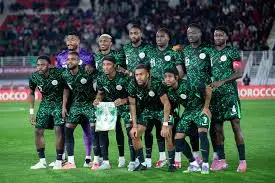
In a packed Paris conference room, senegal’s federation president stood flanked by lawyers and a timetable for a public spectacle: a planned parade of the Africa Cup of Nations trophy before the team’s friendly against Peru at the Stade de France. The mood was defiant, the choreography deliberate—an attempt to turn legal outrage into a visible display of claim and identity.
Scene: Paris, the trophy parade and a public vow
Abdoulaye Fall, president of the Senegalese Football Federation (FSF), used the conference to cast the CAF appeal board decision as a moral affront. “Faced with what amounts to the most blatant and unprecedented administrative robbery in the history of our sport, the Senegalese Football Federation (FSF) refuses to accept this as inevitable, ” Fall said, adding, “Senegal will not bend the knee and will not compromise its values. ” The FSF posted a timetable for events around the friendly at the Stade de France that includes a trophy parade intended to show supporters that the team still regards itself as champion.
Senegal’s legal appeal and the arbitration path
The immediate response is legal: the federation registered an appeal with the Court of Arbitration for Sport (CAS). CAS has confirmed receipt of the appeal and pledged to rule “as swiftly as possible, ” while warning that arbitration proceedings must respect the right of all parties to a fair hearing. “CAS is perfectly equipped to resolve this type of dispute, with the assistance of expert and independent arbitrators, ” said Matthieu Reeb, CAS director general.
Senegal’s legal team has signaled multiple lines of challenge. Serge Vittoz, one of the federation lawyers, argued that CAF had not provided detailed written reasons for the appeal-board decision and said, “For that reason, we consider that the decision has no effect. ” Another lawyer, Seydou Diagne, described the federation’s view as a “betrayal” and said the legal team includes counsel from several countries to press the case. The federation also said the government will pursue an international investigation into “suspected corruption” within the Confederation of African Football (CAF).
What happened on the pitch, and how institutions reacted
The disputed final unfolded when the Lions of Teranga beat host nation Morocco 1-0 after extra time. The match had paused earlier when a stoppage-time penalty was awarded to Morocco while the match was goalless; Senegalese players walked off the pitch in protest. CAF’s appeal board later ruled that Senegal had effectively forfeited the final by leaving the field, converting the on-field 1-0 result into a 3-0 default win for Morocco.
CAF’s disciplinary processes were already in motion: a disciplinary committee had issued sanctions after the match, including a ban for the Senegal head coach. The Royal Moroccan Football Federation had lodged complaints that the walk-off affected the course of the match and players’ morale. The appeal board cited tournament regulations, including an article that states a team leaving the ground without referee authorization can be eliminated. Patrice Motsepe, president of the Confederation of African Football (CAF), urged that the disciplinary and appeals boards be “viewed with respect and integrity, ” rejecting suggestions that the panels lacked independence.
Human stakes, wider perceptions and the next steps
The dispute is more than procedural. For players, officials and fans, the episode is an argument about honor and recognition: the federation insists the team remains champion; CAF has applied tournament rules that led to a different outcome. The federation has assembled “seasoned professionals with undeniable expertise, ” Fall said, framing the strategy as both legal and moral. CAS has registered the appeal but set no timetable for a final verdict; arbitration commonly requires time to schedule hearings and to allow written briefs from both sides.
The parade planned in Paris will be watched for signal as much as spectacle. The trophy on public display before a friendly is intended to translate courtroom claims into street-level conviction—an assertion that a team and its supporters will not quietly accept a decision they see as an administrative reversal. As Senegal prepares its legal case and public response, the question that will follow the team back onto the pitch is whether the juridical process and the public ritual together can restore the title’s meaning for players and fans.