Kosovo or Türkiye: How an ex-Socceroos boss can make World Cup history in last-gasp qualifier

The Socceroos will learn whether they open the World Cup against Türkiye or kosovo in Vancouver on June 13, with the European opponent to be finalised on the morning of Wednesday 1 April AEDT. The confirmation arrives amid a 22-nation scramble for the final six places at the tournament in the United States, Canada and Mexico, and it frames a rare crossroads for Australia’s preparation and for one former national coach aiming to extend his World Cup résumé.
Playoff structure and immediate context
Sixteen European teams were arranged into four groups of four, with semi-finals producing finalists whose winners will fill four remaining European slots at the World Cup. All semi-finals were played on Friday morning AEDT; notable results included Türkiye’s 1-0 victory over Romania in Istanbul and kosovo’s 4-3 thriller against Slovakia in Bratislava. The European section’s outcome will determine the Socceroos’ Group D opponent, joining the United States and Paraguay in a pool that already includes Australia.
Kosovo’s route and what it means for Australia
Kosovo entered the playoff quartet as the outsider, ranked 79th, and delivered a high-scoring win to stay in contention. Türkiye sit at 25th in the world—explicitly noted as two places higher than the Socceroos—making that side the favourite on paper, while kosovo’s victory underlines the volatility of single-match playoffs. For Australia, a matchup with kosovo would present a very different tactical and scouting challenge than a meeting with Türkiye, given the contrasting rankings and the dramatic nature of kosovo’s recent result.
Regional playoff branches and the ex-Socceroos twist
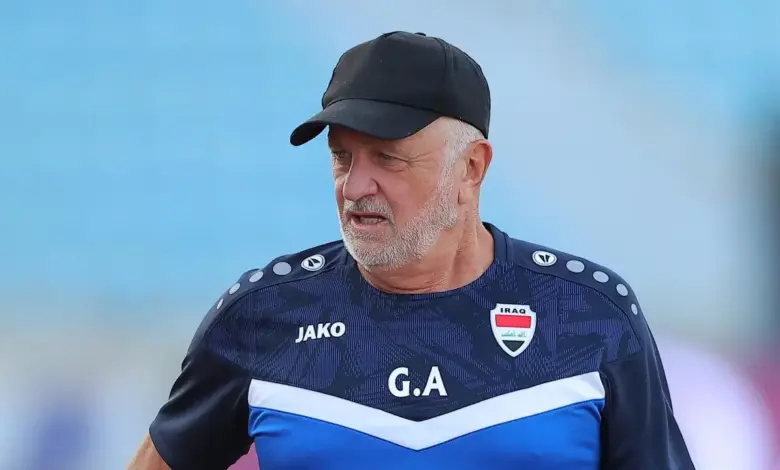
Beyond Europe, six nations are competing in Mexico for two remaining berths: New Caledonia, Jamaica, DR Congo, Bolivia, Suriname and Iraq. As the two highest-ranked teams in that section, DR Congo and Iraq have automatically progressed to their respective finals. The presence of Iraq in that mix carries a particular extra narrative for Australia because former Socceroos manager Graham Arnold is now managing Iraq. Arnold’s team competing in Mexico gives him the opportunity, should Iraq prevail, to become the first Australian manager to take another nation to the men’s World Cup.
Implications for preparation and tournament planning
With the opponent locked in only on the morning of Wednesday 1 April AEDT, Australia’s coaching staff will face a condensed window for opponent-specific scouting and tactical adjustment ahead of a June 13 opening in Vancouver. The playoff format—semifinals followed by a final in each quartet—ensures sudden-death pressure and a very narrow margin for preparation. Türkiye’s status as the highest-ranked team in that European section and kosovo’s recent thrilling win both change the calculus of risk assessment, match planning and player readiness for the Socceroos.
Named figures and strategic angles
Tony Popovic, Socceroos boss, was noted as observing the decisive European playoff matches closely—Türkiye’s tight win in Istanbul and kosovo’s high-scoring victory in Bratislava—signals that Australia’s management is tracking the immediate playoff outcomes as they shape the Group D landscape. Graham Arnold, former Socceroos manager and current Iraq coach, stands to make an unprecedented mark for Australian managers internationally if Iraq secures a World Cup berth through the Mexico pathway.
Those twin storylines—who Australia will face from Europe and whether a former national coach will reach the finals with another country—compress several strategic questions into a short timeline for Australia’s preparations and for the broader playoff ecosystem.
The playoff winners will slot into predetermined World Cup groups: one winner will join Canada, Qatar and Switzerland in Group B; another will enter Group F with the Netherlands, Japan and Tunisia; the European section winner that faces the Socceroos will add to the United States and Paraguay in Group D; and other winners will join established groups, reshaping the final group-stage map.
With the European opponent confirmed only on the morning of Wednesday 1 April AEDT, and Australia’s opener set for June 13 in Vancouver, the intervening weeks will demand rapid adaptation. Will kosovo’s upset form carry into a high-stakes World Cup test, or will Türkiye’s higher ranking and tight semifinal performance set the tone? The answer will determine not only a first-match narrative but also whether history is on the line for an ex-Socceroos coach who has followed his international career beyond Australia’s borders.
Which scenario will ultimately reshape Australia’s path at the finals—and can a former Socceroos boss finish a unique chapter by coaching another nation onto the sport’s biggest stage—are the questions now waiting to be answered.