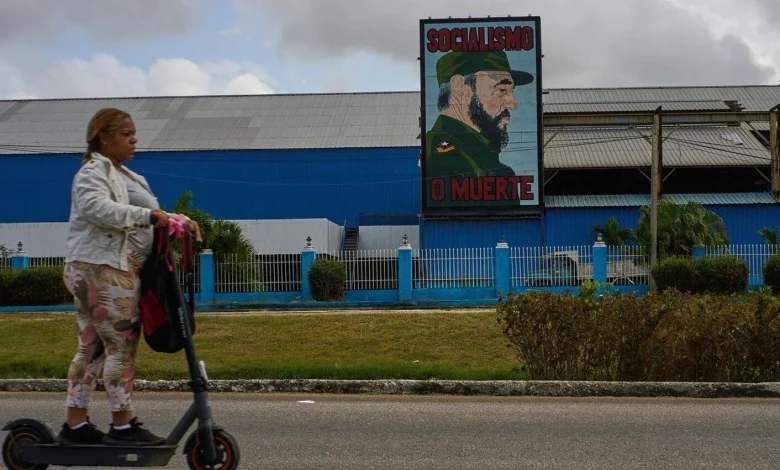
Under a mural of Fidel Castro bearing the slogan “Socialism or Death, ” a woman on an electric scooter weaves through a Havana street where store windows hum with the faint light of refrigerators that may soon fail. The refusal by Cuban authorities to allow the U. S. Embassy to import diesel for its generators has turned cuba fuel into a diplomatic and human flashpoint, visible in doorways, hospital corridors and university halls.
Cuba Fuel: Embassy Request Denied and the Diplomatic Fallout
The Cuban government rejected a request from the U. S. Embassy in Havana to bring in diesel for embassy generators. The denial comes amid a broader fuel squeeze tied to the halt of petroleum shipments after a change in Venezuela’s leadership and new U. S. policy measures that threaten tariffs on countries that sell oil to Cuba. The U. S. State Department has been weighing a reduction in staffing at the embassy because of the lack of diesel; such a reduction would likely prompt a reciprocal demand for cuts at the Cuban Embassy in Washington. The White House, the State Department and the Cuban Embassy in Washington did not immediately provide comment on the refusal.
What the Shortage Means for Daily Life
The island is leaning on natural gas, solar power and its own oil to keep thermoelectric plants running, but those sources have not met demand. Many of Cuba’s 11 million residents face spoiled food as refrigeration falters. Hospitals have canceled surgeries, and the leading university has reduced classes after an electric grid collapse that produced an island-wide blackout earlier this week. President Donald Trump has framed the moment as a chance to press for political change, saying, “Taking Cuba in some form … whether I free it, take it, I think I can do anything I want with it, if you want to know the truth, ” and, “They’re a very weakened nation right now. “
Diplomacy, Pressure and How Actors Are Responding
U. S. officials, the White House and senior policymakers have pushed for changes in Havana in return for easing sanctions. They are demanding, in part, that Cuba free political prisoners and move toward political and economic liberalization as conditions for lifting restrictions. President Miguel Díaz-Canel remains the targeted Cuban leader in those demands; the U. S. is seeking dramatic change in Havana’s government. Secretary of State Marco Rubio and other U. S. leaders have characterized the island as a place where the United States can expand its influence.
At the same time, Cuba is trying to stretch its energy supplies. The government has increased reliance on domestic sources of power, but the strain shows in canceled medical procedures, interrupted classes and households struggling without refrigeration. The U. S. also believes it holds diesel reserves for its Havana mission sufficient to maintain operations for a limited period, which has so far kept a staffing reduction from happening immediately.
Voices on the Ground and the Policy Perspective
The image of Castro with the slogan “Socialism or Death” looms over this dispute as both a symbol and a reminder of the stakes for Cubans living through outages and supply shortfalls. President Trump’s public statements about Cuba’s weakness and the suggestion that Cuban leaders should fear a fate similar to that of a former Venezuelan president underscore the broader pressure the U. S. is applying. Cuban officials have acted by denying the embassy’s diesel import request, a move that turns an energy problem into a test of diplomatic resilience.
As the standoff continues, the practical responses are mixed: Havana is shifting generation to alternative sources and the U. S. is weighing staffing changes while keeping reserve fuel on hand. The demands for political concessions remain central to U. S. policy, and Cuba’s refusal to allow diesel imports for the embassy underscores how energy access and diplomacy have become tightly linked.
Back under the mural, the woman on her scooter passes a small shop rearranging produce in the failing light. The refusal to permit diesel imports for embassy generators is one decision among many that will shape whether daily life can hold steady or whether the diplomatic dispute pushes things further toward scarcity. The question now is whether those decisions will ease pressure on ordinary Cubans or deepen an already palpable strain over cuba fuel.