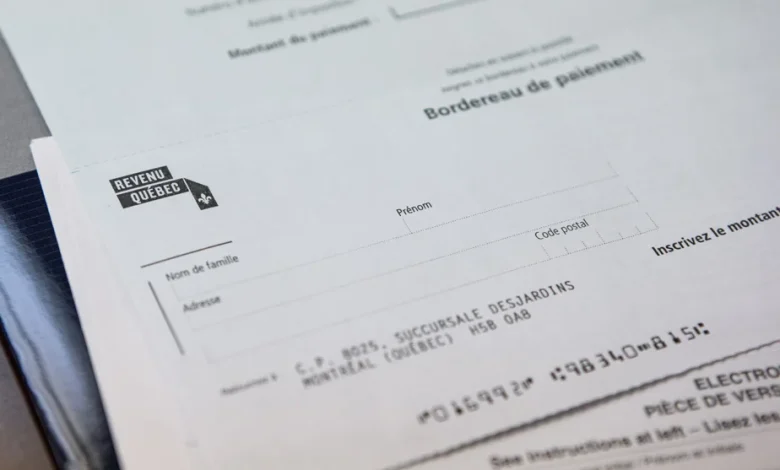
The government has moved to have Revenu Québec produce automatic tax declarations so some people who do not file will receive the revenu they are owed, beginning with a targeted rollout tied to the 2026 taxation year.
What Happens When Revenu Québec Produces Returns?
The budget 2026-2027 states that Revenu Québec will automatically prepare the tax returns of certain taxpayers to ensure those individuals receive benefits and credits to which they are entitled. The measure targets people who typically do not file — an estimated 3 to 5 percent of the Quebec population identified in the budget as often being in vulnerable situations.
Examples cited in the announcement make the policy intent clear: students working a few hours while studying, people working very little or not at all because of personal circumstances, recipients of last-resort aid, and low-income seniors can miss out on amounts such as the solidarity tax credit or refunds for employer overwithheld contributions to RRQ and RQAP if they do not file. Revenu Québec has already run a simplified, prefilled declaration pilot since 2023; that pilot required taxpayers to act to validate the return. The automated production announced in the budget will not require action from the taxpayer for a return to be considered valid, as stated in the budget of Eric Girard.
What If taxpayers do nothing — who benefits and who misses out?
The budget foresees that Revenu Québec will automatically produce returns for at least 10, 000 individuals with stable and simple tax situations for the 2026 taxation year. Those individuals will not receive the related payments before 2027 unless they file their own return. Taxpayers who continue to file will receive refunds on existing timelines: Revenu Québec aims to deliver refunds within 14 business days for electronic returns and within 28 business days for paper returns; Revenu Québec does not issue refunds under $2.
There is a broader context that motivated the move. A research document from Statistique Canada in 2025 highlighted large totals of unclaimed credits at the federal level, showing how eligible workers can leave significant amounts unclaimed. That pattern underscores the government’s rationale for automation: to reduce barriers that keep eligible people from claiming benefits.
What Happens Next: scenarios, choices and a short checklist
Three plausible scenarios emerge from the program details given in the budget and existing pilot work:
- Best case: The automatic-production system scales beyond the initial cohort, quickly incorporating many more simple-file taxpayers and boosting uptake of credits and refunds among vulnerable groups without adding administrative burden for recipients.
- Most likely: The initiative begins with the announced minimum cohort and expands gradually. Some eligible people receive funds without acting, while others still file to obtain payments for 2026 before 2027.
- Most challenging: Implementation complexities or data-matching limits restrict the program’s reach; many eligible people remain unserved until the program can scale and payments do not flow until 2027 for automated files.
Practical actions for taxpayers are straightforward and time-sensitive: if you believe you are eligible for credits tied to the 2025 tax year, submit your return before the end of April to receive any amounts sooner; otherwise, wait for the automated process to take effect for the 2026 taxation year and subsequent distributions.
While automation promises to capture funds for people who currently miss out, the initial scope is limited and the budget makes clear that some amounts tied to the 2026 automated production will not be paid until 2027 unless individuals file themselves. That reality frames how taxpayers, community organizations and public administrators should prioritize outreach, verification and simple filing options ahead of the filing deadline for the 2025 revenu