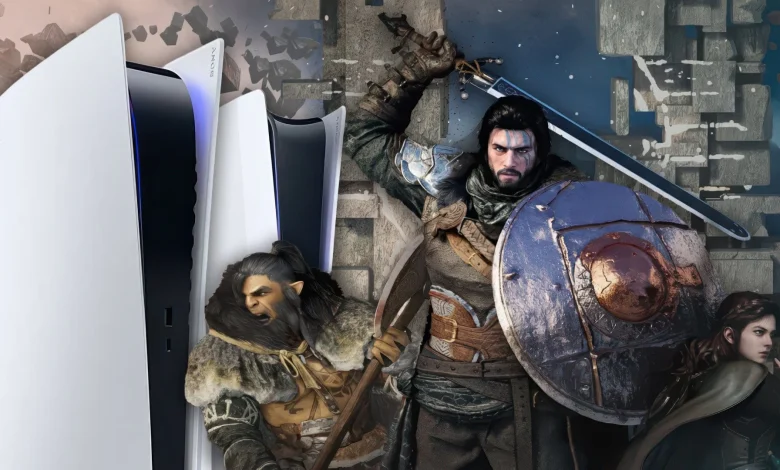
The game crimson desert has amassed roughly 3 million wishlists and is approaching 400, 000 pre-launch sales that represent more than $20 million in gross revenue, yet pre-release technical notes and platform trade-offs suggest the release could arrive on uneven footing.
How did Game Crimson Desert build this level of hype?
Pearl Abyss, the developer behind the title, has shepherded the project for seven years and repositioned it from an MMO prequel into a standalone open-world action game. The studio has highlighted an expansive toolkit of systems: high-fidelity melee combat, environmental interaction, aerial mounts, fishing, and even mech piloting — all running on a proprietary engine the developer credits with enabling a large degree of player choice and discovery. Pearl Abyss announced that the title reached 3 million wishlists, a metric that has been central to the campaign’s narrative of momentum.
Marketing strategy has leaned hard on direct community engagement. Will Powers, PR and Marketing Director at Pearl Abyss, has been presented as the primary public-facing figure for communications, with the studio clarifying genre expectations by positioning the product as an action-adventure rather than a traditional RPG and explicitly noting the absence of certain RPG staples such as character creators, branching dialogue, and conventional leveling systems. Those genre guardrails have been used to shape expectations as the title prepares for a commercial launch across PC, PlayStation 5 and Xbox at a $70 price point.
Do base PS5 technical compromises threaten the launch?
Pre-release technical findings and developer-provided configuration details expose a sharp contrast between the base PS5 experience and the enhanced PlayStation 5 Pro experience. Pearl Abyss supplied PC-equivalent graphics settings that show three primary console modes: quality, balanced and performance. Balanced mode on the standard PS5 runs at a native 1296p and relies on FSR3 upscaling to reach 2160p. Performance mode on both base and Pro consoles targets higher frame-rates but does so at internal resolutions that can be as low as 1080p on the base PS5 with no upscaling assistance.
Two platform-level behaviors stand out as material for early buyers. First, enabling a 120Hz output at the system level forces the game into 120Hz regardless of whether the connected display supports 4K at 120Hz; on many televisions this induces a downscale to 1440p or 1080p before upscaling back to 4K, creating noticeably degraded visuals. Second, in performance mode on the base console, observed frame-rates have been inconsistent in early sessions — fluctuating from the high 30s up to 60fps — producing a perceptible difference in smoothness and image quality compared with balanced or quality modes that use upscaling technologies. By contrast, the PS5 Pro’s extra GPU headroom and upgraded upscaling support deliver markedly better image fidelity and frame-rate stability in the same configurations.
Who benefits, who is exposed, and what accountability is required?
The commercial picture is bright: strong wishlist numbers and early pre-sales suggest substantial consumer interest and the potential for solid launch-week revenue. Pearl Abyss benefits from momentum and a clearly defined marketing narrative enforced by a visible communications lead. Yet the technical disparities between console tiers and the documented behavioural quirks — especially the indiscriminate 120Hz switch and the base PS5’s reliance on native low internal resolutions in performance mode — create a scenario where player experience may vary dramatically depending on hardware and TV configuration.
Verified facts in this file separate clear measurements from interpretation: wishlist totals and early sales figures indicate market demand; developer-provided mode specifications and pre-release performance observations document the technical trade-offs. What is not yet visible in this material is how post-launch patches, user-configurable defaults, or clearer system guidance will be deployed to mitigate the base-console experience for purchasers who expect the headline visual promises.
El-Balad. com calls for transparent post-launch reporting from Pearl Abyss: publish a clear matrix of recommended modes per display capability, commit to prioritized performance fixes for the base PS5 where feasible, and ensure marketing materials reflect the practical trade-offs players will encounter. Until the studio lays out that remediation plan, the contradiction remains stark — a title with blockbuster ambition and commercial momentum that nonetheless risks uneven reception at launch unless the technical gaps are addressed and communicated plainly.
The final metric to watch will be whether Pearl Abyss can translate wishlist momentum into sustained player satisfaction when the product ships, and whether early buyers of game crimson desert receive an experience consistent with the scale promised by the marketing campaign.