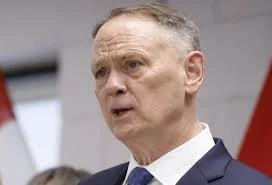
David McGuinty, Minister of National Defence, said as of Tuesday (ET) that the caf would not join U. S. and Israeli offensive strikes on Iran and that Canada made that position clear “from the beginning. ” He spoke at a press event in Brampton, Ontario, outlining the government’s refusal to participate in the prosecution of the war and stressing a focus on protecting Canadians and Canadian forces. McGuinty added the government is watching the volatile situation hour by hour and will keep its forces out of harm’s way.
Caf role and restrictions
McGuinty said the decision was made early in the conflict and has not changed: “But for us, from the beginning, it was clear that joining this in terms of the prosecution of the war offensively was not going to occur. ” He reiterated that Ottawa was not consulted before the U. S. and Israel launched their military action and stated plainly that Canada has not participated in this conflict and has no intention of doing so. For security reasons he declined to reveal operational details, saying only that protecting Canadians in the region and keeping forces safe are primary objectives.
Diplomatic and alliance responses
Anita Anand, Minister of Foreign Affairs, said there has been no conversation among NATO allies about answering a U. S. request for assistance to reopen the Strait of Hormuz and that, “To our knowledge a request has not been made to NATO for the type of assistance that is being requested. ” She described Iran’s closure of the strait as a violation of the United Nations Convention on the Law of the Sea and underlined that ships from all countries have the right of passage. Anand said she has been engaging with governments in the Gulf region and expects to raise the matter with partners in upcoming international meetings.
Immediate reactions and government posture
McGuinty framed the government’s choices in narrow, security-first terms: “It’s very important that we, first of all, focus on Canadians in the region who want to leave that region, ” he said, adding, “Secondly, is very important for me as minister of defence to make sure that we protect, that we keep our forces out of harm’s way. ” On Monday (ET) he had said Ottawa was “leaving the door open” to providing assistance to Gulf nations if formally requested, but he cautioned that any such assistance is not guaranteed and that no requests had been received so far.
Quick context
U. S. and Israeli air strikes on Feb. 28 (ET) triggered a broader conflict that has included retaliatory drone and missile fire, and damage to regional energy infrastructure. The closure of shipping through the Strait of Hormuz has disrupted energy and food-chain shipments, raising legal and diplomatic concerns internationally.
What’s next
Ottawa will continue to monitor developments hour by hour (ET), keeping Canadian military members out of offensive operations while remaining open to formal requests for defensive assistance from Gulf partners. Expect further statements from McGuinty and Anand as NATO discussions evolve and any formal requests for help are received — all while the government maintains its stance that the caf will not be used for offensive participation in the conflict.