Why ‘The Madison’ Is Dedicated to Robert Redford — His ‘Yellowstone’ Connection Explained

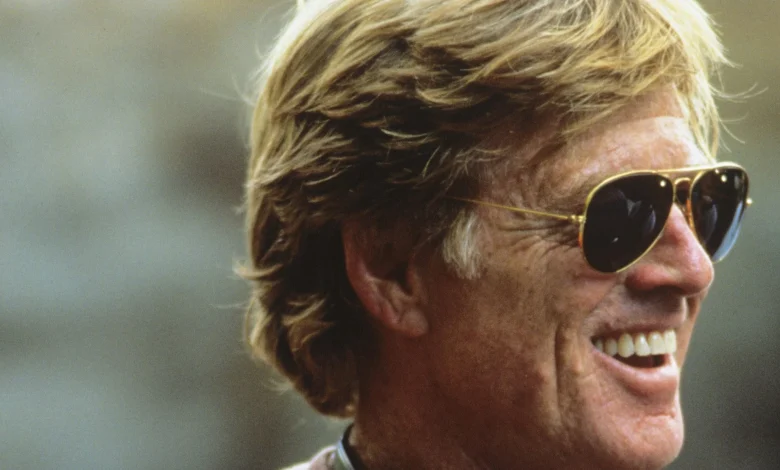
In the first episode of the madison, the end credits carry a simple line: “In loving memory of Robert Redford. ” The dedication follows a sequence in which a Manhattan family retreats to Montana after a pair of brothers die on a fly-fishing trip, gathers in a hotel room and watches Redford’s A River Runs Through It because it was the late husband’s favorite. That interplay of story and cinematic nod explains why the madison opens with an explicit tribute rather than a passing reference.
Background: Why The Madison opens with a Redford tribute
The first episode frames its Montana scenes around a grieving Clyburn family. Two brothers—characters in the episode—are portrayed as bonding while fly-fishing before both perish in a plane crash. When Stacy Clyburn and her family travel from Manhattan to Montana, they assemble in a hotel room to watch A River Runs Through It because it was Preston’s favorite movie; the film’s fly-fishing motif mirrors that of the episode and the brothers’ relationship. The sequence culminates with the on-screen dedication to Robert Redford, who died at age 89 on September 16, 2025.
Deep analysis: Sheridan’s Redford connection and narrative echoes
The decision to dedicate the episode extends beyond thematic resonance. Taylor Sheridan has a documented creative history that ties him to Redford: when Sheridan first sought to place a Western-set family drama, he pursued Redford as the lead for the patriarchal role later associated with another series. Sheridan’s recalled account of the effort includes a personal meeting with Redford at the Sundance festival and Redford’s tentative agreement to star. That anecdote—Sheridan saying, “I drive to Sundance and spend the day with him, and he agrees to play John Dutton”—frames Redford not only as a cinematic influence but as someone Sheridan once hoped would front a foundational television role. When that iteration did not proceed with Redford attached, the project went forward with a different lead on a different network, yet Redford’s imprint on Sheridan’s creative imagination remained visible.
Within the episode itself, the A River Runs Through It sequence functions on two levels: it is diegetic comfort for characters processing sudden loss, and it is an intertextual flag that links Sheridan’s Montana storytelling back to Redford’s work as a director and actor who popularized a certain cinematic view of the American West. The family’s reaction—some members falling asleep, others moved to tears—underscores the film’s role as both personal touchstone and communal ritual. That on-screen ritual is followed immediately by the dedication card, coupling narrative grief with real-world mourning for Redford.
Expert perspectives and regional impact
Christina Alexandra Voros, director and cinematographer of the series, has publicly endorsed the choice to honor Redford. Voros said, “I can’t speak to the decision that was entirely Taylor’s. What I will say is, anyone who sees the show will understand why it is a love letter in many ways to a world that Redford certainly introduced to me, ” a statement that links the tribute to the series’ aesthetic and thematic ambitions. Taylor Sheridan, creator of the series, is on record recounting his earlier effort to involve Redford and framing the veteran filmmaker as part of the lineage that informs Sheridan’s approach to Western-inflected family drama.
The tribute also operates regionally: the series traces grief and reconciliation across two worlds—Manhattan and Montana—and uses Montana’s fishing landscape as an axis. By foregrounding a film set in Montana and dedicated to its director, the episode re-centers the cultural associations of that landscape. For audiences attuned to the history of contemporary Western storytelling on television and film, the dedication signals continuity: the madison positions itself within a lineage that Redford helped shape, and it foregrounds the state’s rivers and rituals as more than backdrop—they are active elements of mourning and memory.
From an industry perspective, the dedication underscores how personal relationships and early creative choices can ripple across projects and networks. The initial pitch that involved Redford is part of the creative paper trail that led to later series set in similar terrain; the on-screen tribute closes that circle symbolically, acknowledging an influence that shaped both storytelling and personnel decisions.
As viewers respond to the storytelling choice, the madison’s opening dedication invites a broader question about authorship and homage: when does a creative nod become an essential part of a narrative’s emotional architecture, and how will audiences interpret such gestures in a serialized landscape increasingly conscious of lineage and legacy?