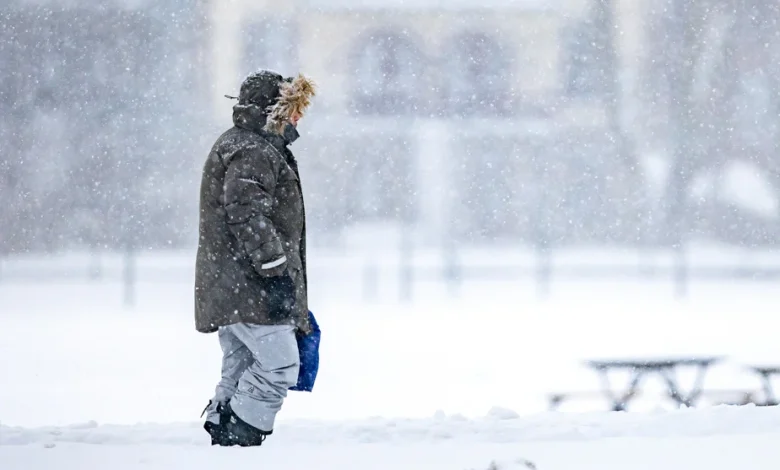
On the roadside outside a small town in Abitibi-Témiscamingue, plow drivers and residents were bracing as a tempête set to sweep a large part of Quebec moved in, promising a changing mix of heavy snow, a short-lived thaw and a risk of freezing rain that could make roads treacherous.
What will the Tempête bring?
The system is a Colorado low pushing north toward Quebec and is expected to bring mainly snow to the affected sectors, Guillaume Perron, meteorologist at Environment Canada, said. Accumulations vary by region: parts of Abitibi-Témiscamingue, the Côte-Nord and the Nord-du-Québec could see 20 to 50 cm of snow in spots; the north-west of Saguenay–Lac-Saint-Jean and Mauricie are forecast for about 15 to 30 cm; the Laurentides nearer Montreal may receive roughly 5 to 10 cm.
Winds will play a key role. Gusts around 50 km/h are expected in many areas and, farther east, gusts could approach or exceed 100 km/h. That combination is likely to produce blowing snow and sudden reductions in visibility.
Later in the event a brief warm-up will change snow into rain where temperatures rise above freezing, and in the transition period there is a risk of freezing rain. Environment Canada warns that freezing rain could leave between 2 and 5 mm of glaze on the ground in affected locations. After the short redoux, temperatures are expected to fall sharply again, with some places dipping to around −20 °C during the night after the system moves through.
Who will be most affected and what should travellers expect?
Communities farther north and along the northeastern corridors face the heaviest snowfall; more southerly sectors along the Saint Lawrence valley, including the Greater Montreal area, are expected to be spared the largest snow totals and will receive mostly rain. In those southern areas, precipitation that begins as snow may rapidly change to rain as mild air moves in.
Environment Canada cautioned that travel will probably be difficult. “The travel will probably be difficult. Visibility will probably be suddenly reduced to almost nil at times. Road closures are possible, ” the agency warned in its advisory. Drivers and transit operators should plan for sudden drops in visibility, pockets of very heavy snowfall, and slick conditions where freezing rain occurs.
In some northern pockets, sustained snowfall could be heavy for many hours. Regions that see the highest totals should expect conditions that make movements slow and hazardous; authorities have flagged the possibility of temporary road closures as conditions deteriorate.
What responses and warnings are in place?
Environment Canada has issued storm and winter weather advisories for large parts of the province; an official meteorologist has described the system as a Colorado depression known for producing abundant precipitation and strong winds. The warnings emphasize the potential for rapidly changing conditions: snow giving way to rain, the danger of freezing rain accumulation, periods of whiteout from blowing snow, and a marked return to cold after the brief warm spell.
Local road crews and municipal services in the hardest-hit regions are preparing for heavy snow removal and for the possibility of emergency measures if visibility and road conditions deteriorate. Travel planning that accounts for slower speeds, possible detours and temporary closures will reduce risk for commuters and longer-distance travellers.
Back on the Abitibi shoulder of the highway, the first flakes thickened into a steady fall as crews checked their equipment. The forecast numbers — tens of centimetres of snow in places, gusty winds and a patch of freezing rain during the transition — gave the scene a different tenor than an ordinary winter storm: it was the kind of tempête that can reshape a day, isolate communities for a time, and test local services. Whether preparations hold and how quickly roads and systems return to normal will be the next chapter for those on the storm’s path.