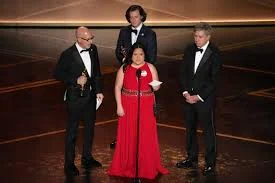
Under the bright stage lights, wearing a red dress and a pin bearing her daughter’s face, Gloria Cazares accepted an Oscar and held a silence that opened into a room nobody could ignore. The documentary all the empty rooms—built from intimate visits to bedrooms left as they were when children were killed in school shootings—took home the award for Best Documentary Short at the 98th Academy Awards, and onstage the film’s message shifted from remembrance to appeal.
What is All The Empty Rooms?
Answer: It is a short documentary that follows a seven-year project documenting the bedrooms of children killed in school shootings. Director Joshua Seftel accepted the Oscar onstage alongside journalist Steve Hartman, producer Conall Jones and Gloria Cazares, whose daughter Jackie was killed in the Uvalde school shooting. Seftel told the crowd that the film focuses on four empty rooms that belonged to four young children—Hallie, Gracie, Dominic and Jackie—and then passed the mic to Cazares to speak for her child.
Why did the filmmakers focus on bedrooms, and what did they find?
Answer: Bedrooms served as quiet, detailed archives of lives interrupted. Cazares said that Jackie’s room has been “frozen in time, ” a description echoed across the project: small, personal traces that reveal personality and possibility. In Jackie’s room, a piece of chocolate remained in a spot saved for a day that never came, and an “About Me” chalkboard listed a wish to be a veterinarian. Photographer Lou Bopp reflected on the work’s intimacy, writing that personalities “shone through in the smallest details of their untouched rooms — hair ties on a doorknob, a toothpaste tube left uncapped, a ripped ticket for a school event. ” Those details are the film’s evidence against abstraction: they make the losses specific and human.
What was said onstage, and what response did family members ask for?
Answer: Onstage, the award acceptance became a platform. Seftel named the four children whose rooms frame the film and invited Cazares to speak. Wearing the image of Jackie, Cazares made a direct appeal: “Jackie is more than just a headline. She is our light and our life. ” She pressed for change, saying that “gun violence is now the number one cause of death in kids and teens” and expressing the belief that if people could see these empty bedrooms, the nation would respond differently. The moment converted an industry accolade into a public plea from a mother whose private grief had been shown to millions.
Beyond the stage, the film’s approach—slow, detail-rich documentation over years—creates a different kind of evidence than statistics alone. The filmmakers and the family aimed to bridge private mourning and public memory by asking viewers to imagine what a frozen room means: the interrupted routines, the futures that were not lived. For families like Cazares’s, the camera’s careful attention was both an honor and a demand that the public imagine the human consequences behind headlines.
The Oscar gives the project wider visibility, but it also returns us, as the film does, to the stillness of bedrooms. Standing again in the small square of light that once fell across Jackie’s chalkboard and the saved chocolate, the audience is left with the same question the filmmakers posed: what will seeing these rooms move a nation to do? For Gloria Cazares, the hope she voiced onstage remains the film’s enduring request—that public witnessing lead to change and that the memory of those children be more than a moment on an awards night.