Shock opening: the new macbook air arrives with a $100 price increase even as Apple places a lower‑cost MacBook Neo roughly $500 below the base Air — a configuration shift that reframes the Air from default entry model to deliberate middle ground.
Is the New Macbook Air still the smart middle ground?
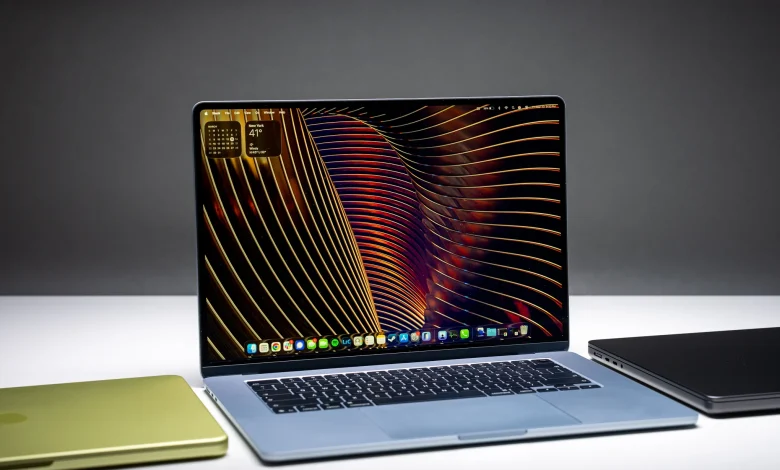
Verified facts: The Air now ships with an M5 chip, Wi‑Fi 7, and faster base storage that starts at 512GB rather than 256GB. The M5 iteration uses a 10‑core CPU and a 10‑core GPU. Battery performance on the 15‑inch model registered endurance of roughly 13 to 14 hours in mixed web browsing, messaging and streaming with screen brightness between 50 and 100 percent. The 15‑inch Air retains a six‑speaker setup and a 12‑megapixel Center Stage camera. A separate model named the MacBook Neo exists as a lower‑priced option positioned beneath the Air by approximately $500.
Analysis: Those upgrades make the Air a clear step up in capability from the lower tier. Faster storage and the M5’s GPU gains move the Air closer to pro‑class responsiveness, while battery life and multimedia hardware keep it highly practical for everyday users. But the concurrent introduction of the Neo shifts consumer perception: the Air is no longer the unquestioned entry device, it is the “step‑up” device — more costly and more capable, yet sharing part of the market the Air used to own outright.
What do benchmark and configuration changes actually show?
Verified facts: Storage speeds measured in Amorphous Disk Mark tests are more than twice as fast on the M5 Air than on the prior M4 Air, bringing Air storage performance on par with M5 MacBook Pro configurations. In multicore workloads such as 3D rendering measured in Cinebench, the M5 Air posts gains over the M4 Air, with the largest improvements in GPU performance. Benchmarks place the 15‑inch M5 Air slightly below the 14‑inch M5 MacBook Pro, a gap attributed to the Pro’s active cooling fan and resulting thermal advantage. The Air’s base price is $100 higher than the M4 generation, but that base now includes larger storage.
Analysis: The benchmark gains are concentrated where users notice them most — GPU and storage throughput — which directly affect tasks like media editing, large file handling, and application responsiveness. The Air narrows the performance distance to the Pro in many everyday workflows but remains thermally constrained relative to the fan‑cooled Pro. The storage boost at the base configuration makes the price increase less naked, but it also signals product segmentation: Apple appears to be moving customers through a clearer ladder — Neo, Air, Pro — each with differentiated tradeoffs in price, thermals, and raw sustained performance.
Who benefits, who is exposed, and what must change next?
Verified facts: The product lineup now explicitly includes the MacBook Neo as a lower‑cost sibling, the new Air with M5 and higher base storage, and M5 MacBook Pro models that continue to offer fan‑assisted thermal headroom and higher sustained benchmark scores. A notable retail discount on a 2025 M5 MacBook Pro model reduced that Pro’s street price substantially below prior retail, highlighting active pricing movement across tiers.
Analysis: Consumers seeking ultraportable performance benefit from the Air’s incremental gains — faster storage and GPU improvements make it more capable than before. Price‑sensitive buyers benefit from the Neo sitting well below the Air. The exposed risk is confusion and potential overlap: if the Neo delivers sufficient everyday performance at roughly half the Air’s cost in some cases, Apple must clarify why buyers should choose the Air over the cheaper alternative beyond marginal speed and finish. The occasional steep discount on Pro models also compresses the perceived value ladder, complicating purchase decisions for buyers weighing cost versus capability.
Accountability and recommendation: Verified facts show an intentional repositioning of devices and base configurations. Analysis suggests the company should publish clearer guidance on intended use cases for each model and on sustained performance expectations under real workloads. Buyers should be able to compare sustained thermals, storage throughput, and real‑world battery endurance side by side. Until that transparency improves, the new product layout will leave some buyers uncertain whether the new macbook air is the right balance of cost and capability for their needs.