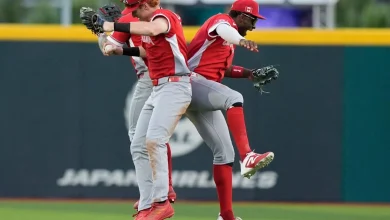
In Houston, amid the clatter of bats and the tight grin of an underdog manager, francisco cervelli scoffed at the idea of being grouped with legends. He did not seem affronted so much as amused — a coach who has spent the last year building Italy’s program and who now watches his 4-0 Pool B team advance after wins that included beating Team USA and Team Mexico by a combined 17-7.
Why does Francisco Cervelli’s run with Italy matter?
Because it is proof in motion. Cervelli, a native of Venezuela with Italian roots, spent 13 years as a major-league catcher and then devoted a year to developing Italy’s baseball program. That work has translated to results: Italy finished 4-0 in Pool B and earned a spot to meet Team Puerto Rico for a place in the WBC semifinals at Daikin Park. Puerto Rico general manager Carlos Beltran said, “Italy has a lot of talent on their squad. Also, Cervelli, their manager, he’s a great coach and even better human being. ” The comment underscores how Cervelli’s leadership has reshaped expectations for a squad that many viewed as an underdog.
How are Latino managers using the WBC as a proving ground?
The tournament has become a stage where winter-league success and national-team performance build managerial résumés. Albert Pujols, for example, helped the Dominican Republic reach the WBC semifinals after a managerial debut that included winning a winter league and Caribbean Series title. Yadier Molina has drawn praise guiding Puerto Rico and has previous experience in the Venezuelan winter league and consecutive WBCs. Benji Gil, who guided Mexico in the last two WBCs and led a club to Pacific League and Caribbean Series titles, noted the limits of visibility when he said, “I’ll be honest, it’s kind of sad that you don’t see a lot of these guys even get interviewed. ” Gil added that he will “just continue trying to do the best job that I can” for the organizations he manages. Together, these paths — winter leagues, national teams and the WBC itself — are forming a parallel pipeline of experience that can be weighed alongside traditional club-level coaching résumés.
What are the barriers and what is being done?
Structural barriers are apparent. Latinos make up around 30 percent of MLB players but only four of 30 teams are led by Latino managers. Last winter’s nine managerial openings produced little movement for Latino candidates; many were not selected despite visible success in winter and international play. Benji Gil pointed to that gap and to the disappointment of not receiving interviews. At the same time, organizations and individuals are responding by leaning into the WBC and winter circuits as places to demonstrate readiness. Cervelli’s year of program-building for Italy, Molina’s repeated WBC roles, Gil’s championship runs with the Charros de Jalisco, and Pujols’ rapid transition from player to national-team manager all illustrate concrete steps managers are taking to expand their résumés and public profiles.
Veteran voices in the game amplify the argument that playing pedigree and international success deserve attention. Dusty Baker, who managed Nicaragua in the WBC, voiced a simple belief about player-to-manager transitions: “It shouldn’t be someday. He should be managing right now. ” That sentiment, directed elsewhere in the tournament, resonates with a larger push to recognize managerial capability beyond conventional hiring routes.
The short-term response is already visible on the field: the WBC is spotlighting tactical decisions, clubhouse management and program development in a compressed, high-stakes environment. For managers like Cervelli, the tournament is both test and résumé — a place to translate a year of behind-the-scenes building into headline results.
Back in Houston, the image that opened the tournament — a leveled stare, a shrug at being called a peer to Molina and Pujols — takes on new meaning. The scoff is not dismissal but focus: francisco cervelli has used a year of preparation, a decade-plus of playing experience, and the WBC’s glare to argue that managerial readiness is earned in many forums. As Italy prepares for its next game, the question lingers: will these performances change how clubs evaluate candidates when the next round of vacancies opens? For now, Cervelli’s team moves forward, and the tournament keeps offering the proof managers like him need to press their case on a larger stage.