Paralympic Hockey — ‘I want to be a role model’: Canada’s McGregor leads with quiet confidence

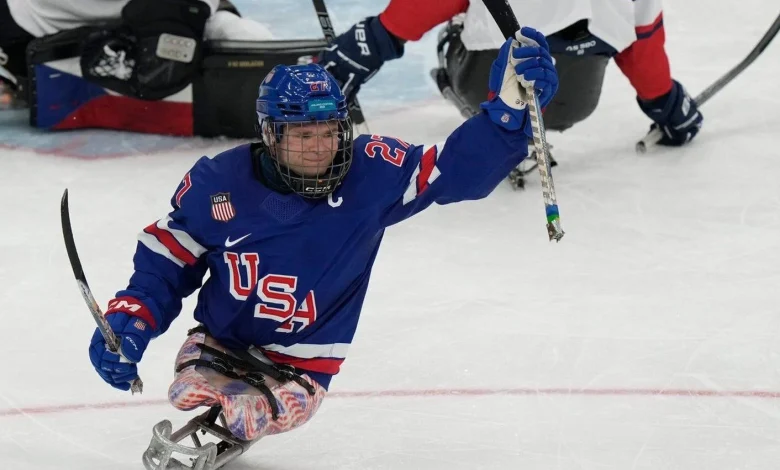
Under the bright arena lights in Milan, a loose puck slid behind China’s net and Liam Hickey darted in to jam it home — the goal that sealed Canada’s 4-2 semifinal and kept this run of paralympic hockey alive. Tyler McGregor, captain of the Canadian side, stood rinkside with a quiet clarity: “We’re going to write our own story. ” The remark hung in the air, part restraint and part challenge, as Canada prepared for a familiar opponent in the gold-medal game.
What is at stake in Paralympic Hockey in Milan?
The stakes are both national and historic. The United States arrives seeking what no nation has done here: a clean sweep of the ice hockey tournaments at both the Olympics and the Paralympics. Sunday’s gold-medal match will again be a U. S. -Canada showdown in para ice hockey, mirroring the Olympic finals on the same ice earlier in the Games. The U. S. advanced with a dominant 6-1 semifinal win over the Czech Republic, while Canada edged past China 4-2 in a tighter contest. For both teams, the match is about more than a medal — it is an opportunity for pride, redemption, and to extend or halt a rivalry that has defined the sport at its highest levels.
How did Canada reach this point?
Canada came into the knockout rounds after an overwhelming preliminary showing, with a 26-1 goal differential in earlier play. Yet the semifinal revealed new pressure: China pushed the Canadians early, keeping the puck in Canada’s zone and forcing a tense back-and-forth. With under five minutes remaining, Hickey’s decisive goal broke the deadlock and punched Canada’s ticket to the gold-medal game.
Tyler McGregor framed the moment as an opportunity to move past Olympic storylines and claim a Paralympic chapter of their own. “Those were two of the best hockey games I’ve ever seen, but this is our story at the Paralympics and we have a chance to bring home a gold medal for Canada, ” he said, emphasizing team identity over external comparisons. Forward Liam Hickey pointed to recent losses to the U. S. in major finals as fuel: “That kind of fuels us. We’ve learned from those. They’re a great team and we’ve had a great rivalry for as long as this sport’s been around. ” The head coach, Boris Rybalka, kept preparations straightforward: “It’s going to be one great game. And we’re going to be ready. Simple. ”
Who leads the U. S. push, and how do both teams frame the rivalry?
The U. S. roster has shown clinical finishing and celebration moments in Milan, with players such as Josh Pauls and Declan Farmer marking scoring highlights through the knockout stage. U. S. forward Kevin McKee captured the mindset succinctly: “We got to do our part, right? So they got the two done, so now it’s our job and we just got to bring it home for them. ”
For Canada, winning carries the weight of national identity and the sting of recent defeats. Forward Adam Dixon put it plainly: “It is a source of pride for us just to win, like we believe Canada is THE hockey country and we want to prove that. ” That mix of national expectation and personal motivation gives the final a charged human dimension: players chasing personal legacies, captains aiming to set examples, and coaches aligning routine with resolve.
What does the outcome mean going forward?
A U. S. victory would complete a rare double on the ice at these Games, creating a historic sweep of Olympic and Paralympic titles. A Canadian win would be redemption in a rivalry that has seen multiple championship reversals, and it would mark another gold-medal appearance fulfilled after tight, competitive play. Either result will reshape immediate narratives inside the sport and leave individuals with milestones that can influence how they are seen at home and by emerging players watching the arena stands.
Back in the same Milan rink where the semifinal drama unfolded, Tyler McGregor returned to the small rituals that steady leaders: adjusting his helmet, scanning teammates, and repeating that quiet determination to “write our own story. ” The arena held both the echo of past defeats and the possibility of a new chapter — a reminder that for players on both sides, the final is at once a national contest and a deeply personal moment to lead, to answer rivalries, and to try to become the role models they say they want to be.