Tpc Sawgrass Tensions: Cameron Young Solving a ‘Tricky’ Stadium Course as Davis Love III Plans a Pete Dye Revival

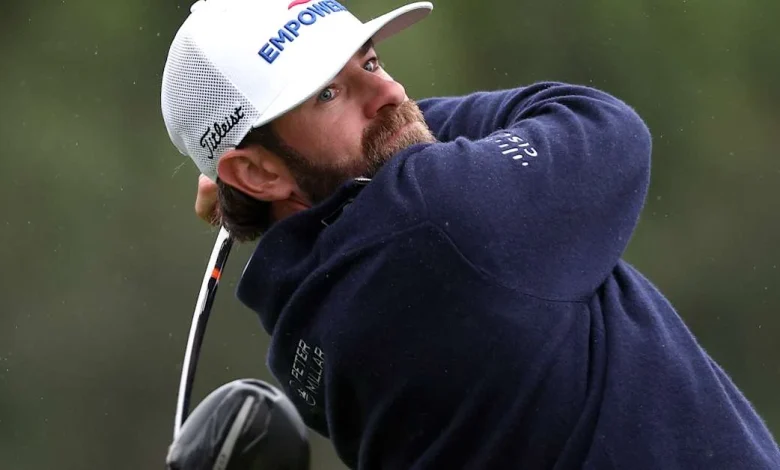
Cameron Young has framed the challenge of tpc sawgrass in one word: “tricky. ” That characterization underpins two parallel storylines at THE PLAYERS Championship—Young’s attempt to overcome a course that has chewed up previous chances, and an architectural push led by Davis Love III to reintroduce elements of Pete Dye’s original intimidation. Both narratives converge on March 12–15 (ET) at the Stadium Course.
Background and context: a player, a course and recent form
The recent headlines rest on a narrow set of facts. Cameron Young has a mixed history at THE PLAYERS Championship: in four prior starts he made three cuts with a best finish of T-51, and he finished tied for 61st at six-over in last year’s renewal. At the start of this week he marched into contention, carding a 5-under 67 in the morning wave to sit solo second, one shot behind Xander Schauffele and at 9 under for the week.
Young arrives with momentum from earlier starts this season: a T-55 at the AT& T Pebble Beach Pro-Am, a T-7 at the Genesis Invitational and a T-3 at Bay Hill. He is listed 15th in the world and carries one PGA Tour win, and he has emphasized preparation and decisiveness as tools to combat the course’s visual and strategic traps. Meanwhile, the course itself is in an active state of change under the stewardship of Davis Love III and PGA Tour officials, who have referenced a return to design elements from an earlier era of the layout.
Tpc Sawgrass changes and why they matter
The architectural thread is explicit: Davis Love III, a two-time Players champion and course architect working with the PGA Tour, has directed modifications intended to restore some of Pete Dye’s original character. Those interventions include pushing tees back on several par-5s, adding mounding on the par-4 14th, replanting a tree that once overhung the fairway on the 6th hole, and enlarging the driving range—work that has required digging a lake and reshaping dirt on the property.
Love and PGA Tour officials have combed archival photos to identify a visual benchmark for restoration, repeatedly citing a late-1980s iteration as the target. One practical consequence Love has highlighted is that flatter greens installed over time have reduced surface contour and hampered drainage and firmness after rain; reintroducing slope and contour is part of the stated goal.
Deep analysis: how course shifts affect championship outcomes
Those course adjustments interact directly with the player-side dynamics documented this week. Young has identified specific tee shots and visual cues that have worked against him at tpc sawgrass in previous years; his approach this week—marked by preparation with his caddie Kyle Sterbinsky and by a focus on decisiveness—appears calibrated to contend with a layout that rewards firm choices and penalizes hesitation. In the short term, moving tees and altering mounds shifts risk-reward equations on par-4s and par-5s, potentially changing where birdie opportunities and forced carries occur.
The changes also carry second-order effects: reintroducing slope to greens alters putting lines and the value of approach precision, while reshaping fairways can change preferred angles into key greens. For players chasing major-season form, these adjustments affect not only scoring this week but also preparation for the stretch of elite events that follow. Young himself framed the week as a chance to put himself in contention ahead of bigger tests, underscoring how course design and player readiness are mutually influential.
Expert perspectives
Direct commentary from the two protagonists illuminates the strategic contours. Cameron Young, professional golfer, PGA Tour, described the course succinctly: “I feel if you’re not decisive, if you’re unsure of what you want to do, it can really kind of rear its head at you. ” Young credited the work he and his caddie Kyle Sterbinsky have done on preparation and planning as central to navigating the Stadium Course’s demands.
Davis Love III, two-time Players champion and course architect working with the PGA Tour, articulated the restoration aim plainly: “What I want to see is Pete Dye back in the golf course. ” Love has overseen visible interventions already and framed the project as an exercise in selecting the era of Dye’s vision to emulate, with 1989 repeatedly cited as a target moment.
Broader implications and the run-in to the majors
The interplay between player adaptation and course restoration matters beyond a single championship. For elite competitors eying major championships, tpc sawgrass functions as both a proving ground and a rehearsal space: it tests decisiveness, shot-shaping and strategic preparation under tournament pressure. For the PGA Tour, the choices made by Love and officials about which historical picture to restore will influence how the Stadium Course is perceived by players and fans, and how it challenges field composition and strategy in future renewals.
Looking ahead
As play proceeds through March 12–15 (ET) the immediate question will be whether Cameron Young’s tactical reset and Davis Love III’s restorations combine to elevate scoring variance or to reintroduce the stern test that once defined the Stadium Course. Will the revived features of Pete Dye’s architecture produce the kind of strategic demands that reward decisiveness and preparation—or will the modifications produce new, unforeseen contours in championship play at tpc sawgrass?