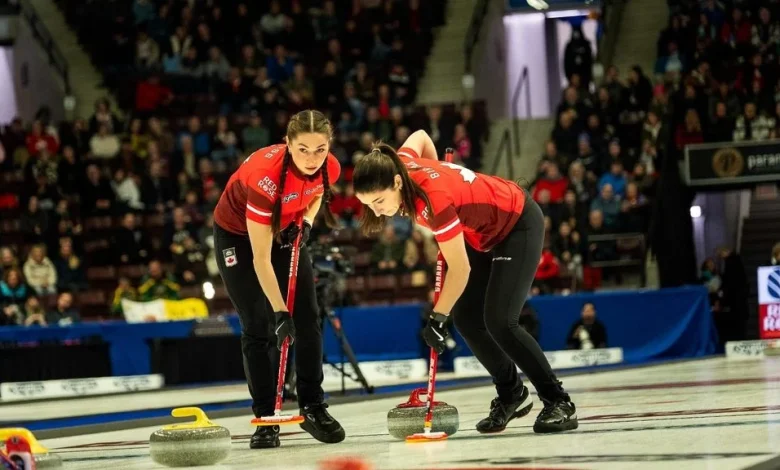
The women’s world curling 2026 arrives in Calgary with an unexpected vacancy at the top: several recent dominant teams are absent, transforming what might have been a predictable title defense into an open competition. The Manitoba-based quartet led by Kerri Einarson will play before live fans at the Winsport Event Centre, and the event schedule runs March 14-22 with opening session matchups and a playoffs format that guarantees high stakes from the first draws.
Background & context
The tournament takes place March 14-22 in Calgary. Session 1 is set for Saturday, March 14 at 4 p. m. ET and features China vs. Scotland, Canada vs. Sweden, Norway vs. Türkiye and Japan vs. Switzerland. Subsequent sessions across March 14–17 list matchups that include Canada facing the United States and Denmark later in the round-robin. The field comprises 13 teams, and the top six teams will advance to playoffs: pool winners move directly to semifinals on March 21, while four others contest earlier playoff berths. The gold-medal final is scheduled for Sunday, March 22 at 3 p. m. local time, 5 p. m. ET.
The landscape is notable for who is not here. The Olympic podium’s top three teams are missing from the entry list, including reigning world champions and long-running title contenders. That absence — along with the presence of rising squads and several first-time world participants — is a central reason the women’s world curling 2026 looks markedly different from recent editions.
Deep analysis: what the open draw means competitively
With multiple recent world titleholders absent, the competition’s balance shifts. The vacuum left by those teams, who accounted for seven of the last eight world crowns, removes a predictable axis of dominance and elevates the importance of depth, experience and adaptation during the round-robin. Canada’s entry, skipped by Kerri Einarson, arrives as an experienced outfit that has navigated world championship pressure before, but the path to the podium will run through a congested mid-tier where a single loss can reshape playoff odds.
Operational factors matter: this edition returns live spectators to the arena, altering atmosphere and potentially influencing in-game momentum. Einarson, who last skipped Canada on home ice in a COVID-restricted bubble, underscored the difference between that experience and the present one. Teams that adapted to quiet, clinical conditions in past seasons must now manage raucous crowds, new broadcast dynamics and added travel routines. Those shifts can advantage crews that prepared with extended practice time together, whether by arriving early or adjusting accommodation plans ahead of the opening draw.
Scheduling also plays a tactical role. Early-session pairings — for example Canada vs. Sweden in Session 1 at 4 p. m. ET — create immediate tests of readiness. The tournament’s progression, with pool winners bypassing an extra playoff round, rewards consistent round-robin play and penalizes slow starts. In a field described as more ‘wide-open, ‘ the margin for error tightens; mid-event momentum swings could carry a dark-horse team to the semifinals.
Expert perspectives and on-ice voices
Kerri Einarson, skip of Team Canada, framed the emotional return to Calgary plainly: “It’s going to be pretty amazing to be able to have fans in the stands, ” she said, noting the difference from the prior Calgary worlds played under heavy restrictions. Einarson added that her team felt ready for the assignment and excited for their home-ice opportunity.
Val Sweeting, teammate on Team Canada, spoke to national aspiration: “We’d love to keep that gold in Canada and come home. ” Sweeting emphasized the legacy those absent champions established and the Canadian team’s goal to continue the country’s recent successes at the world level.
Karlee Burgess, making her first world championship appearance with the Manitoba-based squad, said she’ll lean on teammates’ experience during the debut, highlighting the internal balance of youthful introduction and veteran steadiness on the roster.
Women’s World Curling 2026: regional and global impact
The altered competitive mix has implications beyond the arena. National selection systems that produced different lineups for this event — including teams who won or lost domestic qualifiers shortly before the championship — will face scrutiny based on results here. The absence of certain Olympic podium teams also shifts international ranking narratives and can accelerate the global exposure of teams that make deep runs.
For Canadian curling, a home world championship with fans present restores an experiential continuity interrupted by the pandemic era and creates a moment for national attention on the sport. For other federations, standout performances at this tournament could influence funding, selection confidence and momentum heading into subsequent international windows.
As the draws progress through March 14–22 and the playoff picture clarifies, one central question will drive attention: which team can capitalize on an open field, manage the return of live crowds and navigate the compact schedule to claim the title at home?
Will the combination of experience, early momentum and crowd support be enough for Canada, or will a new champion emerge from this reshaped field at the women’s world curling 2026?