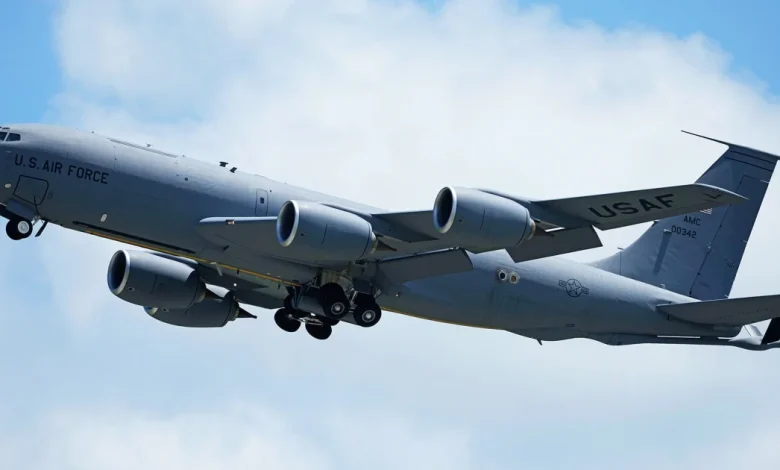
A US military refuelling plane crash in western Iraq prompted search-and-rescue operations and produced immediate, conflicting accounts about the cause and the status of the crew. U. S. Central Command has framed the event as non-hostile, while other statements and claims leave core questions unresolved.
What does the Refuelling Plane Crash reveal about the official response?
U. S. Central Command (CENTCOM) has described an active rescue effort after a KC-135 refuelling aircraft went down in western Iraq during Operation Epic Fury. CENTCOM said the incident occurred in friendly airspace and involved a second aircraft; that second plane landed safely. CENTCOM also stated that the loss was not due to hostile fire or friendly fire and that rescue efforts were ongoing.
Early accounts reflected uncertainty about crew numbers and casualties. Initial statements noted at least five personnel on board; a subsequent CENTCOM update confirmed that the KC-135 went down at approximately 2 p. m. ET and that four of six crew members were dead, with rescue operations continuing for remaining personnel. Military procedures on identification of the deceased remain in force: service member identities are being withheld until families are notified.
What does the documented evidence show, and what remains unverified?
- U. S. Central Command: acknowledged the loss of a KC-135 refuelling aircraft in western Iraq, said the incident occurred in friendly airspace during Operation Epic Fury, and that rescue efforts were ongoing.
- CENTCOM further stated that a second aircraft was involved and that the second aircraft landed safely.
- CENTCOM posted timing for the loss at approximately 2 p. m. ET and later confirmed four of six U. S. crew members were dead while rescue continued for the remaining crew.
- Pentagon briefings and military tallies cited broader campaign casualties and injuries; Pentagon spokesperson Sean Parnell has provided counts of wounded and severely injured service members in the wider operation.
Unverified claim: an armed group calling itself the Islamic Resistance in Iraq has asserted responsibility for shooting down a U. S. tanker. That claim has not been corroborated by CENTCOM, which maintains the loss was not the result of hostile or friendly fire. The discrepancy between CENTCOM’s characterization and the insurgent claim is central to the ambiguity surrounding cause and accountability.
Verified fact and informed analysis are distinct here: verified facts are those publicly stated by CENTCOM and Pentagon officials about location, timing, aircraft type, rescue activity, and casualty counts. Informed analysis must treat the insurgent claim as an unverified assertion until corroborated by the ongoing investigation and by physical or forensic evidence from the crash site.
Who must answer the outstanding questions and what should follow?
CENTCOM has placed the incident under investigation. That formal inquiry must address the technical chain of events—whether the loss resulted from a flight mishap during an aerial refuelling operation, a midair collision, a mechanical failure, or hostile action. The investigative remit should include flight data recovery, communications records between the two aircraft involved, maintenance and mission logs for the KC-135, and eyewitness and sensor accounts from the crash zone.
Key accountability rests with the military chain overseeing Operation Epic Fury and with investigative authorities charged with establishing cause. Families of the fallen require timely, complete information; military protocol on notifications must be followed while investigators preserve evidence. Given CENTCOM’s public assertion that the loss was not due to hostile or friendly fire, the investigation’s findings should be released in a manner that distinguishes verified technical conclusions from unverified claims.
Transparency is the immediate remedial action that would reduce confusion and speculation. A clear, evidence-based timeline of events and a forensic explanation of how the KC-135 was lost are necessary to restore confidence in operational safety and to prevent similar losses. Public clarity is essential to understand how this refuelling plane crash occurred and to prevent repeat losses.