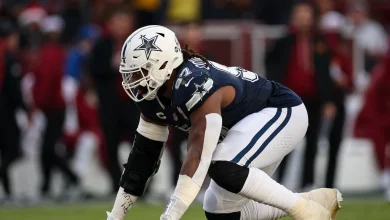
Kalyn Ponga’s decision to change national allegiance has immediate implications for the national rugby league landscape: the International Rugby League board has unanimously approved his application to represent New Zealand at the Rugby League World Cup, a move that the board treats as final under tier-one eligibility rules.
What does National Rugby League eligibility change mean for Kalyn Ponga?
Verified fact: The International Rugby League board unanimously approved Kalyn Ponga’s application to defect from Australia and represent New Zealand at the Rugby League World Cup. Kalyn Ponga wrote to the International Rugby League as part of his case; the board considered he had a strong case because a nines tournament in 2019 marked his only senior appearances for Australia. The board’s decision clears the way for Ponga’s first Kiwis appearances at this year’s World Cup and, under the same tier-one eligibility changes, means Ponga will never represent the Kangaroos.
What are the verified facts and documents behind the switch?
- Kalyn Ponga publicly stated at this year’s NRL season launch that he would consider switching allegiances from Australia to New Zealand, the country of his father’s birth.
- Ponga subsequently submitted written material to the International Rugby League; the IRL board reviewed the application and approved it at a board meeting on Wednesday night.
- The IRL treated the 2019 nines tournament as Ponga’s only senior appearance for Australia when assessing his eligibility.
- Ponga had earlier withdrawn from Kangaroos duty in 2024 to focus on the NRL pre-season, a decision noted in the record of his representative availability.
- The IRL’s tier-one eligibility changes are being applied as final in this case, removing the prospect of future Kangaroos selection for Ponga.
- Ponga is one of the NRL’s few Western Australian-born players but lived in Queensland in his youth and therefore remains eligible for State of Origin under the residency and parentage provisions now in place for New Zealand and England internationals.
- The board approval positions Ponga among players being considered for the Kiwis alongside James Fisher-Harris, Leo Thompson and Knights teammate Dylan Brown.
Who benefits and what accountability follows?
Analysis: On the face of the documented facts, New Zealand’s selection pool gains a marquee attacking option; the acquisition is described in the record as a boost to New Zealand’s hopes of winning a World Cup for the first time since 2008. The International Rugby League’s application of tier-one rules in a unanimous decision demonstrates a finality that alters representative pathways for players in similar positions. That finality carries operational consequences for selectors and competition administrators within the NRL framework: teams and representative coaches must adjust selection expectations when a player’s prior senior appearances are narrowly defined and an approved change removes future eligibility for another tier-one nation.
Verified fact: the IRL’s policy on State of Origin eligibility was updated so that New Zealand and England internationals may play Origin provided they meet specific birth, parentage or residency conditions — being born in New South Wales or Queensland, having a father who played Origin, or having resided in either state prior to their 13th birthday. Ponga’s documented upbringing in Queensland places him within those provisions and preserves his Origin eligibility despite the national switch.
Accountability conclusion: The written record shows a single governing body decision has reshaped representation for Kalyn Ponga and, by extension, the national rugby league environment. Transparency demands that the International Rugby League publish the criteria applied in comparable cases and that selectors at national and representative levels disclose how they will treat players who change eligibility under the same rules. Where fact ends and interpretation begins has been signposted in the board minutes and the written application; regulators, teams and selectors now face a public expectation to explain how identical applications will be judged going forward to ensure consistent, auditable outcomes for the sport and its stakeholders in the national rugby league community.