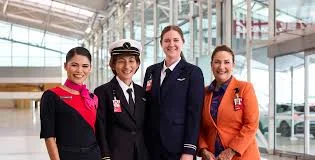
jetstar and Qantas operated 22 all-female flights this week carrying more than 2, 500 customers while hosting hands-on career days for students — a visible demonstration of women in aviation that raises an urgent question: how much is symbolic momentum, and how much is structural change?
What is Jetstar highlighting — and what remains unaddressed?
The airlines mounted a coordinated programme that placed more than 50 women across 22 flights on 10 domestic routes and organised career immersion events for students. Captains and managers led both airborne and on-ground activities: QantasLink Captain Tomoko Sakurai Dahlstrom flew several International Women’s Day services and addressed students at the Qantas NextGen Aviators Career Day; Jetstar Eastern Regional Flying Manager Captain Narelle Coooper framed the flights as a showcase of the depth of talent across the workforce. On the ground, the Jetstar Career Immersion Day in Melbourne partnered with Melbourne University and RMIT to host more than one hundred students for talks and interactive sessions delivered by almost 100 pilots, engineers, operations specialists and aviation leaders.
What do the numbers and programs actually show?
Facts presented by the Qantas Group point to measurable shifts alongside explicit acknowledgements that more work remains. The group’s Women in Leadership Program is described as preparing women for senior roles through workshops, coaching and networking; the Qantas Group states that women now occupy 40. 7 per cent of senior roles. The Qantas Board is 50 per cent female, and the senior executive team comprises seven women and five men. The operational initiative of staging nine flights on International Women’s Day, including a Jetstar service from Melbourne to the Gold Coast and a series of regional QantasLink services such as Tamworth to Sydney and Coffs Harbour to Melbourne, was presented as both celebration and recruitment tool. Leaders framed the events as pathways: pilots, engineers and operations staff delivered practical workshops intended to help students move from classroom to flight deck, hangar or operations centre.
Who benefits, who is accountable, and what should change?
Stakeholders who clearly benefit from the activity include the students who attended immersive career events and the women visible in operational roles during the flights. Group Chief People Officer Catherine Walsh acknowledged that there is “still work to do” and positioned the initiatives as part of a long-term effort to improve gender representation while strengthening the talent pipeline.
Verified fact: the Qantas Group runs targeted programs and publicly cites specific representation metrics. Informed analysis: staging all-female flights and career days creates role-model visibility and recruitment touchpoints, but the permanence of that impact depends on sustained hiring, retention and progression policies that extend beyond single-day events. The initiatives detailed emphasize development and return-to-work support for pilots at key life stages, which are relevant measures if applied consistently across time.
Accountability requires transparent milestones tied to the programmes already named: publish the targets and timelines for increasing the share of women in technical and cockpit roles; report year-on-year retention and promotion rates for participants in the Women in Leadership Program and the Female Pilot Council; and measure conversion from career-day attendance to enrolment in training pathways. Those are concrete extensions of the actions already described by the Qantas Group, Captain Tomoko Sakurai Dahlstrom, Captain Narelle Coooper and Catherine Walsh.
These flights and events are verifiable steps, but they must be connected to measurable, long-term change if they are to be more than a concentrated display on International Women’s Day. The industry and the airlines named in these initiatives will need to move from high-visibility demonstrations to published, auditable progress — so that the students who experience the Jetstar career day can realistically see a mapped path to those roles in future.