The iea is set to recommend the release of 400 million barrels from strategic reserves in a bid to restrain soaring crude prices tied to the U. S. -Israeli war with Iran. The proposal would be staggered over at least two months, with participating countries given up to 90 days to deliver allocations. Publication of the recommendation is scheduled for 9 a. m. ET ahead of a 10 a. m. ET G7 leaders’ meeting chaired by France.
Iea proposal and background
The proposal — described by a national minister as the largest in the agency’s history — would mark a significant escalation from the prior coordinated release in 2022, when member countries withdrew 182. 7 million barrels in two stages. Germany’s Economy Minister Katherina Reiche confirmed the 400 million barrel figure and said Germany would participate. The United States and Japan are set to be the largest contributors, and participating states would have up to 90 days to deliver their allocations.
Deep analysis: pace, market dynamics and operational limits
Analysts emphasise that the pace of daily stock releases will determine market impact as much as the overall size. One scenario cited the release of 100 million barrels over a single month, which would equate to roughly 3. 3 million barrels per day — a fraction of an estimated current disruption of about 20 million barrels per day with the Strait of Hormuz effectively blocked. Markets showed scepticism: oil prices rebounded as traders questioned whether the planned release could offset potential supply shocks from the conflict.
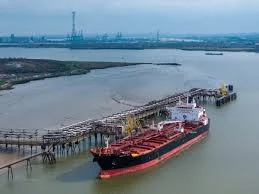
Operationally, the move cannot be instantaneous. Key decisions on country allocations and timing remain to be finalised, and the staggered approach over at least two months suggests a calibrated attempt to stabilise prices without creating new logistical bottlenecks. Maritime risk is rising: three additional vessels were reported hit by unknown projectiles in the Strait of Hormuz, bringing the total struck since the conflict began to at least 14, underlining dangers for shipping and the importance of timing in any reserve release.
Expert perspectives and what comes next
Voices from governments and ministers framed the proposal as unprecedented and urgent. Sara Aagesen, Spain’s energy minister, said: “I would say it is the largest proposal in the history of the International Energy Agency. ” Katherina Reiche, Germany’s Economy Minister, confirmed her country’s participation and the 400 million-barrel figure. Prime Minister Sanae Takaichi of Japan set out a parallel course of action: “Rather than wait for formal IEA approval of a co-ordinated international reserve release, Japan will act first to ease global energy market supply and demand, releasing reserves as early as the 16th of this month, ” she said, announcing 15 days’ worth of private-sector reserves and one month of state reserves to be unlocked ahead of any formal IEA operation.
The G7 energy ministers expressed broad support for proactive measures, stating: “In principle, we support the implementation of proactive measures to address the situation, including the use of strategic reserves. ” French President Emmanuel Macron is due to chair the leaders’ meeting where the timing and mechanics of any coordinated action will be discussed at 10 a. m. ET. While no country currently faces a physical shortage of crude, leaders are weighing whether market interventions now can prevent deeper disruptions later.
Whether the iea recommendation will be sufficient to cool prices hinges on daily release rates, international coordination on allocation, and the security environment for tanker traffic. If the coordinated plan moves forward, its design will be judged not just by the headline 400 million-barrel total but by how quickly, predictably and safely that oil reaches markets.