Sleeper Cells: Interior Minister Alexander Dobrindt and an Expert Face a Growing Security Question

An intercepted, encoded broadcast and a terse government alert have put the phrase sleeper cells at the center of a new security discussion. U. S. authorities say an encrypted transmission believed to originate in Iran was relayed across multiple countries and flagged as the kind of message that could be used to activate prepositioned operatives outside the country.
Are sleeper cells being activated outside Iran?
U. S. intelligence intercepted an encrypted transmission that analysts judged likely of Iranian origin and potentially intended for clandestine recipients with the necessary encryption key. The message was relayed across several countries shortly after the death of Ayatollah Ali Khamenei in a U. S. -Israeli attack, and a federal alert sent to law enforcement agencies described the transmission as the sort of communication that might serve as an operational trigger for “sleeper assets” operating beyond Iran’s borders. The alert warned that while the exact contents could not be determined, the sudden appearance of a new international rebroadcast station warranted heightened situational awareness but did not tie an operational threat to a specific location.
What history and evidence point to external attacks?
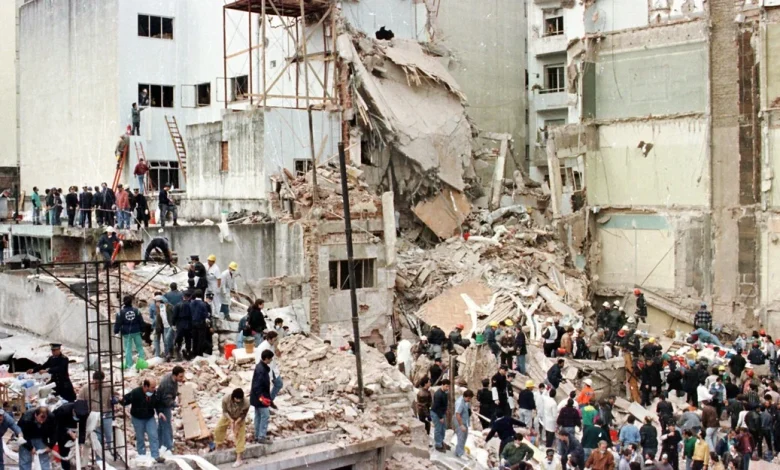
Officials and analysts point to a record of Iranian-backed or Iranian-linked operations outside the Middle East as the context for concern. Past attacks attributed to Hezbollah and others include bombings in Buenos Aires in the 1990s and a 2012 suicide bombing in Burgas, Bulgaria. Authorities have disrupted suspected plots in a range of countries over the years, and an Iranian diplomat was arrested and later convicted in connection with the supply of a bomb intended for an attack in Europe. Since the 2020 assassination of Qasem Soleimani, Iran has attempted more operations abroad; U. S. authorities say they disrupted 17 plots targeting the homeland in recent years, and MI5 Director General Ken McCallum noted that U. K. authorities had dealt with 20 distinct Iranian-backed plots in a nearly three-year span. At the same time, analysts note that Tehran’s capacity to sustain large projectile campaigns in the Middle East has shown signs of decline, even as the risk of external retaliation grows as the wider conflict continues. President Trump put the human stakes plainly: “I guess” Americans should be worried. “We plan for it. But yeah, you know, we expect some things. Like I said, some people will die. When you go to war, some people will die. “
How are authorities responding, and what are experts saying?
The federal alert instructed law enforcement to increase monitoring of suspicious radio-frequency activity. In Germany, Interior Minister Alexander Dobrindt said security services are closely monitoring the situation and that authorities stepped up protection at sensitive sites, including synagogues and Israeli or U. S. consulates. Experts point to a hybrid approach to aggression. Hans-Jakob Schindler, senior director of the Counter Extremism Project, said, “It’s clear that the defense strategy of the Islamic regime in Iran really is hybrid warfare. Therefore, the idea that they could also try to increase the economic and political costs of military confrontation globally by using terror attacks as they had a history in the past of doing is definitely something that is very clear. ” Law-enforcement disruption, heightened physical protection of potential targets, and electronic monitoring of coded broadcasts and radio-frequency channels are the primary measures described in alerts and public statements. Past disruptions and arrests are cited as evidence that authorities can interdict plots, but officials caution that the appearance of new encrypted rebroadcast stations and encoded transmissions requires continued vigilance.
The intercepted transmission itself remains an open question: its precise content cannot yet be determined, and the alert emphasizes increased situational awareness rather than a specific, actionable plot. That ambiguity is at the heart of the security dilemma posed by sleeper cells — the signals can be murky, the intent unclear, yet the historical record of overseas operations keeps officials and communities alert.
Back where the story began, the image of an encrypted message crossing borders lingers. The alert has already changed behavior — more monitoring, more patrols, more protection at targeted sites — but it has not erased uncertainty about whether sleeper cells will be activated or when. The balance between readiness and restraint, between watchfulness and public calm, will shape how governments and societies live with this new, encoded risk.