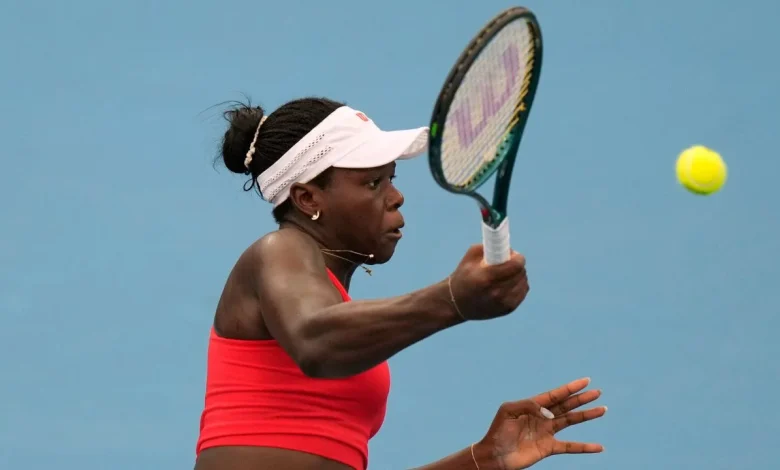
At the sunlit courts of the BNP Paribas Open in Indian Wells, mboko closed out a tense tiebreak and raised her racquet with the calm of a player who has already weathered big moments this season. The 19-year-old Canadian defeated Kimberly Birrell 6-4, 7-6 to move into the third round, a win that followed a first-round bye for the 10th seed.
How one match reflects a larger run
The victory over the world No. 69 was more than a line in a results sheet. Mboko collected seven aces against Birrell’s two, committed five double faults, and converted five of her seven break opportunities. She also won 69 percent of her first-serve points, while Birrell managed 54 percent on first serve and converted four of seven break points. Those numbers underline a player blending firepower and situational control—a combination that has carried her through finals appearances earlier this season and a run to the round of 16 at the Australian Open.
Mboko’s win and what it reveals
Beyond the single, straight-set victory, the tournament showed Mboko’s expanding range. Seeded 10th at Indian Wells, she will next face 23rd-seeded Anna Kalinskaya of Russia. Earlier in the year, Mboko reached finals in Adelaide and in Qatar, and those experiences are visible in how she closed out pressure moments in the tiebreak against Birrell. In doubles play, Mboko teamed with Mirra Andreeva to upset the fourth-seeded pair of Elise Mertens and Zhang Shuai, winning 6-4, 4-6, 10-8—evidence that her game is adaptable across formats and that the Canadian contingent at the tournament is producing notable results in both singles and doubles.
Canada’s broader presence at Indian Wells
Mboko’s performance came amid strong showings from other Canadian players. Félix Auger-Aliassime rallied past Gael Monfils 6-7, 6-3, 6-4 in a second-round match, finishing with 14 aces, four double faults, 34 winners and 29 unforced errors. The ninth seed will await the winner of the match between 17th-seeded Andrey Rublev and Montreal’s Gabriel Diallo. Denis Shapovalov also advanced, edging Tomas Martin Etcheverry 6-3, 2-6, 7-6 and setting up a meeting with second-seeded Jannik Sinner. Shapovalov’s match statistics underscored a high-risk, high-reward approach; he recorded 14 aces, nine double faults, 43 winners and 49 unforced errors.
Other Canadians remain in the draw: Gabriel Diallo and Leylah Fernandez were scheduled to play second-round matches on Saturday. The depth of results—singles victories, a doubles upset, and multiple players moving forward—paints a picture of a national group finding traction at a marquee tournament.
What this means and what comes next
For mboko, Indian Wells is both a testing ground and a proving stage. The combination of recent finals appearances and consistent serving statistics suggests the 19-year-old is converting experience into results. The immediate task is clear—prepare for a seeded opponent in Kalinskaya and build on momentum—but the broader storyline is the way Canadian players are navigating big-match moments across the draw.
Back on the same California court where the match began, the image of Mboko walking off after the tiebreak feels less like an endpoint and more like a waypoint. She leaves Indian Wells with a third-round berth and a doubles upset in her pocket, while teammates continue to push deeper into the tournament. Whether this week becomes a springboard will depend on matchups ahead, but for now the metrics and results offer a tidy explanation for why her name is rising on draws and discussions alike.
As the sun set over the tournament site, the same raised racquet that closed the day suggested a young athlete steadily turning promise into performances—and a Canadian contingent that is asserting itself, match by match, under the desert sky.