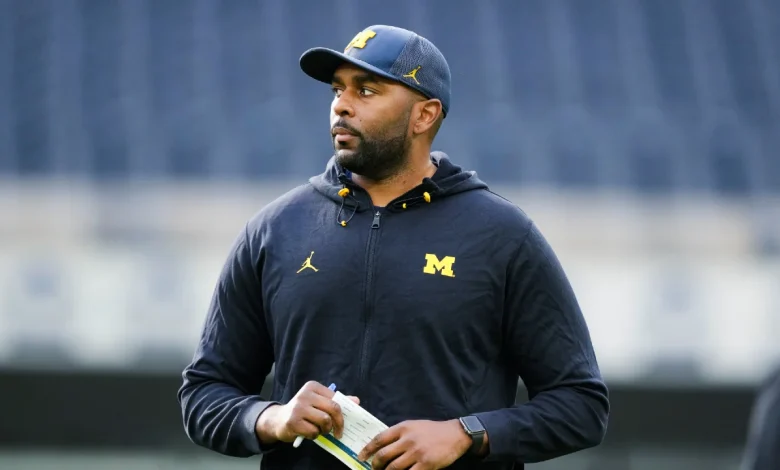
sherrone moore, the former University of Michigan coach fired amid an internal inquiry into an inappropriate relationship, pleaded no contest to two misdemeanor counts, a development that collapsed a pending felony home invasion case and left a string of more serious charges dismissed. The deal, announced as a judge prepared to hear a challenge to the arrest, reshapes both the criminal exposure and the public narrative surrounding the incident that led to his December arrest.
Sherrone Moore: Background and Court Outcome
The legal resolution stems from charges that followed Moore’s dismissal on Dec. 10 after the university cited an inappropriate relationship with a staff member. Prosecutors had filed three more serious counts, including felony home invasion, stalking in a domestic relationship and breaking and entering in a domestic relationship. Those felony charges were dropped when Moore pleaded no contest to trespass and malicious use of a telecommunications device in a relationship, both misdemeanors. Sentencing is scheduled for April 14 (ET).
Details presented in pretrial proceedings and a probable cause hearing described a confrontation in which Moore confronted the woman involved in the relationship, blamed her for his firing and threatened self-harm with kitchen implements inside her apartment. Court records and detective testimony recounted that knives and scissors were involved and that the woman’s attorney placed a 911 call when the incident occurred. A judge handling the matter noted that “things have changed” as the case evolved.
Deep Analysis: What the Plea Deal Reveals
The plea agreement narrowed the legal framing from alleged domestic felonies to misdemeanor-level criminal misbehavior tied to an intimate-partner dispute. Assistant prosecutor Kati Rezmierski said the prosecution’s view shifted based on additional evidence and consultation with the woman through her lawyer, concluding that the evidence supported criminal misbehavior within an intimate relationship rather than the initial domestic-violence theory.
Clinically, that transition matters in three ways: it reduces the statutory penalties Moore faces in sentencing, it eliminates the need for a contested trial that would have aired sensitive relationship details, and it preserves certain procedural outcomes such as continued GPS monitoring imposed by the judge. One of the remaining misdemeanor counts carries a maximum penalty of six months in jail, though defense counsel predicted no further custodial time beyond the two nights Moore spent in custody after his arrest.
Expert Perspectives and Courtroom Voices
Judge J. Cedric Simpson, presiding in the courtroom where the plea was entered, observed that the posture of the case had shifted by the time of the scheduled hearing. Kati Rezmierski, assistant prosecutor, explained the prosecutorial recalibration as rooted in additional evidence and conversations with the woman through her counsel.
Defense attorney Ellen Michaels framed the result as a validation of concerns she had raised about the investigation and emphasized Moore’s desire to move past the episode with his family. Michaels noted that advising a no-contest plea allowed Moore to avoid a trial and spend time with his daughters and wife during the period since his dismissal.
Detective Jessica Welker of the Pittsfield Township Police provided investigative testimony in the probable cause hearing describing the 911 call placed by the woman’s attorney, Heidi Sharp. Sharp, the victim’s attorney, told police that her client had called to say “Sherrone is here, ” and that screaming could be heard on the phone. Testimony offered details that Moore had at one point armed himself with knives and that he said, “You ruined my life. You ruined my life, ” while backing the woman toward a living area.
These firsthand courtroom statements framed both the original felony filings and the reasoning behind prosecutors’ later decision to accept misdemeanors in exchange for dropping the more serious counts.
Broader Consequences and a Forward-Looking Question
The plea deal closes the immediate criminal chapter while leaving institutional and reputational consequences in place: Moore was fired after two seasons as head coach, succeeding a coach who had won a national championship before departing for the NFL. The agreement spares the parties a public trial but raises questions about how universities, prosecutors and legal advisors balance privacy, accountability and criminal exposure in intimate-partner incidents involving public figures.
As the April 14 (ET) sentencing approaches and GPS monitoring remains in effect, observers will watch whether the court imposes any custodial sanction and how the resolution influences institutional policy on staff misconduct and post-employment investigations. How will athletic programs and legal systems adapt procedures when high-profile personnel disputes intersect with criminal allegations?