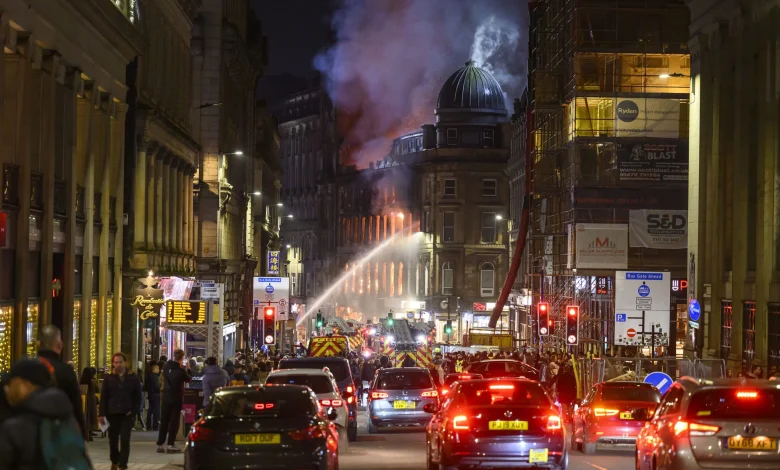
In glasgow a blaze that began in a Union Street shop has torn through adjacent Victorian buildings, collapsing a dome on a corner of the Central Station complex and forcing the station’s closure while emergency teams battle the fire.
What happened at Glasgow Central?
Verified facts: A fire was reported in a shop on Union Street at about 15: 45. The fire spread into a block of Victorian buildings next to the city’s Central Station; sections of roof and at least one dome have collapsed. Drone imagery and on-scene observations indicate large-scale structural failure in multiple parts of the affected buildings. A coffee shop in the building at the centre of the blaze has been destroyed and its owners described the loss as devastating. Evacuations of nearby hotels and residents took place as the fire progressed.
Analysis: The trajectory—from a single shop fire to the collapse of historic masonry—highlights how quickly conflagrations can overwhelm older urban fabric. The collapse of the dome underscores the vulnerability of ornate, load-bearing elements once fire takes hold of roof structures and internal supports. The destruction of commercial premises will compound economic disruption in the immediate area while the physical damage creates complex recovery needs.
How extensive was the emergency response and what does it reveal?
Verified facts: The Scottish Fire and Rescue Service mobilised a large response, including 15 appliances and three high-reach vehicles, with water pumped from the River Clyde to fight the blaze. Initial dispatches began with six appliances; the operation later expanded as the fire developed. Dozens of firefighters and specialist units have been engaged. Rail operator statements confirm Glasgow Central Station is closed until further notice and that no services will call at the station while the incident is active.
Analysis: The scale of apparatus deployed and the use of river pumping show the severity of the incident and the logistical challenges posed by a fire in a dense historic quarter. That such measures were required indicates the speed and intensity of spread. The station closure, confirmed by the rail operator, transforms this from a building fire into a transport crisis with cascading impacts on travel and commerce across the region.
Who is affected, what are the immediate impacts, and what comes next for Glasgow?
Verified facts: Train services between surrounding areas and Glasgow are expected to be impacted for several days as Central remains closed; the rail operator has advised there will be no services in or out of Central until at least the next morning and will update customers as the situation develops. Witness accounts described loud bangs and explosive-seeming events as parts of buildings failed; large crowds gathered around cordons while emergency crews worked. The full scale of damage remains unclear but multiple parts of the station-adjacent block appear to be completely destroyed.
Analysis: The compounded effects—loss of retail premises, structural collapse in a heritage context, and prolonged rail disruption—create overlapping challenges: emergency stabilisation, heritage and structural assessment, business recovery, and transport contingency planning. For commuters and regional services, the shutdown of a major urban terminus will require rapid operational decisions on where to terminate trains and how to move passengers. For property owners and insurers, determining fire origin, paths of spread and the sequence of collapse will be central to recovery and accountability.
Accountability conclusion (verified vs analysis): Verified facts establish a severe fire that began in a Union Street shop, required a major tactical response by the Scottish Fire and Rescue Service, destroyed commercial premises and caused the collapse of parts of the adjacent Victorian complex, prompting a closure of Glasgow Central. Analysis shows this incident raises urgent questions about the resilience of historic station-adjacent structures, the adequacy of preventive oversight for high-risk retail premises, and the preparedness of transport operators for prolonged closures. Transparency over the fire’s origin, an expedited structural assessment, and a published recovery and signalling plan from the rail operator are immediate, evidence-based steps that the public should expect as glasgow works to restore safety and services.