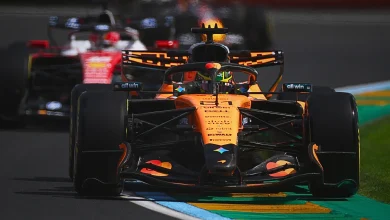
alex dunne climbed from eighth to finish third in the opening Formula 2 sprint race in Melbourne, and has completed a move into the Alpine F1 team academy that frames this moment as an inflection point for his 2026 campaign.
What Happened in Melbourne?
The opening sprint race in Australia saw Dunne make a late charge through the field after starting eighth, passing Rafael Câmara and team-mate Gabriele Minì with three laps remaining, then overtaking Tasanapol Inthraphuvasak early on the final lap to cross the line in fourth. A penalty applied to Martinius Stenshorne promoted Dunne to third, with Joshua Duerksen taking the win and Noel León second. Dunne collected six points for the result and had qualified third for the feature race, which produced the reversed-grid starting order for the sprint.
What Happens Next for Alex Dunne?
The sporting developments off-track are as consequential as the result in Melbourne. Dunne has been named a fully fledged member of the Alpine young driver programme for 2026 while continuing to race for Rodin in Formula 2. The Alpine deal restores a direct link to a Formula 1 environment after his exit from another team’s development programme last September, and it creates regular opportunities to be assessed in top-level machinery: each F1 team is obliged to offer its young drivers four practice sessions across the season.
Relevant facts shaping the near term are these:
- Dunne will continue his second season with Rodin in F2 while carrying the Alpine academy badge.
- He does not yet have the super licence points required to serve as an official reserve for Alpine’s race drivers, Pierre Gasly and Franco Colapinto, but will receive practice chances to demonstrate his progress.
- He turned 20 last November and finished fifth in his debut F2 season, entering 2026 with two wins, two pole positions and eight podiums from the prior campaign.
What This Means for His F2 Campaign and Alpine Role
The combination of momentum from a podium-promoted sprint result and formal integration into Alpine’s academy recalibrates expectations. Dunne has tangible credentials from last season, having led the championship into the mid-season rounds before settling fifth overall, and the Alpine affiliation adds structured access to F1 practice sessions. Alpine F1 Team principal Flavio Briatore said that Dunne’s performances in Formula 2 and his F1 free practice work were impressive and that he is clearly a very talented young driver with pure, natural speed.
For the rest of the season Dunne’s objectives are clear: convert racecraft into consistent points-scoring finishes, leverage any F1 practice outings to sharpen pace and feedback, and build the super licence points total required to move closer to an official reserve role. The Melbourne sprint result provides championship momentum; the academy placement supplies development resources and visibility within an F1 team structure.
Uncertainties remain: the pace of rivals, the balance of performance across the Formula 2 field, and the timing of additional F1 sessions will all influence outcomes. The most prudent reading is that the Alpine link improves Dunne’s long-term pathway without guaranteeing an immediate seat in Formula 1. Fans and stakeholders should expect continued on-track aggression in F2 and measured development work with Alpine staff across practice opportunities and testing programmes. The immediate takeaway for those tracking his trajectory is simple: the season opener in Melbourne combined with the Alpine academy move establishes a clearer route for alex dunne