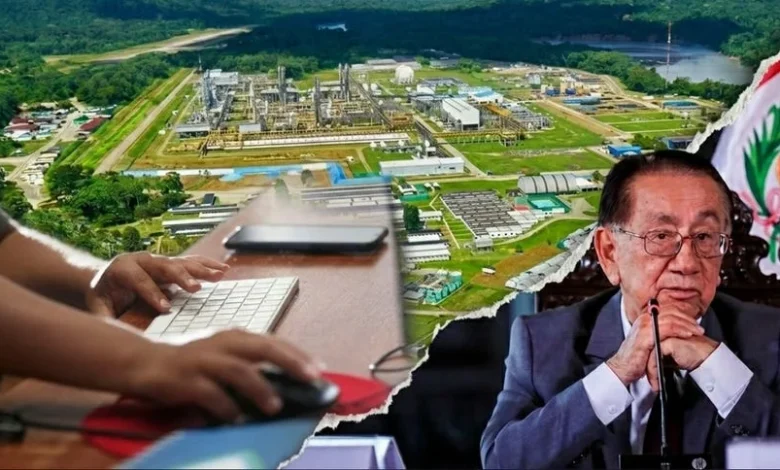
lima — Josué Gutiérrez, Defensor del Pueblo, rejected the government’s push for remote work and virtual classes as an immediate fix to the national gas shortage, saying those measures shift the burden onto workers and students. He delivered the criticism in a presentation before the Congressional Oversight Commission, urging technical contingency solutions rather than temporary closures. The measures follow a rupture in the KP43 pipeline in Megantoni, Cusco, which has constrained gas supplies and led authorities to prioritize essential sectors and promote telework in Lima Metropolitana and Callao.
Key developments and government response
The premier, Denisse Miralles, said the government’s priority is to restore the gas service and that state agencies and the private operator TGP are working on repairs at the Megantoni site, with a repair timeline described as 14 days. Miralles noted that TGP has committed to raising daily gas delivery from 70 to 80 million cubic feet, a change officials say will help reintroduce services such as GNV for taxis in Lima, Callao and Ica. The cabinet minister listed institutional participants engaged in the effort, including the Ministry of Energy and Mines, the Ministry of Labor and Promotion of Employment, the Ministry of Defense, the regulator Osinerming and the environmental oversight agency OEFA.
At the same time, the Ministry of Labor and Promotion of Employment has urged employers to prioritize telework where the nature of tasks allows, referencing existing telework legislation as the framework for that recommendation. The government has also limited certain vehicular movements in Lima Metropolitana to reduce demand for the affected fuel and protect supplies for households and key industries tied to health and food services.
Immediate reactions from oversight, business and education sectors
Josué Gutiérrez voiced clear indignation at the choice to present telework and virtual schooling as the primary response. He said that announcing closures as if the solution were simple — “don’t go to school, don’t go to work, do everything from home and problem solved” — understates the need for contingency plans that maintain electricity generation. Gutiérrez proposed alternative technical measures, including the temporary use of heavy liquid hydrocarbons to sustain power generation, and flagged active monitoring of environmental impacts after the gas leak, with attention to air and water quality in affected southern areas.
Business organizations and private school associations also questioned broad measures that suspend in-person activity. One national business confederation emphasized the educational cost already borne by children after prolonged school closures and warned that many families lack connectivity and devices for remote learning. A major export and commerce organization described the temporary stoppage of normal economic and educational activity as an unacceptable way to manage an energy contingency, arguing that it transfers the costs of public policy failures onto students, families, companies and workers.
What happens next in Lima
The coming days will focus on completing repairs at the Megantoni pipeline site and monitoring whether the increased daily flow pledged by TGP materially eases restrictions. Officials say the 14-day repair window anchors immediate expectations; oversight bodies will track environmental risk and service restoration. Meanwhile, debates over whether telework and virtual classes are temporary necessities or misplaced policy responses are likely to persist as decisions on targeted, technical alternatives proceed in the capital and affected regions.
Updated 08 March 2026, 10: 00 AM ET. The Defensor’s office and the government remain central voices as Lima residents and institutions await restored gas supplies and clearer contingency guarantees.