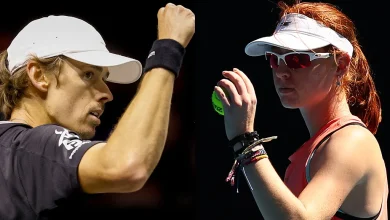
puerto rico’s reopening as a World Baseball Classic host produced a paradox: 18, 793 fans packed Estadio Hiram Bithorn to cheer a 5-0 win, yet the night was shadowed by last-minute insurance denials that sidelined marquee talent and forced a roster built of younger, unproven players.
What happened on the field?
Verified fact — Puerto Rico opened Pool A play with a 5-0 victory over Colombia in San Juan. Willi Castro, Eddie Rosario, Heliot Ramos, and Martin Maldonado each drove in runs as part of a five-run fifth inning that decided the game. Seth Lugo, the Kansas City Royals All-Star pitcher, started for the host team and delivered four scoreless innings, surrendering three hits, issuing two walks and recording three strikeouts. Lugo threw 36 of 62 pitches for strikes and was removed before the fifth inning because of the World Baseball Classic pool-play pitching restriction of 65 total pitches. Additional verified measurements of Lugo’s outing show an average fastball velocity of 92. 7 mph with instances touching 95 mph, effective use of his slurve and four-seam fastball, and a combined 28% whiff rate on his pitches.
How did roster complications transform celebration into scrutiny for Puerto Rico?
Verified fact — The lead-up to the tournament on the island had been marred by resentment. José Quiles, president of the Puerto Rico Baseball Federation, at one point threatened to withdraw the team when several high-profile Puerto Rican players were denied tournament insurance at the eleventh hour. The roster losses included notifications that Francisco Lindor and Carlos Correa were denied insurance. Catcher Victor Caratini and reliever Alexis Diaz were also denied coverage. Two-time All-Star right-hander Jose Berríos was denied insurance for pool play but remained a possible addition for later rounds. Enrique Hernández was already known to be unavailable after offseason elbow surgery.
Verified fact — Tournament insurance rules tightened after prior editions, in which a player injury had tangible consequences: Edwin Díaz suffered a season-ending knee injury celebrating a Puerto Rico victory in a previous WBC, and Jose Altuve missed regular-season games because of a WBC thumb injury. The stricter qualification process directly influenced who could participate this year. A last-ditch private offer from renowned Puerto Rican music artist Bad Bunny to cover insurance for two denied stars was not approved by their agencies or teams.
Who benefits, who is accountable, and what should change?
Verified fact — Despite the roster turmoil, the team’s leadership embraced the moment. Puerto Rico manager Yadier Molina said in Spanish, “We’re not going to bow our heads. We trust our talent, we trust our pitching, we trust the defense. ” Closer Edwin Díaz framed the squad’s motivation in familiar terms, comparing the present group to the 2017 team and asserting a collective “hunger to win. ” The players’ response delivered a home-field celebration that temporarily quieted the earlier bitterness.
Analysis — Viewed together, the facts reveal a structural tension: institutional risk controls (stricter insurance qualification) collided with national expectations and player willingness to compete. The immediate benefit accrues to the younger players who seized an unexpected opportunity to perform on a global stage and to fans who experienced a stirring home victory. The immediate losers are the high-profile athletes prevented from participating and, more broadly, the competitive narrative of a roster weakened by administrative limits rather than on-field decisions.
Accountability conclusion — Public transparency is warranted. Teams, player agencies, and the tournament’s insurance administrators hold fragments of the decision chain that produced these exclusions. The Puerto Rico Baseball Federation, represented by José Quiles, and team leadership, represented by Yadier Molina and players such as Edwin Díaz and Seth Lugo, have already articulated the emotional and competitive stakes. The evidence presented here — denied insurance for named players, the role of prior WBC injuries in tightening qualifications, and the unsuccessful private offer to secure coverage — supports a focused public demand for clearer disclosure of insurance criteria, timelines for denial notifications, and the decision-making roles of agencies and clubs.
Final recommendation — To preserve both player safety and the integrity of future tournaments on the island, stakeholders must publish the basis for coverage denials and timelines that allow federations to plan. The fans who packed Estadio Hiram Bithorn celebrated a win, but the unresolved insurance fallout means that puerto rico’s next steps must be framed by accountability measures if the island’s baseball hopes are to match its home-field passion.