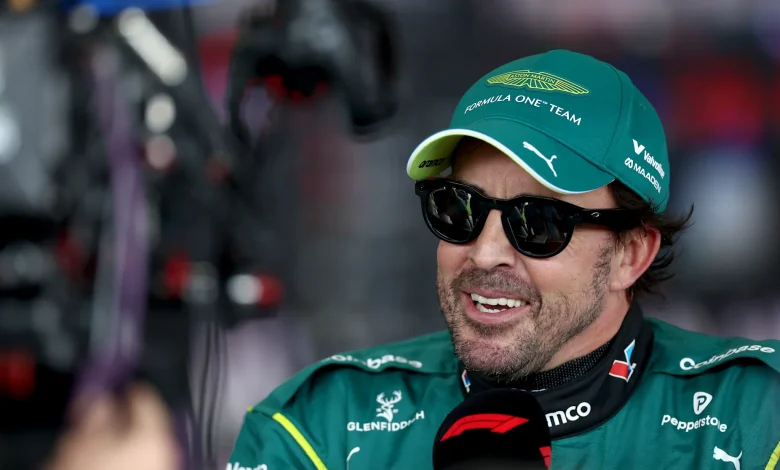
Fernando Alonso showed encouraging pace in qualifying, but the weekend was dominated by mechanical problems and safety alarms that left lawrence stroll’s stewardship under intense scrutiny. Alonso reached provisional Q2 contention with a 1m 21. 969s lap to finish P17, while Lance Stroll missed qualifying after a suspected Internal Combustion Engine failure that the team could not repair in time.
Background & context: limited running, big consequences
Aston Martin arrived in Australia linked to a new engine partnership with Honda and immediately faced the consequences of restricted running. Pre-season testing and early practice sessions were hampered by limited mileage; Fernando Alonso was ruled out of FP1 with a suspected power unit issue, forcing him to make up laps in FP2 and FP3. That deficit translated into tangible time on the timing screens: Alonso noted a reduction in the gap to the lead from roughly 4. 5 seconds to about 2. 5 seconds simply by completing more laps.
Mechanical faults compounded the problem. Lance Stroll was unable to take part in qualifying after a suspected Internal Combustion Engine issue in FP3, with the team unable to rebuild the car in time. The situation extended beyond a single component: Honda-engineered vibrations affecting hybrid batteries had restricted mileage in testing and returned as a critical threat at Albert Park. With spare parts limited, Aston Martin faced hard choices about how much to run the cars before later events on the calendar.
Technical and safety analysis: Lawrence Stroll and the Honda problem
Engine vibrations from Honda’s power unit emerged as the central technical challenge. The vibration has been severe enough to threaten hybrid battery integrity; teams discarded multiple batteries after fresh communication issues were detected, leaving Aston Martin with only one usable battery per car for the remainder of the weekend. Honda built a countermeasure on a dynamometer at HRC Sakura, and engineers fitted items at the track to protect batteries, but earlier failed attempts and a separate communication fault further reduced available spares.
The safety implications were stark. Team communication flagged extreme vibrations transmitting from the power unit to the chassis as a risk; one account warned that the magnitude of vibration could expose drivers to potential nerve damage. The team took countermeasures to allow cars to reach track mileage, but the prospect that neither car might be able to start the 58-lap race remained a live possibility given the limited battery reserve.
Fernando Alonso, driver for Aston Martin, framed the on-track progress as meaningful: “Probably yesterday we could all bet that we were not able to go through Q1 and we nearly made it, ” he said, stressing the importance of continuous running to unlock the car’s potential. Adrian Newey, designer at Aston Martin, explained the interplay between newly discovered communication faults and the persistent vibration issue, noting that while a dyno-based fix had been engineered in Japan, fresh problems had sidelined some components.
Regional and global impact: what Melbourne exposes about broader preparations
Aston Martin’s Melbourne weekend provides a case study in how narrow supply and reliability constraints can cascade into sporting and safety dilemmas. The team’s limited inventory of hybrid batteries, compounded by susceptibility to vibration, meant that a single additional failure in practice, qualifying or the race could render a car unable to continue that weekend. For a squad that joined forces with Honda only at the start of the season, the lack of spare parts and the need to preserve remaining components for forthcoming rounds heightened strategic conservatism.
Operationally, the team opted to prioritise survival and data collection over aggressive running, recognising that more laps produce setup learning but also consume scarce parts. With Lance Stroll sidelined from qualifying and Fernando Alonso narrowly missing Q2, the on-track consequences of these engineering challenges were immediate: reduced competitive prospects this weekend and an urgent inventory and reliability problem to resolve before the next race.
Beyond team walls, the episode underscores how supply-chain and engineering integration issues can turn into safety and sporting risks within a single race weekend. Honda’s countermeasures validated on the dyno and later at track provided limited reassurance, but the combination of battery scarcity and persistent vibration means the team must manage both components and driver exposure carefully.
As Aston Martin assesses repairs, spares and the safety posture for forthcoming events, questions remain about how best to balance aggressive development with component preservation — and how lawrence stroll will weigh those trade-offs going forward. Will the team secure additional parts and a lasting fix for the vibration problem before the next race, or will conservative preservation continue to blunt its on-track competitiveness?