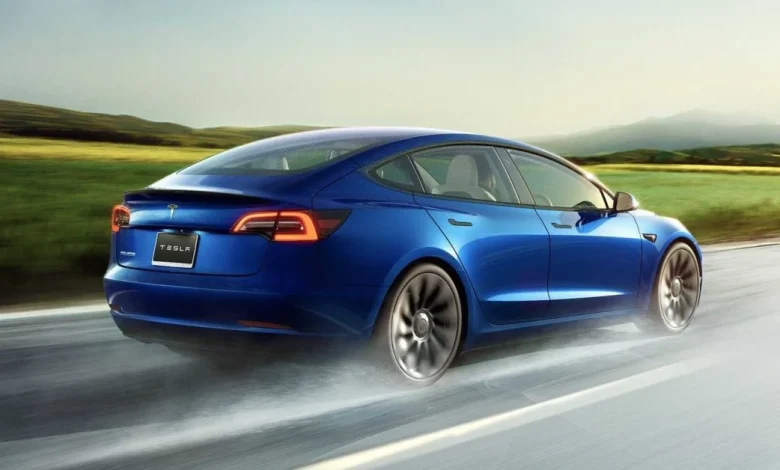
Canada Chinese Evs have moved from theoretical policy option to immediate market force as Ottawa activated an import quota with sharply reduced tariffs. The change has already emptied a major automaker’s local Model 3 inventory, advanced BYD’s certification filings with Transport Canada and created a constrained first-come, first-served window for 24, 500 vehicles — a shift that will reverberate through pricing, dealer strategy and supply chains.
Background: How Canada opened to Chinese-built EVs
Canada’s new framework permits up to 49, 000 China-built electric vehicles annually at a 6. 1% tariff, replacing earlier punitive duties that had effectively blocked imports since 2024. The quota system launches with 24, 500 slots available in the first six months on a first-come, first-served basis beginning March 1, with the second allocation covering the following six months. Import permits are shipment-specific, valid for up to 60 days and may be filed up to 30 days before a shipment’s expected arrival. Only original equipment manufacturers or their authorized Canadian representatives are eligible to apply.
In regulatory terms, the Canada Border Services Agency has repealed the prior surtax barrier and Transport Canada’s certification database lists models that can be cleared for immediate import. At the same time, Global Affairs Canada has framed the permit process with operational limits intended to steward equitable access.
Canada Chinese Evs: Supply Shock, Tariffs and Quotas
The market mechanics are immediate and concrete. One major automaker moved its remaining Canadian Model 3 inventory out of the country and redirected US-built units back to the United States rather than sell them in a market where tariff-driven pricing had inflated sticker prices. Earlier tariff swings had pushed a long-range Model 3’s price to a level that embedded roughly $25, 000–$30, 000 in duties, compressing demand.
Now, the arithmetic flips: Shanghai-built units listed in Transport Canada’s certification database can be imported at the new 6. 1% rate and priced materially lower than the tariff-inflated US-built units they replaced. Industry estimates indicate a pronounced advantage for manufacturers with certified, China-built production already listed; one automaker could capture several thousand of the initial 24, 500 permits, giving it a substantial early allocation while competitors await certification processing.
Operational details from the government add constraints that will shape market outcomes. Global Affairs Canada has signaled there is “no predetermined limit” on permits per automaker, a principle intended to avoid arbitrary caps, while also noting it is “not aware of any export-permit mechanism that might be administered by China, ” leaving import-side pacing primarily in Canadian administrative hands.
Regional ripple effects and what comes next
Registration activity in Transport Canada’s Appendix G already shows a notable development: BYD has added passenger vehicle factory listings for manufacturing plants in Shenzhen and Xi’an and appears positioned to move from commercial vehicles into the consumer market. BYD’s passenger car entries sit alongside existing BYD listings tied to buses and earlier commercial entries, and the company’s Ontario bus assembly footprint that has served local transit agencies since 2019 remains a tangible local presence.
That combination—an onshore commercial footprint plus newly registered passenger-vehicle factories—creates a fast path for a major Chinese EV maker to enter the Canadian consumer market under the quota. Yet BYD’s own recent sales pattern complicates the timing: the company experienced a sharp year-over-year decline in total sales in the referenced month, and for the first time in its history overseas shipments exceeded domestic sales. Those trends mean certification and logistic readiness will be as decisive as tariff math.
For Canadian consumers, the immediate consequence is unlikely to be an instant flood of deeply discounted models. Certification lead times, shipment-specific permits and the initial first-come, first-served allocation create a phased opening in which early movers with ready certifications will secure the first permits. Longer term the quota is set to expand to 70, 000 units per year by 2030, widening access beyond the initial winners.
Which actors will gain ground in the months ahead depends on a narrow set of verifiable facts: who secures the initial permits, which models are already certified in Transport Canada’s database, and how swiftly manufacturers complete any outstanding certification steps. The dynamics bind pricing, dealer inventory strategy and cross-border supply chains in ways that will be measurable and auditable as permits are issued and shipments arrive.
As Canada opens to Chinese-built vehicles under this new framework, the central question for industry and policymakers alike is how to balance rapid market access with robust certification and fair allocation — and whether early allocations will entrench first movers or simply mark the start of a more competitive Canadian EV market. Canada Chinese Evs are now a test case for that balance; how the allotments play out will determine whether the initial winners translate their head starts into lasting market share.