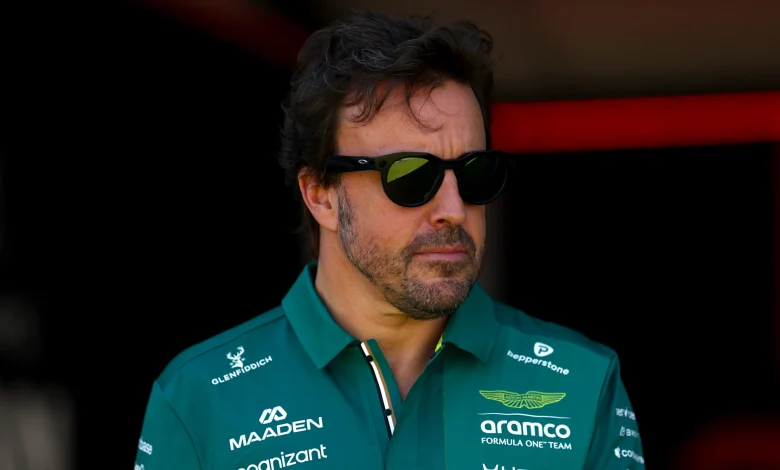
In the dim glow of the Albert Park pit lane, where engineers hover over hybrid systems and mechanics sweep debris from a curtailed practice session, fernando alonso emerged from the garage after a day many teams would rather forget. He had no FP1 running and managed only a short stint in the second practice, the limited mileage a stark marker of a weekend that began with technical uncertainty.
Fernando Alonso on ’embracing the challenge’
When asked to sum up the mood, Alonso used a phrase that captured both grit and realism: the team is “embracing the challenge. ” He acknowledged that Aston Martin and its engine partner had seen less mileage than rivals in pre-season testing and that the squad “still need to catch up a little bit in the weekend programme. ” Despite that, Alonso offered a cautious forward view: “This is Formula 1 – unfortunately technology is very complex and things require a little bit of time. We are running every day in free practice and every week, Grand Prix to Grand Prix, and maybe we don’t see the progress that we all want to see. But there are things happening – smaller or bigger, but there is always progress in the team, so let’s hope that this is visible in lap time as soon as possible. ”
On-track figures underline the constraint: Alonso recorded 18 laps during the second session after missing the opening practice, a tally that left little room for set-up work as teams adapt to new technical regulations.
Battery shortage leaves Aston Martin in a ‘scary place’ — team leaders speak out
Behind the frustration on track sat a more acute technical problem. Team principal Adrian Newey warned that Aston Martin had been reduced to its last two operational battery units after conditioning or communication problems sidelined two of the four carried to Melbourne. “The critical point is the number of batteries, ” Newey said, noting the team “came here with four batteries” and that they now “only got two operational batteries. ” The shortfall prompted a stark assessment that the outfit was in “quite a scary place to be in. ”
Newey went further, saying the shortage left doubt over whether the team could even contest qualifying or the race if further battery issues occurred. He described the day’s running as disastrous at the start, with Alonso unable to take to the track in the first session and teammate Lance Stroll completing only a handful of laps before retiring with the same problem. In the second session, both drivers completed limited runs and remained several seconds off the pace; Newey also relayed concerns about how much distance each driver could safely complete, suggesting Alonso believed he could manage only 25 laps and Stroll only 15.
Newey also revealed the manufacturer partner had no spare battery units to call upon, a limitation that compounded the operational challenge.
How the team is responding and where progress might come from
On the pit wall, Chief Trackside Officer Mike Krack framed the situation as difficult but manageable in terms of approach. He described Friday as “a difficult day” and added that such outcomes were “to be expected after our difficulties that we had in winter testing. ” Krack emphasized a methodical response: “If that is the situation, you try to do the best out of the situation. ”
He stressed the value of even limited running: “Every lap that you do, you learn – you see what you could have done better in that lap or in your settings, and we are playing catch-up with that, ” Krack explained. The team planned to work through the data gathered during the second practice overnight in order to extract performance and identify small but cumulative gains. Krack pointed to a modest improvement between the two sessions as evidence that a step forward had been made, however small.
The picture that emerges is one of a team balancing technical constraints with iterative learning. Engineers will pore over the handful of laps available; drivers will try to translate limited seat time into setup clues; and leadership must weigh short-term survival at a race weekend against longer-term development needs. The weekend at Albert Park thus becomes a test of adaptability as much as speed.
Back in the pits, with toolboxes closed for the night and a handful of data files to dissect, the same concrete scene from the morning takes on new meaning. The throttle maps and battery logs will tell whether the small steps Krack described can add up. If they do, fernando alonso and his team may yet convert a day of frustration into the kind of progress the Spaniard wants to see in lap time. If not, the uncertainty around batteries and mileage will remain the defining story of Aston Martin’s weekend at Albert Park.