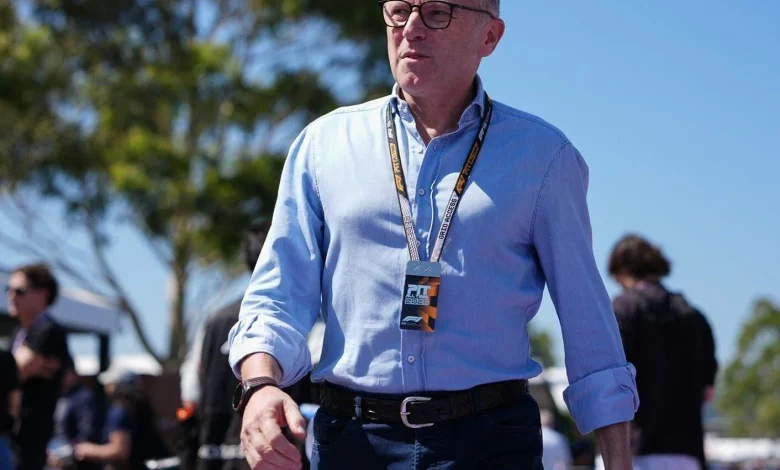
On a rain-bright morning at Albert Park, mechanics wiped down carbon fiber and drivers exchanged terse nods while the paddock buzzed with questions about a looming f1 race in the Middle East. The ordinary rituals of a Grand Prix weekend — radio checks, tyre runs, urgent briefings — were threaded with an unmistakable pause: the April events in Bahrain and Jeddah remain undecided as officials monitor strikes tied to the Iran war.
What the F1 Race delay means for the calendar
Formula 1 has two scheduled stops in the Middle East: Bahrain and the Saudi Arabian city of Jeddah, on April 12 and April 19 respectively. F1 officials met at Albert Park but left without a final call and without a set deadline for making one. Cancelling either round would carve an almost five-week gap in the season and create immediate logistical headaches for teams that build operations around fixed travel and cargo timelines.
The financial exposure is significant: cancelling the events could cost the sport more than $100 million, reflecting the sport’s reliance on race hosting fees and media rights. Organizers also face the short-term challenge of finding replacement venues; Malaysia, Turkey, Portugal and Imola have been mentioned as possible substitutes later in the year. The governing body has already postponed the World Endurance Championship curtain-raiser in Qatar that had been slated for March 26–28, illustrating how motorsport calendars are being shuffled in response to regional security concerns.
Voices from the paddock: safety, logistics and money
Inside the paddock, team leaders emphasized a cautious approach. Racing Bulls chief executive Peter Bayer, present at the meeting in Melbourne, said that no decision had been reached. “What we said is, first of all, it’s still a month to go, ” Bayer said. “Secondly, it’s also difficult to talk about it because I’m really sorry for the people and the situation (in the Middle East). But I also have to say that we are so focused on (racing) here, which is, for us now, really what matters at the moment. “And I know Stefano (Domenicali, F1’s president and CEO), and the FIA, they’re monitoring the situation. And I trust they make the right decision for us as a team. ”
Bahrain had already hosted two preseason F1 tests this season before the strikes tied to the Iran war began. In the immediate aftermath of those strikes, a smaller-scale test of wet-weather tyres in the region was called off — a sign that organizers are prepared to pause operations when conditions change. Teams measure risk not only in airspace advisories and event security but in the stability of local infrastructure and the safety of staff, families and local workers who support a race weekend.
What organizers and governing bodies are doing — and the wider ripple
The FIA and F1 leadership are cited as monitoring the unfolding situation. Historically, the sport has moved both ways: in 2022 the Jeddah weekend continued despite an attack that sent plumes of black smoke rising near the circuit, while the Russian Grand Prix was later canceled after broader geopolitical developments. The last time a scheduled F1 race was called off at short notice was the Emilia Romagna Grand Prix in 2023, when floods made racing untenable.
Organizers must weigh the human cost of running a global sporting event during a regional conflict, the contractual and broadcast obligations that underpin the sport’s finances, and the practicalities of moving people and freight across volatile air and sea lanes. If a decision to cancel is made, the immediate response teams will include series leadership, national promoters, race organisers and the FIA to coordinate refunds, rescheduling and potential replacement venues.
Back at Albert Park, the paddock’s routine persisted even as uncertainty hung over distant circuits. Mechanics tightened wheel nuts, engineers adjusted telemetry and team members talked through contingencies — the familiar choreography of preparation now suffused with the knowledge that a f1 race in April may not go ahead as planned. As officials continue to monitor the situation, the sport faces a choice between preserving the calendar and prioritizing safety and regional stability, leaving teams, local workers and fans waiting for a final word.