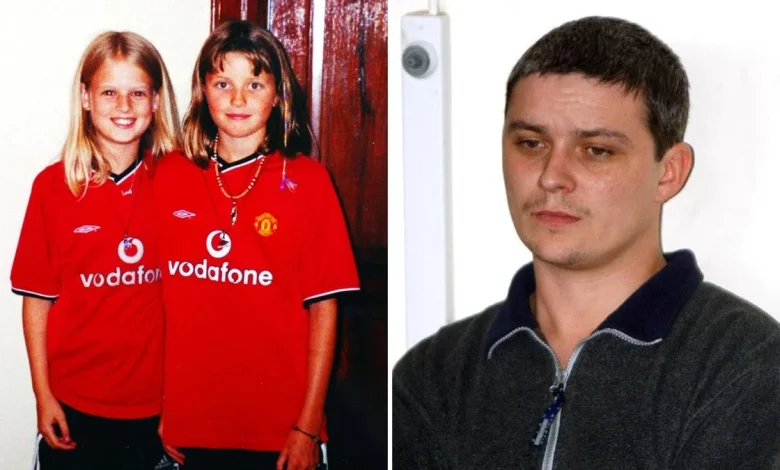
Ian Huntley was found unconscious and lying in a pool of blood in HMP Frankland’s recycling workshop on February 26, after what prison officers and investigators describe as a brutal ambush that left his head “split in two. ” He was rushed to hospital, where police say his condition remains serious.
What happened during the attack on Ian Huntley?
Prisoners had reportedly reacted with cheering during the incident that left the 52-year-old double child murderer gravely injured. The attack unfolded inside Frankland’s recycling workshop, where Huntley was struck at least six times in the head with a pole fitted with a spike. He was discovered unconscious and in a pool of blood and was stabilised at the prison before being moved to hospital.
Investigators have named triple murderer Anthony Russell as the main suspect in the assault. A doctor and a paramedic were flown to HMP Frankland to stabilise Huntley, but because of the severity of his wounds he was unable to be evacuated by air to hospital. Medical teams placed him in an induced coma after clinical staff judged he was so close to death that road transfer offered a more controlled option for moving him to definitive care. Two armed officers have been assigned to guard him around the clock at the hospital.
What is Huntley’s condition and where might he be moved?
A spokesperson for Durham Constabulary said on Wednesday that Huntley remains in hospital and that his “serious condition” has not changed. It remains unclear whether he is still in a coma and what prospects there are for his recovery.
It is understood that, because Huntley’s injuries are so severe, it is unlikely he will return immediately to HMP Frankland. One assessment discussed in the prison and health system suggests that if he is well enough to leave hospital his most likely destination initially would be Ashworth, a high-security psychiatric hospital. The NHS describes Ashworth as providing “assessment and treatment for men with a serious mental illness or personality disorder who are detained under the Mental Health Act and are assessed as presenting a grave risk to others. ”
How does the attack affect the wider human and institutional picture?
The assault on Huntley cuts across several human realities: the management of high-risk prisoners, the capacity of prisons to protect or segregate notorious inmates, and the continuing trauma tied to historic crimes. Huntley was serving a 40-year minimum jail term for the murders of 10-year-olds Holly Wells and Jessica Chapman in Soham in 2002. The girls were lured to his home, murdered and their bodies dumped nearly 20 kilometres away. Those facts anchor why his presence in a general prison environment has long drawn attention and strong feelings from other inmates.
HMP Frankland is described in official material as a maximum-security prison that houses some of the country’s most dangerous offenders. The scale and severity of the attack have prompted immediate operational responses at the prison and at the receiving hospital, where armed officers are maintaining continuous guard duties while clinicians manage Huntley’s critical condition.
For the families of the murdered children and for wider communities who followed the case, the attack raises renewed questions about safety, punishment and what a heavily injured, high-profile inmate should be allowed to face behind bars. Those questions now sit alongside clinical uncertainty about recovery and the practical decisions correctional and health authorities must take if he stabilises.
Back in the recycling workshop where the assault began, the scattered tools and a patch of dried blood are a grim marker of how a routine work space inside a secure prison can become the scene of a life-threatening act. As hospital teams and investigators continue their work, Ian Huntley’s fate remains uncertain — a reality that returns the story to that small, violent moment and the wider systems that produced it.