Condoleezza Rice Urges Trump Administration To ‘Take Care’ Of Iran For Good — A Stark Strategic Appeal


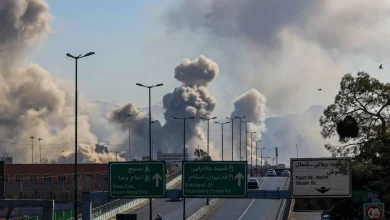
In a blunt intervention, condoleezza rice urged the Trump administration to “take care of Iran for good, ” framing the moment as a narrow window to strip Tehran of its ability to project force. Rice praised Operation Epic Fury and the U. S. -Israeli strikes that killed Supreme Leader Ayatollah Ali Khamenei, arguing that the United States faces a long-running threat that demands decisive action rather than a protracted new war.
Condoleezza Rice: Rationale Behind the Call
Condoleezza Rice, who served as U. S. national security advisor and secretary of state under President George W. Bush, laid out a historical and operational rationale for pressing the advantage. She asserted that “Iran has been at war with us for at least 47 years, ” and highlighted battlefield consequences of that posture, saying that estimates place as many as “75 or 80%” of U. S. casualties in Iraq on Iranian-made roadside bombs. Rice characterized the current strikes as an effort to “neuter” Iran’s military power and stressed that Iran has “developed the military capability to reach outside the boundaries of Iran, including Hezbollah and Hamas, which they both arm and equip. “
For Rice, the objective is kinetic and systemic: “If you can render Iran essentially incapable of military action against us and against our allies, that’s worthy, ” she said, urging leaders to “take care of it and render them incapable of those activities” while Iran remains vulnerable. Her comments place emphasis on disabling networks and capabilities rather than initiating open-ended occupation or wider conventional war.
Operation Epic Fury: Scope, Toll, and Stated Aims
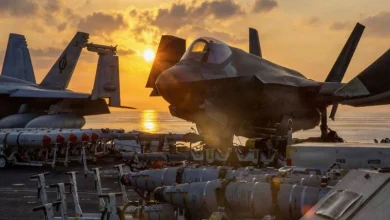
The operation Rice referenced, Operation Epic Fury, has been described in public briefings with specific force and casualty figures. CENTCOM provided figures showing the campaign has utilized more than 50, 000 troops, 200 fighters and two aircraft carriers. CENTCOM figures also list six American service members killed and 20 Iranian ships struck or sunk. The strikes have been coordinated with Israeli forces and include the strike that killed Supreme Leader Ayatollah Ali Khamenei.
Those operational details sit alongside diplomatic context: the coordinated strikes follow failed diplomatic efforts to negotiate Iran’s nuclear program, which Iran refused to abandon. Rice framed the current posture as an opportunity to remove Iran’s ability to coordinate with proxy groups and to blunt the transnational threat she sees as longstanding.
Wider Implications: Strategic Risks, Regional Fallout and the Moment to Act
Rice painted Iran’s future as “complicated” and described Tehran as “essentially, at this moment, defenseless, ” a condition she warned will not last. The strategic calculus she presents balances the immediate risk of escalation against the possibility of degrading Iran’s capacity to harm U. S. forces and partners. Past U. S. casualties in Iraq that she cited, linked heavily to Iranian-supplied munitions, are used to justify a posture aimed at disabling Iran’s ability to arm and direct proxies.
The human and material costs of the operation are already evident in CENTCOM’s tallies, and the broader consequences include political and economic reverberations noted by U. S. leadership responses. After the decision to strike Iran, efforts were launched to address associated economic effects, including spiking gas prices, though those measures were described as having limited effect so far.
Rice’s argument is narrowly framed: capitalize on a fleeting advantage to render Iran less capable of regional military action. She warned that inaction risks allowing Iran to recover its reach, and she cast decisive dismantling of military capability as both a defensive necessity and a strategic good.
As the administration weighs next steps, the central question Rice poses remains: can the United States and its partners translate a moment of Iranian vulnerability into enduring reductions in Tehran’s capacity to threaten U. S. forces and allied populations — or will those capabilities rebound once the immediate pressure subsides? condoleezza rice’s appeal leaves that strategic dilemma squarely on the table.