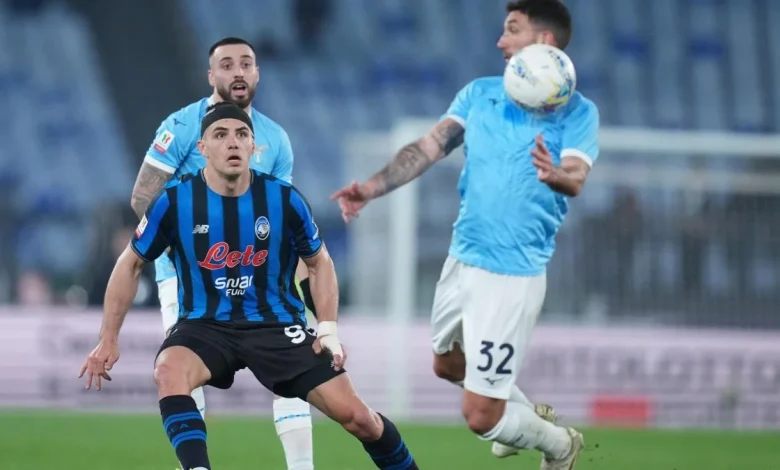
coppa italia began its second semifinal with a 2-2 draw as Lazio and Atalanta left the Olimpico level after an evening of alternating breakthroughs and late drama.
What Is the Current State of Play?
The first leg finished 2-2. Lazio opened through Dele-Bashiru and later Dia, only for Atalanta to reply Mario Pasalic and Yunus Musah, the latter marking his second consecutive scoring appearance. The match featured a low-tempo first half and a livelier second phase: an early disallowed Atalanta effort, a quiet 45 minutes followed by rapid exchanges after halftime, and late emotional moments sparked by an inadvertent arm contact between Kossounou and Zaccagni that drew disciplinary action for both managers.
Tactical notes embedded in the game: Lazio deployed Tavares wide on the left rather than Pellegrini and positioned Maldini as a central forward; Atalanta started with Hien and Kolasinac in defense and Krstovic up front. The encounter played out in an unusually empty stadium and will be settled at the return leg in Bergamo in roughly a month. The winner will face the victor from the Inter–Como tie in the final.
What Happens When Coppa Italia Return Decides the Finalist?
The return leg in Bergamo is the clear inflection point. With a 2-2 aggregate, both sides carry viable pathways: Lazio can lean on its attacking switches and the potential of players like Dia and Dele-Bashiru to unsettle the hosts; Atalanta can exploit its capacity for quick recovery, exemplified by Musah’s immediate response and the squad rotation that has shown resilience. Raffaele Palladino, Atalanta’s coach, framed the competition as a priority and called it “a dream” and the fastest route to European competition, signaling his side’s intent to press in the second leg.
Key match factors going into the return, all present in the first leg: set-piece and transitional moments (two early and late goals emerged from swift sequences), bench impact (several substitutions altered momentum after the hour), and disciplinary temperature (yellow cards to both managers and flashpoints among players). These elements suggest the return will be contested physically and tactically, with margin for error slim.
Who Wins, Who Loses?
Three outcomes are plausible and rest on concrete first-leg evidence:
- Best case for Lazio: Defensive fixes to limit transitions and a repeat of forwards’ finishing, allowing them to reach Bergamo with an away-goal cushion or controlled draw.
- Most likely: Tight, tactical second leg decided by a single incident—a set piece, a late substitution, or a moment of individual quality—mirroring the pattern of rapid swings seen in Rome.
- Most challenging for either side: A volatile match that produces multiple goals and disciplinary issues, leaving progression to chance and turning the tie into a physically draining contest.
Quick stakeholder readout:
- Winners if Lazio prevails: Players who can convert limited chances (Dele-Bashiru, Dia), the coach who adjusts formation and personnel.
- Winners if Atalanta prevails: Impact substitutes and form players (Musah), coach Raffaele Palladino for prioritizing the cup as the path to Europe.
- Losers in a poor outcome: Defenders whose errors led to goals and managers whose cards and protests escalate tension and reduce tactical focus.
What Should Fans and Clubs Anticipate and Do?
Prepare for a decisive, tightly managed return in Bergamo where small adjustments will have outsized effects. Teams should prioritise minimising avoidable errors in transition and managing emotional triggers that produced disciplinary measures in the first leg. Coaches must weigh early substitutions that altered momentum in Rome; players who proved decisive off the bench warrant careful monitoring. For observers tracking routes to European qualification and trophy contention, the return will be the inflection that defines which side advances toward the final and the broader season narrative: coppa italia