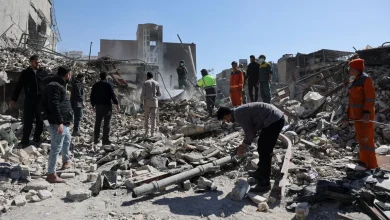
In kurdistan, senior officials are engaged in urgent talks even as nearby military actions and retaliatory strikes cross borders. Two separate rounds of high-level telephone diplomacy — one between European foreign ministers and one between regional security leaders — are coinciding with a pattern of aerial bombardment and counterattacks that officials say threaten local stability.
What are Greek and Turkish ministers discussing about Middle East developments?
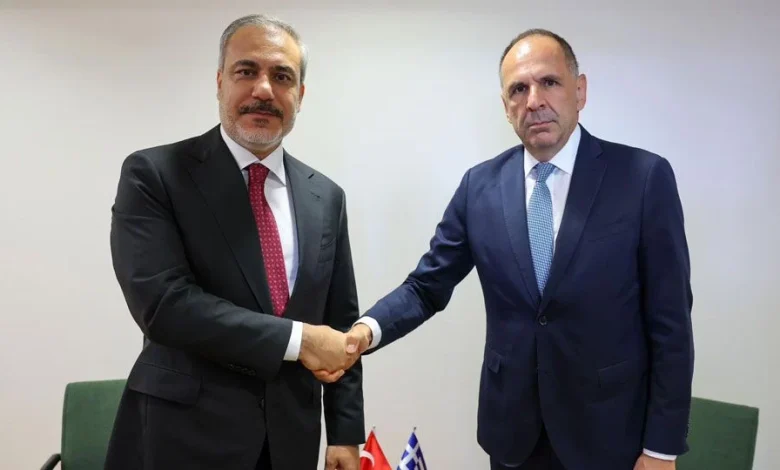
Greek Foreign Minister Giorgos Gerapetritis held a telephone call with Turkish Foreign Minister Hakan Fidan focused on recent developments in the Middle East and rising regional tensions. That exchange is presented by participants as centered on the broader escalation and its international implications.
Verified facts (named officials and institutions):
- Giorgos Gerapetritis, Greek Foreign Minister, held a telephone call with Hakan Fidan, Turkish Foreign Minister, to discuss developments in the Middle East.
- Masrour Barzani, Prime Minister of the Kurdistan Region of Iraq, held a telephone conversation with Mazloum Abdi, Commander-in-Chief of the Syrian Democratic Forces (SDF); both emphasized preserving security and stability in the Kurdistan Region of Iraq (KRI) and the wider region.
Analysis (clearly labeled): These exchanges show concerted diplomatic outreach among officials with differing strategic interests. The Greek–Turkish conversation signals concern in European regional diplomacy, while the KRI–SDF exchange reflects immediate security prioritization at local and cross-border levels. Verified statements from the named ministers map to two parallel tracks: macro-level regional diplomacy and micro-level stabilization efforts in and around the KRI.
How is Kurdistan’s leadership responding to rising violence?
The Prime Minister of the Kurdistan Region of Iraq, Masrour Barzani, and SDF Commander-in-Chief Mazloum Abdi focused their call on the general situation in Southern Kurdistan and recent regional tensions. Their dialogue emphasized the necessity of preserving security, peace, and stability in the KRI and throughout the region. The conversation took place against a backdrop described in official descriptions as a US–Israeli campaign of aerial bombardment against Iran, followed by responses from Tehran and its proxies.
Verified facts (named individuals and actions):
- Masrour Barzani (Prime Minister, Kurdistan Region of Iraq) and Mazloum Abdi (Commander-in-Chief, Syrian Democratic Forces) spoke by telephone about security and stability in Southern Kurdistan.
- The text describes ongoing aerial bombardment against Iran and subsequent counterattacks by Tehran and its proxies, including strikes that have reached US bases and other sites in regional states and incidents cited in Southern Kurdistan.
- Benjamin Netanyahu, Israeli Prime Minister, has publicly justified attacks by citing perceived nuclear threats from the Islamic Republic; Badr Albusaidi, Oman’s Foreign Minister, has described progress in nuclear talks and quoted Iranian assurances about nuclear material use.
Analysis (clearly labeled): The contact between Barzani and Abdi is narrowly focused on immediate stability in the KRI, suggesting local leaders view spillover as a direct operational concern rather than a distant strategic theater. At the same time, named statements from Benjamin Netanyahu and Badr Albusaidi introduce competing narratives: security imperatives invoked by Israel’s leadership and diplomatic movement Oman’s foreign minister. Together, these elements create a tension between calls for de-escalation and justifications for military action, with the Kurdistan Region positioned between these pressures.
Accountability and forward look: Verified facts show active diplomacy at multiple levels but also document military actions and counterattacks that have reached Southern Kurdistan. The public deserves transparent briefs from the named officials involved — Giorgos Gerapetritis, Hakan Fidan, Masrour Barzani, Mazloum Abdi, Benjamin Netanyahu, and Badr Albusaidi — on concrete measures to prevent spillover, protect civilians, and coordinate de-escalation. Absent clarifying statements tied to operational safeguards, the disconnect between diplomatic reassurances and continued strikes risks further destabilizing the KRI and neighboring areas.
Verified fact summary: senior foreign ministers and regional leaders are engaged in telephone diplomacy while military actions and reciprocal strikes have been reported to affect Southern Kurdistan. Analysis: these parallel developments expose a gap between diplomatic intent and on-the-ground security trajectories, demanding immediate, detailed transparency from the officials named above to prevent wider escalation in and around the Kurdistan Region.