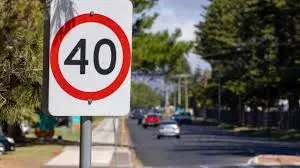
Road enforcement around two Adelaide schools has turned into a sharp warning for motorists, with almost 1, 200 drivers fined in a little over two months for breaking the new 40km/h school zone rule. Fresh South Australia Police data shows the penalties reached $694, 037, reflecting how quickly a time-based speed change can reshape daily driving patterns. The numbers also suggest that compliance remains uneven just as South Australian public schools return from holidays and the school-day limits are back in force.
Why the new school-zone road rule matters now
The latest figures show an average of about 24 motorists a day were penalised outside Marryatville High School and Goodwood Primary School. Fixed cameras monitored both sites, and the fines were issued over 11 weeks from late 2025. A total of 992 drivers were fined on Kensington Road near Marryatville, while another 202 were caught on Goodwood Road. In practical terms, the road rule is not a theoretical policy change; it is being enforced at scale on busy school corridors where children are present at the most sensitive times of the day.
The limits apply on school days, between 8am and 9. 30am and again from 2pm to 4pm. That timing matters because the risk window is concentrated around drop-off and pick-up periods, when traffic, pedestrians and cyclists all converge. South Australia is also only at the early stage of rollout, with more than 160 schools eventually set to receive lower limits and around 60 already introduced. Another 100 are expected by the end of the year, which means the current fine totals may be an early indicator of wider compliance pressures.
What the fines reveal about driver behaviour
The scale of the penalties suggests that many motorists either missed the new signs or chose not to adjust quickly enough. The state has previously relied mainly on 25km/h zones on local streets, while major roads have had fewer restrictions even where pedestrian activity remains significant. That makes the transition to a 40km/h road framework on main roads more visible, but also potentially more confusing for some drivers who have grown accustomed to different school-zone settings.
There is also a deeper safety message behind the enforcement data. Charles Mountain, senior safety manager at the Royal Automobile Association of South Australia, said drivers ignoring the new 40km/h limits at drop-off and pick-up times may be putting children and other road users at risk. He said the expanding network of time-based limits means motorists will encounter them more often on daily commutes, and that attention is essential because children are among the most vulnerable road users.
Mountain also pointed to crash data showing about 40 per cent of injury crashes involving pedestrians and cyclists under 16 occur during those school peak hours. That figure helps explain why the road rule has been framed around precise time bands rather than all-day restrictions on every route. The underlying logic is targeted protection: reduce speed where child pedestrian activity is highest, then return traffic flow to normal outside those periods.
Enforcement, safety and the wider expansion across South Australia
The penalties were triggered by fixed cameras, which gives the rollout a strong enforcement backbone from the start. That matters because the difference between a signed limit and a real-world change often depends on certainty of detection. When drivers know cameras are present, compliance tends to become less about habit and more about immediate consequence. The $694, 037 total shows how quickly non-compliance can translate into revenue, but the policy objective is clearly broader than fines alone.
There is also a structural challenge in scaling the road rule across the state. More than 160 schools are expected to eventually receive the lower limits, and the program is partly funded through the $168 million National Road Safety Program in partnership with the federal government. The program was announced in September 2025 by then-Education Minister Blair Boyer. That timeline indicates a relatively new shift in South Australia’s approach, and the first enforcement figures are likely to shape how the public understands and accepts it.
Expert view and regional impact
Mountain’s advice was blunt: drivers need to reduce speed to 40km/h before the crossing and not increase it again until passing a 50 or 60km/h sign on the departure side. He also clarified that the new 40km/h limit on main roads does not change the 25km/h limit on local roads that apply whenever children are present, even on non-school days. That distinction is important because it shows the rollout is layered, not uniform.
For Adelaide and the wider state, the regional impact is likely to be measured in both safety outcomes and public adjustment. If the road rule is obeyed more consistently, the benefit should be most visible during the school peaks when children are on foot or cycling. If not, the early fine totals may be a preview of continuing friction as the network expands. The key question is whether motorists will adapt before the next wave of school-zone installations makes non-compliance even harder to excuse.
For now, the message is straightforward: South Australia is changing the road environment around schools, and the first numbers show that many drivers are still catching up.