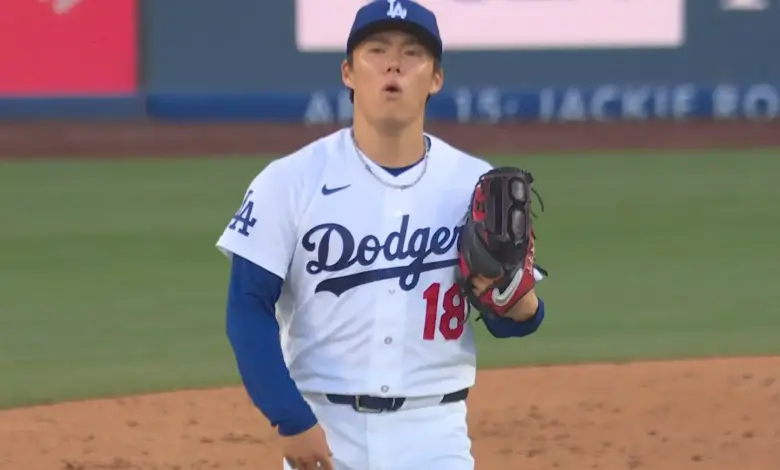
The Dodgers vs Marlins series begins with more than a simple checkmark on the calendar. Los Angeles enters at 19-9 after taking two of three from the Cubs, while Miami arrives at 13-15 and still searching for consistency on the road. The immediate focus is Yoshinobu Yamamoto, who takes the ball after a strong stretch that has kept the Dodgers in front of their bullpen. Yet the sharper storyline is the pitching shuffle around Shohei Ohtani, a move that signals how carefully Los Angeles is managing a packed early-season stretch.
Why Dodgers Vs Marlins matters right now
This Dodgers vs Marlins matchup lands at a useful moment for both clubs, but for different reasons. Los Angeles is trying to turn a bounceback weekend into a clean finish to the homestand, while Miami is trying to stabilize after another series loss. The Dodgers have won 19 games already, and the next one would reach a notable early milestone. Miami’s profile is more complicated: it has been competitive in places, but its road record remains one of the clearest warning signs, sitting at 3-9. That split matters because this series is taking place in Los Angeles, not Miami.
The Marlins also bring a contact-oriented offensive profile that could test patience and defense rather than power. They rank sixth in team batting average at. 255, but only 15th in slugging at. 386, and they have struck out 20. 3 percent of the time, fifth-best in baseball. Their limited home-run output stands out as well: 20 homers through this point is one of the lowest totals in the sport. That combination suggests a lineup built to string together contact, not overwhelm a game with extra-base damage.
Yamamoto, Ohtani and the pitching plan
The central edge in Dodgers vs Marlins may come from the mound. Yamamoto owns a 2. 48 ERA across 32. 2 innings this season, with 28 strikeouts and just five walks. Even his last start, which included three runs in the first inning against San Francisco, settled into a seven-inning outing without another run allowed. That kind of response matters because it shows the Dodgers can absorb an early jolt without losing the game’s structure.
The broader pitching plan is just as revealing. Ohtani is now set to pitch Tuesday rather than Wednesday, while Tyler Glasnow moves to Wednesday so he can stay on normal rest. Dodgers manager Dave Roberts said the adjustment was tied to Glasnow having pitched a lot in recent weeks, and he added that the club spoke with Ohtani and that he felt good about going Tuesday. Ohtani will be on five days of rest for only the third time in his Dodgers tenure, which makes the change notable even in a short series.
That decision also shows how much the Dodgers are treating this series as part of a larger workload puzzle. They do not need to force a traditional off-day rhythm if the pitchers are better served by another arrangement. In that sense, Dodgers vs Marlins is not just about the opponent. It is about preserving the team’s best arms while keeping the rotation aligned for what comes next.
What the matchup says about the two offenses
On paper, the offensive contrast is stark. Los Angeles has already shown it can pile up runs in bursts, including a 12-run outburst on Saturday against Chicago. Miami, by comparison, has a perfectly even run differential at 126 runs scored and 126 allowed, a sign of how closely it has lived on the edge of break-even. The Marlins have also only won two of eight series this season, which underscores how difficult it has been for them to turn short stretches of competence into sustained success.
There is still one caveat: the Dodgers have not been lighting up the scoreboard behind Yamamoto in every start. They scored eight runs on Opening Day behind him, but only seven total in his other four starts, with only four of those coming while he was actually in the game. That is a reminder that even strong pitching can be wasted if the lineup goes quiet. Still, the overall shape of the matchup favors Los Angeles if the starter sets the tone early.
Expert view and the larger ripple effect
Roberts’ explanation for the Ohtani change frames the series as a matter of workload management rather than surprise for its own sake. The Dodgers have enough confidence in their pitching depth to move pieces around without treating an off day as mandatory timing. That approach can matter over a long season, especially when a starter like Glasnow has been used heavily and Ohtani’s two-way role adds another layer of complexity.
There is also a broader team-management lesson inside this series. Yamamoto has been excellent enough that a three-run outing over seven innings can still be labeled disappointing, and that is an unusually high standard. For the Dodgers, that standard is a strength and a risk: it raises the floor, but it also creates an expectation that can make even ordinary stress feel like a problem. The Marlins, meanwhile, are trying to prove their contact-heavy style can travel better than their 3-9 road record suggests.
In the broader National League picture, a series like this can shape how a team is viewed less by headlines than by habits. If Los Angeles keeps winning behind elite pitching and flexible scheduling, it reinforces the idea that depth is its real edge. If Miami can pressure the Dodgers with contact and clean at-bats, it would hint that the standings do not fully capture how competitive this group can be in the right spots.
That is what makes Dodgers vs Marlins more interesting than a routine April matchup: it is a test of structure, not just talent. And if Yamamoto keeps controlling the game while Ohtani’s schedule stays fluid, how many more layers can the Dodgers add before the rest of the league catches up?