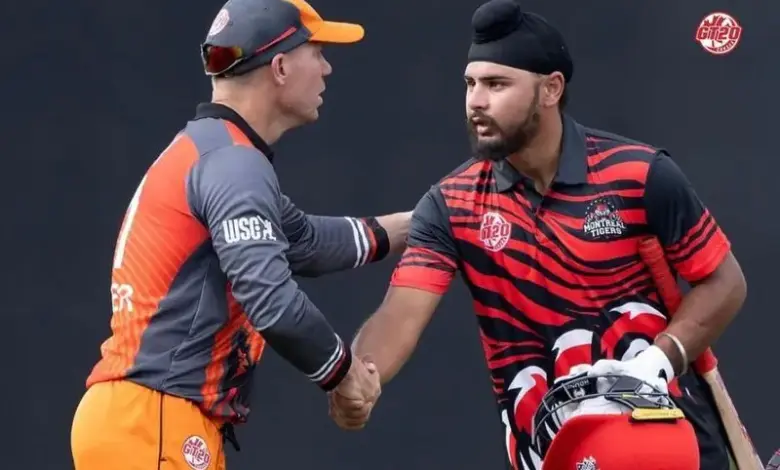
icc is now at the center of a widening integrity story after Canada’s T20 World Cup 2026 captain, Dilpreet Bajwa, came under investigation over suspected corruption during a match against New Zealand. The case matters because it is not being framed around ordinary poor form; it is focused on a sequence of actions in a crucial phase of play, and on broader questions raised by a documentary about cricket governance in Canada.
What Happens When a Single Over Draws Attention?
The immediate focus is the fifth over of New Zealand’s chase. Canada were defending 174 and had New Zealand at 35 for 2 when Bajwa, primarily a batter, brought himself on to bowl. The over began with a no-ball, then a wide, and eventually produced 15 runs. On their own, those events could be explained as mistakes inside a fast-moving match. In combination, and in that match situation, they have drawn scrutiny from the International Cricket Council’s Anti-Corruption Unit.
The ACU does not investigate bad performance in isolation. Its role is to examine patterns that may fit manipulation, and the timing of extras in a tight phase is one reason the over has become central to the inquiry. The concern is not that every error proves wrongdoing. It is that deliberate extras can affect betting markets, and that a small moment can carry outsized consequences when a game is still balanced.
What If the Documentary Changes the Frame?
A documentary titled Corruption, Crime and Cricket has added a second layer to the story. The film aired on the public broadcaster CBC and raised allegations including possible external influence on team selection and questions about Bajwa’s rapid appointment as captain. Those claims are not proven, but they widen the scope of attention beyond one over and toward the governance environment around Cricket Canada.
That matters because integrity cases rarely stay narrow. Once a match event is linked with wider allegations, the issue becomes not only what happened on the field, but whether systems around the team were robust enough to prevent pressure, influence, or weak oversight. The ICC has said its Anti-Corruption Unit works through intelligence, prevention, education, and investigation, and that those functions run together wherever there is a credible basis to believe integrity may be at risk.
What Are the Main Forces Shaping the ICC Response?
Three forces are shaping how this case develops.
First, the match context. Canada were already under pressure in a chase against New Zealand, and the tactical choice to introduce a batter into the attack during a critical phase is unusual enough to attract review.
Second, the governance context. The documentary’s allegations about selection and leadership have shifted the discussion from one over to the structure around the team. Even without proof, such claims expand the range of questions investigators and administrators must consider.
Third, the integrity context. The ICC’s Anti-Corruption Unit is designed to detect patterns, not isolated accidents. That makes the combination of no-ball, wide, timing, and match situation more relevant than any single event on its own.
| Scenario | What it could mean |
|---|---|
| Best case | The review finds the over was a cricketing error sequence with no broader integrity breach. |
| Most likely | The investigation continues with uncertainty, while governance questions remain under separate attention. |
| Most challenging | Further evidence links the on-field sequence with wider corruption or influence concerns. |
What If the Investigation Spreads Beyond One Match?
If the inquiry stays narrow, the outcome will likely be limited to the specific match and its unusual over. If it broadens, then the reputational impact will fall on several stakeholders at once: Bajwa, Cricket Canada, and the tournament’s integrity narrative. The ICC would also face pressure to show that its anti-corruption processes can deal with both match-level irregularities and institutional concerns.
Winners in the short term are hard to identify because uncertainty itself is the dominant force. The most exposed party is Cricket Canada, because allegations tied to governance are always more damaging than isolated performance questions. Bajwa is also under direct scrutiny, not only as a captain but as a player whose decision-making in one over is now being examined through an integrity lens. For the ICC, the challenge is to protect confidence without overstepping the evidence.
What Should Readers Watch Next?
The key point is that this story is still about scrutiny, not proven wrongdoing. The facts now visible point to an active review of a Canada-New Zealand group-stage fixture, a captain under investigation, and a documentary that broadened the frame around governance. The next phase will depend on whether the available evidence supports a match-specific concern or reveals a deeper structural problem. For now, the signal is clear: the icc case is no longer only about one over, but about how modern cricket protects trust when small moments can carry large stakes. Readers should watch the process carefully, expect partial answers before full clarity, and treat every new development as part of an unfolding integrity test around icc.