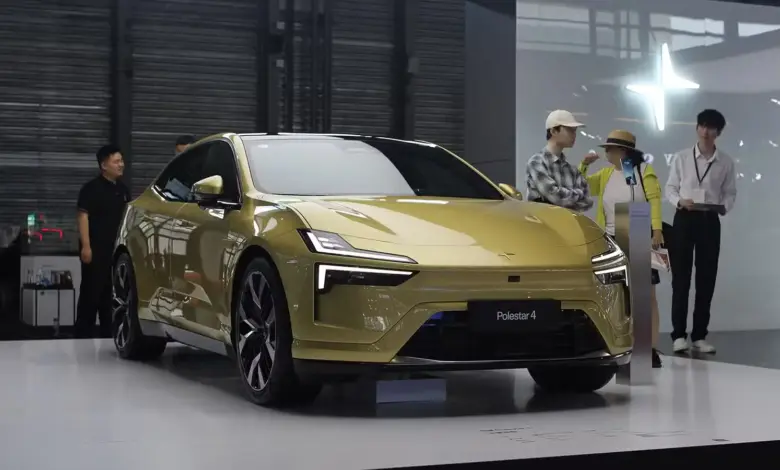
The polestar 4 recall is small in number but large in implication: 1, 473 electric vehicles are being pulled back in China over a battery thermal runaway risk tied to manufacturing inconsistencies. That figure matters because the issue is not a single defective car, but a specific batch built between November 16, 2023, and May 24, 2024, with replacement work set to begin on May 16.
Verified fact: Geely Auto is recalling Polestar 4 EVs equipped with 86 kWh battery packs after China’s State Administration for Market Regulation identified a risk that internal resistance in the battery may rise during long-term use. Informed analysis: the case shows how a modern EV recall can look narrow on paper while still pointing to wider strain in manufacturing controls, battery supply chains, and public confidence.
What exactly is being recalled, and why does it matter?
The recalled vehicles are a defined batch of Polestar 4 EVs built over a limited production window. The trigger is not a crash, fire, or public incident named in the official notice, but a stated production inconsistency in high-voltage power battery components. That inconsistency may cause internal resistance to increase after prolonged use, which can reduce battery performance. In extreme cases, regulators say, it could lead to thermal runaway of the power battery and create a safety hazard.
The recall begins on May 16. Geely will authorize Polestar’s sales company to implement the action, and affected battery modules will be replaced free of charge. Until replacement is completed, customers are strongly advised not to charge high-voltage batteries above 70% for daily use. That instruction is notable: it shows the remedy is not just administrative, but a temporary operating restriction placed on owners to reduce exposure before physical repair.
Is this an isolated defect or part of a broader pattern?
The recall does not appear in a vacuum. The latest action closely follows a similar step taken by sister brand Zeekr in February, when 38, 277 Zeekr 001 WE edition cars were recalled over the same high-voltage battery thermal runaway risk. That earlier case was linked to a settlement involving a Geely subsidiary and battery supplier Sunwoda over a battery quality dispute. Geely subsidiary Vremt had previously sued the supplier, seeking compensation of up to 2. 31 billion yuan, or $338 million.
Those facts matter because they place the polestar 4 recall inside a wider manufacturing and supplier landscape. The newly disclosed agreement in the Zeekr case required the two companies to share repair costs proportionally based on actual expenses. That is a financial signal as much as a technical one: battery defects are not only safety issues, but also costly disputes over who absorbs remediation expenses when components fail quality expectations.
There is one important uncertainty. It remains unclear whether the Polestar 4 recall is related to Sunwoda’s batteries. That gap in the record leaves open a crucial question about whether the current action reflects the same supplier problem or a separate defect path. What is clear is that regulators and the company are treating the risk seriously enough to require a formal recall and a charge limit until repairs are made.
Who is implicated, and what do the responses suggest?
Geely Auto is the recalling party, Polestar’s sales company is the entity authorized to carry out the repairs, and China’s State Administration for Market Regulation is the government body that disclosed the recall details. Each plays a different role, and together they show how an EV safety issue moves from manufacturing oversight to regulatory notice to customer instruction.
The response structure also suggests where responsibility is being managed. Geely is making the recall available at no charge to owners. Regulators are framing the issue as a technical safety hazard rather than a speculative concern. And customers are being told to change charging behavior immediately, which is a practical recognition that the affected vehicles remain in service while parts are replaced.
Verified fact: the recall concerns a specific batch, not the entire model line. Informed analysis: even so, the limited scope does not eliminate the reputational effect, because battery safety problems in EVs are judged not only by volume, but by whether the underlying manufacturing process can be trusted.
What does the Polestar 4 case reveal about EV quality control?
Viewed together, the facts point to a familiar but unresolved challenge in electric vehicle production: battery systems are central to performance, range, and safety, yet they also concentrate manufacturing risk. A batch recall based on component inconsistency suggests that quality control failed at an early stage, before the vehicles reached consumers. The fact that long-term use could worsen internal resistance means the problem may not be visible at first delivery, which makes traceability and inspection especially important.
The recall also underscores the financial consequences of defect management. If a battery supplier dispute can lead to a settlement over repair costs in one case, and if it is still unclear whether the current recall is tied to the same supply chain, then the industry faces more than a mechanical problem. It faces pressure to prove that quality checks, supplier oversight, and remediation plans are strong enough to prevent repeat episodes.
For readers, the key issue is not whether the polestar 4 recall is large. It is whether the recall exposes a deeper weakness in how EV batteries are produced, traced, and defended once they enter the market. The evidence now on record shows regulators have identified a thermal runaway risk, a company has begun a formal repair process, and customers are being told to limit charging until replacement. What remains necessary is fuller transparency about the manufacturing failure and whether similar risks exist beyond this batch of polestar 4 vehicles.