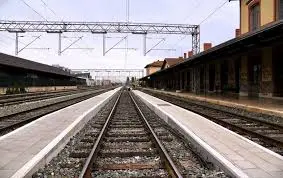
In Croatia, the sound of a railway project is often measured long before the first train runs. On the line between Hrvatski Leskovac and Karlovac, that future now has a contract, a timeline, and a clear promise: faster travel, stronger freight movement, and a more modern track linking the Zagreb–Rijeka corridor.
What will change on the Zagreb–Rijeka railway?
The project covers a 44-kilometre section and includes reconstruction of the existing track, construction of a new track, electrification, modernization of signalling and safety and telecommunication systems, and renovation of the train stations in Hrvatski Leskovac, Jastrebarsko and Karlovac. In practical terms, this means a line designed for higher capacity, improved traffic safety, and speeds of up to 160 km/h.
For passengers, the work points to more reliable suburban connections between Zagreb and Karlovac. For freight operators, it is meant to create a stronger route toward Central European markets and improve the competitiveness of the northern Adriatic port of Rijeka. The section sits within a wider railway corridor that is being treated as strategically important.
Why does this investment matter beyond the tracks?
The scale of the agreement makes it more than a local upgrade. Deputy Prime Minister and Minister of the Sea, Transport and Infrastructure Oleg Butković described it as one of the largest investments in Croatia’s railway infrastructure. He said it is important for aligning Croatia’s rail system with European interoperability standards and noted plans to invest nearly €6 billion in the sector over the next decade.
The contract value is stated excluding value added tax, and the project is co-financed by grants from the European Union’s Competitiveness and Cohesion Programme for the 2021-2027 financial period. That financing structure gives the upgrade a wider public purpose: it is not only about a single stretch of rail, but about reshaping how people and goods move through the country.
In this context, Croatia is using rail as an economic instrument. Better capacity can support logistics, reduce bottlenecks, and make the Port of Rijeka more competitive as a gateway for freight. The line also connects to the planned lowland railway, adding another layer to its strategic role.
When will work start, and what is already in place?
Work is expected to begin in summer 2026 and is scheduled for completion in 2029. Some groundwork is already visible: overpasses and underpasses along the route have been completed, removing level crossings and helping prepare the corridor for higher performance and safer operations.
That kind of progress can feel distant to commuters waiting for the train, yet it matters in daily life. A more efficient line can change morning routines, shorten freight delays, and make a regional journey feel less like a compromise. For people living near the stations named in the project, the upgrade also brings the promise of renewed infrastructure in places that are often experienced only as passing points.
Who is carrying out the project?
The contract was formalised by HZ Infrastruktura with Spanish construction firm COMSA S. A. the project marks another step in strengthening its presence in the country and will be its third railway project in Croatia. That continuity matters because railway work depends on trust as much as engineering.
For now, the important fact is simple: Croatia has placed one of its most visible transport upgrades on a timeline that reaches into 2029. Between now and then, the line between Hrvatski Leskovac and Karlovac will be watched not just as an infrastructure project, but as a test of how quickly a rail system can be turned toward the future while still serving the people who already depend on it.
Image alt text: Croatia railway upgrade between Hrvatski Leskovac and Karlovac promises faster travel and stronger freight links.