The rpcs3 cell cpu breakthrough is not just about numbers on a benchmark. It is about what happens when a game that once felt stubborn and uneven on a PC suddenly runs with a little more breathing room, especially on hardware that has no excess power to spare.
What did RPCS3 change in the Cell CPU emulation?
Developers behind the open-source PlayStation 3 emulator RPCS3 say they have found a new way to handle the PS3’s Cell Broadband Engine processor. Lead developer Elad identified previously unrecognized SPU usage patterns and wrote new code paths that generate more efficient native PC output.
That matters because SPU emulation is the biggest CPU bottleneck in RPCS3. In the PS3’s design, the Cell processor paired a PowerPC-based PPU with up to seven Synergistic Processing Units. RPCS3 has to recompile those workloads into native x86 code using LLVM and ASMJIT backends, and the quality of that translation shapes how much host CPU time each emulated SPU cycle consumes.
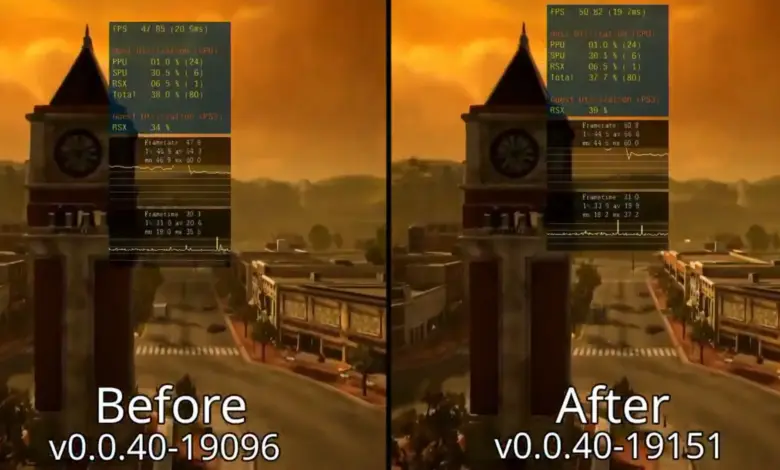
The project says the improvement benefits every game in its library. In Twisted Metal, one of the most SPU-intensive titles, RPCS3 says the result was a 5% to 7% average FPS gain between builds v0. 0. 40-19096 and v0. 0. 40-19151. The team shared side-by-side comparisons and noted that some visual differences in the demonstration came from dynamic lighting, NPC positioning, and environmental effects that change on every run.
Why does the rpcs3 cell cpu breakthrough matter beyond one game?
Because the optimization is not limited to a single title or a narrow class of machines. RPCS3 says the rpcs3 cell cpu breakthrough benefits all CPUs, from low-end to high-end, and the team cited user reports of improved audio rendering and slightly better performance in Gran Turismo 5 on a dual-core AMD Athlon 3000G.
That detail gives the story its most immediate human dimension. A budget APU that would ordinarily struggle with PS3 emulation can still feel the gain. The same optimization also tightens the machine code generated for SPU workloads, reducing CPU overhead across the board. In practical terms, that can mean less strain for players trying to run demanding games on modest desktop systems or portable PCs.
Elad, known in RPCS3’s codebase as elad335, has already shaped the project’s performance story before. In June 2024, his SPU optimizations delivered 30% to 100% performance gains on four-core, four-thread CPU configurations, with Demon’s Souls among the titles that saw doubled frame rates on constrained hardware. The new work builds on that pattern: small-looking code changes, broad consequences for playability.
How is RPCS3 improving the handheld experience?
RPCS3 has also been focusing on how the emulator feels to use, not only how fast it runs. The developers said they have been improving the user experience by reworking the overlay, including a redesigned settings menu that allows more tweaks without restarting the game. Performance and rendering options such as frame rate limits and resolution scaling can now be adjusted through the in-game overlay.
That kind of usability shift matters for handheld play, where quick adjustments can make the difference between a smooth session and a frustrating one. The project also added new Arm64 SDOT and UDOT instruction optimizations to accelerate SPU emulation on Arm hardware, including Apple Silicon Macs and Snapdragon X laptops. RPCS3 currently lists over 70% of the PS3’s game library as playable and supports Windows, Linux, macOS, and FreeBSD, with native Arm64 architecture support added in late 2024.
For players who still want PS3 games on modern portable PCs, the message is straightforward: the platform may be behind the hardware curve, but the emulator keeps finding ways to narrow the gap. The rpcs3 cell cpu breakthrough does not erase the limits of emulation, yet it does make those limits feel a little farther away.
At the end of a long session, that may be what matters most: a game that was once barely holding together now has enough headroom to stay steady, even on a small screen and a machine built for something less demanding.