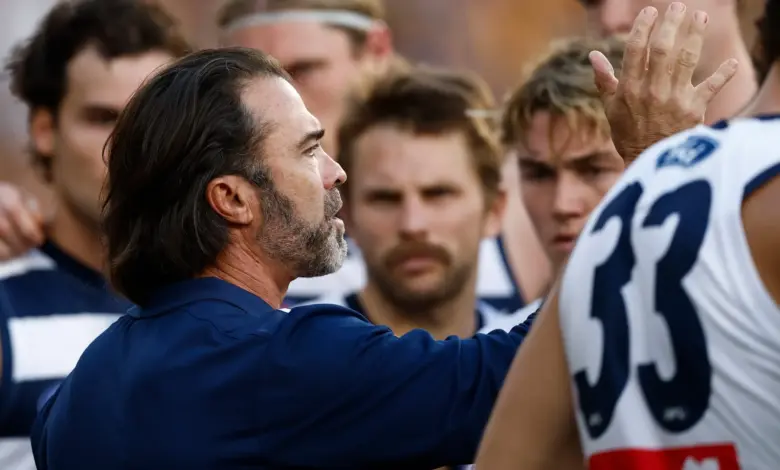
chris scott framed Geelong’s Easter Monday clash with Hawthorn as a game decided by composure, execution, and late chances, with both sides leaving the MCG knowing they had opportunities to settle it. The tone of the post-game remarks was measured rather than dramatic, but the message was clear: there are parts of the game that still need work.
What happens when execution becomes the difference?
In a tense contest that felt, in Chris Scott’s words, better for neutral observers than for the supporters inside it, the key issue was not a lack of effort. It was the quality of execution. He said early-season leeway can sometimes be granted to players, but this game featured “poor execution on both sides” and a sense that the team with the best composure would take its chances.
That framing matters because it shifts attention away from raw intensity and toward decision-making under pressure. Scott said Geelong did not play well for the full game and that the coaching group did not think the side hit its straps throughout. At the same time, he stopped short of describing the match as one the Cats simply failed to finish off. His view was more nuanced: Geelong had chances, Hawthorn had chances, and late composure looked like the deciding factor.
What if the early fixture list is the real test?
The positive, in Scott’s assessment, is the position Geelong now occupies: two wins and two losses after a start that has already included three teams he described as close to top-eight locks. That is an important piece of context. It suggests the record is not being judged in isolation, but against the calibre of opposition faced early in the season.
For a side still finding consistency, that matters. It means the conversation is not only about one close loss, but about whether Geelong can tighten parts of its game while staying steady in a demanding opening stretch. Scott’s comments point to a team that believes it can keep its composure, even if the environment around it is trying to disrupt that balance.
| Theme | Scott’s assessment |
|---|---|
| Game quality | Tense, with questionable ball use and strange late moments |
| Geelong’s performance | Not at full capacity and not executing as well as it can |
| Result context | Two and two after a difficult opening run |
| Late stages | Both teams had chances to win |
What if the pressure simply rises from here?
Scott also pointed to pressure from both sides as a major factor in the match. That pressure, he said, naturally contributes to questionable ball use. It is a small detail, but a revealing one: this was not presented as a match where one team folded. It was presented as a match where both teams made life hard for the other, and where composure under that pressure became the decisive currency.
He also noted that Hawthorn matched expectations and played well, while Geelong did not quite reach the level needed to put itself in a position to win comfortably. Even so, there was no sense of panic in the comments. The message was that improvement is needed in specific areas, not that the season has taken a wrong turn. That makes chris scott a useful lens for understanding how Geelong is likely to talk about close games going forward: honestly, without overreaction, and with a focus on execution rather than excuses.
One additional note from the post-game assessment concerned a player who took a knock but was able to keep going. Scott said the player was influential up the ground and remains important even when his impact is not always obvious with ball in hand. That reinforced the broader theme of the night: the game was tight, physical, and shaped by contributions that were not always easy to read in the moment.
What should readers take away now?
The central takeaway is not that Geelong is off course, but that the margins are already sharp in round four. Scott’s remarks suggest a side that sees room for improvement, especially in execution and composure, while still drawing confidence from a 2-2 start against strong opposition.
What happens next will depend on whether those small corrections arrive quickly. If they do, this kind of loss may later look like an early-season checkpoint rather than a warning sign. If they do not, the same issues could keep deciding close games. For now, the most honest reading is that Geelong has enough structure to remain competitive, but not enough room for avoidable mistakes. That is the lesson of chris scott.